
Aare Amerijoye DOT.B
Politics, when stripped of noise, emotion, and propaganda, resolves into a single discipline. Arithmetic. Elections are not ultimately decided by television appearances or manufactured enthusiasm. They are decided by numbers rooted in history, identity, trust, and lived political relationships. And nowhere in Nigeria does this arithmetic speak more clearly than in the North, the region that has, across election cycles, determined the final architecture of presidential power.
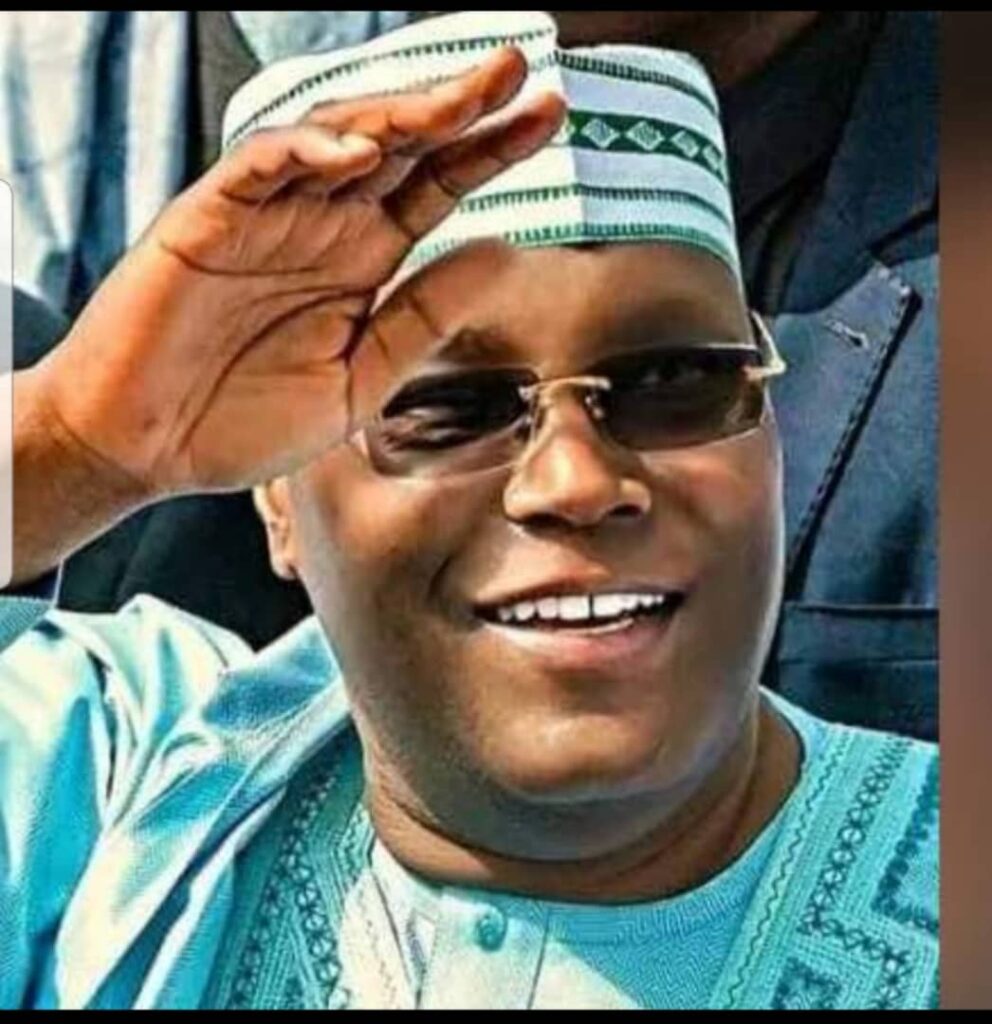
The certified results of the 2023 presidential election delivered a message that was deeper than the declaration of a winner. They revealed the enduring structural strength of Atiku Abubakar across the core Northern heartland and exposed the fragile and limited penetration of his principal opponent within the same territory.
In the North East, Atiku Abubakar secured Adamawa, Bauchi, Gombe, Taraba, and Yobe. Five of the six states in the zone placed their mandate in his hands. His opponent secured only Borno, the home state of his running mate. Even with the regional advantage of a vice presidential candidate, the expected consolidation did not materialise. Instead, the zone reaffirmed its historic political alignment with Atiku Abubakar.
The North West delivered an equally consequential verdict. Atiku Abubakar won Katsina, Kaduna, Sokoto, and Kebbi, states that represent some of the deepest reservoirs of political consciousness and electoral weight in the federation. While other candidates secured Jigawa, Zamfara, and Kano, the dominant structural reality remained that Atiku Abubakar emerged as the single most successful candidate across the core Northern belt.
When the North East and North West are combined, the arithmetic becomes unmistakable. Out of thirteen states, Atiku Abubakar won nine. No other candidate approached that scale of acceptance across the region.
This achievement did not emerge from coincidence. It emerged from history.
Even in 2019, running against an incumbent Northern President at the height of incumbency power, Atiku Abubakar demonstrated formidable electoral strength. He secured Adamawa, Sokoto, Taraba, and Plateau in the North, and went on to win seventeen states nationwide, while Muhammadu Buhari won nineteen states, with the Federal Capital Territory also falling to Atiku. That performance established a resilient electoral foundation that did not weaken. It expanded.
By 2023, that expansion had matured into dominance across the North East and large portions of the North West. Without federal power, without control of national security institutions, and without the structural advantages of incumbency, Atiku Abubakar still emerged as the principal electoral force across the core Northern zones.
This continuity is neither accidental nor temporary. It reflects relationships built over decades. It reflects familiarity born of shared political struggle. It reflects trust rooted in presence, accessibility, and identity.
Beyond electoral history, present economic realities further reinforce this trajectory. Since 2023, Nigeria has experienced profound economic disruption. Rising cost of living, inflationary pressure, and declining purchasing power have reshaped political perception nationwide. Food inflation rose above forty percent year on year in 2024 before moderating after statistical rebasing. In regions where economic hardship is felt most directly, political accountability becomes immediate and personal.
Voters remember leadership that protected economic dignity. They remember periods of expansion and opportunity.
Atiku Abubakar’s tenure as Vice President remains widely associated with economic liberalisation, expansion of the telecommunications sector, increased private sector participation, and job creation. These are not abstract policy arguments. They are lived experiences remembered across households and communities.
Equally important is the unmatched breadth of Atiku Abubakar’s political network. His alliances cut across Hausa, Fulani, Kanuri, and Middle Belt communities. His appeal is not confined to a single identity. It is pan Northern and national.
Looking toward 2027, the trajectory points toward further consolidation. With established victories already recorded across the majority of the core Northern states, Atiku Abubakar stands positioned to secure as many as twelve of the thirteen states in the North East and North West under favourable political alignments. Should Rabiu Musa Kwankwaso, whose influence in Kano remains structurally decisive, align in support of Atiku, the consolidation of all thirteen core Northern states becomes a realistic political pathway, effectively establishing an unshakeable Northern electoral base.
At that point, the strategic contest would inevitably expand beyond the core North into the North Central, South South, South East, and South West, where Atiku Abubakar’s longstanding national relationships and coalition building capacity would shape the final outcome.
Presidential elections in Nigeria are ultimately won through coalition architecture built on strong regional foundations. And no political figure enters the 2027 electoral cycle with a stronger Northern foundation than Atiku Abubakar.
His opponents may possess temporary incumbency.
But Atiku Abubakar possesses something more enduring.
He possesses history.
He possesses structure.
He possesses trust.
And above all, he possesses the numbers from which victory is built.
The North has spoken before.
All evidence suggests it is preparing to speak again and this time brutally in numbers supporting Atiku.
Aare Amerijoye DOT.B
Director General
The Narrative Force



lukmanlawal128@gmail.com
Welcome to The Narrative Force, Comrade Lukman. Your presence here is noted and appreciated. We are building a community of conscience ahead of 2027. Stay with us. The best is yet to come.