How One Man’s Vanity Turned a Nation Into a
Graveyard of Dreams.
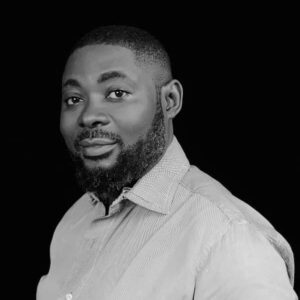
Aare Amerijoye DOT.B.
There is a particular species of ruler Africa has always known. He does not govern. He reigns. He is not moved by the statistics of the dead, because the dead do not attend his rallies. He is not troubled by the hunger of the poor, because the poor do not sit at his banquets. He is not shamed by the collapse of institutions, because institutions are useful only when they serve his survival. Bola Ahmed Tinubu is that ruler. And Nigeria, ancient, long-suffering, and still fighting, is paying the price in blood, in hunger, in darkness, and in despair.
This is not a political editorial. This is a reckoning. Let us count the costs. Let us name the crimes. Let us refuse the sedation of euphemism.
He is not moved by the statistics of the dead, because the dead do not attend his rallies.
I. THE EGO THAT REPLACED GOVERNANCE
Bola Tinubu spent decades constructing himself as the singular indispensable genius of Nigerian politics. The Jagaban. The Godfather. They fed the ego because it was useful. Nobody told the emperor he had no clothes, because nobody in his court could afford the consequences of honesty. Then came the presidency, and the ego consumed the man entirely.
A president ruled by ego cannot accept bad news. He cannot acknowledge failure, because failure is an assault on the image he has constructed. He cannot change course, because changing course means admitting error. And admitting error is, to the ego-driven ruler, a form of death.
The fuel subsidy was removed not because careful analysis said this was the right moment, but because it was a grand gesture. A statement of boldness. The ego demanded a dramatic opening act. The people paid for the performance with their livelihoods. When the naira collapsed and Nigerians began to ration food, the ego would not permit correction. When the people screamed that they were drowning, the presidency told them they were merely wet. When they showed their empty plates, the presidency showed them charts.
This is the government of the graph and the press release, of the award received in far away while the homeland burns. It governs for the optics, not for the outcome.
The ego demanded a dramatic opening act. The people paid for the performance with their livelihoods.
II. BLOOD ON EVERY ROAD
While the president’s ego preoccupied the palace, Nigeria was bleeding out. The Benue corridor has become a killing field. In Plateau State, entire villages have been razed within hours of distress calls to security forces that somehow never arrived in time. In the Northwest, bandit commanders have imposed tax regimes on communities, kidnapping schoolchildren with the confidence of men who know no consequence awaits them. They do not hide. They send ransom notes. They operate as a parallel state because the actual state has abdicated.
A mother in Bokkos, Plateau State. Her home is ash. Her husband is among the bodies the community spent three days identifying. Her children are in a displacement camp with no sanitation and no schooling. She is not a statistic in a UN report. She is a citizen of the Federal Republic of Nigeria, and her president has not mentioned her name, her community, or her grief in any public address of consequence.
Across the Northeast, thirteen years after the declaration of emergency, the insurgency has not been defeated. It has merely adapted. The Middle Belt, once the food basket of the federation, has become a corridor of terror. Insecurity and hunger are not separate crises. They are the same crisis in different uniforms. The dead are acknowledged, and then the machinery moves on. The ego cannot sit with grief. Grief is admission that something has gone wrong.
Insecurity and hunger are not separate crises. They are the same crisis in different uniforms.
III. THE SUFFERING THEY CALL REFORM
A bag of rice that cost N22,000 in May 2023 now costs over #70,000, #85,000 or N90,000. Petrol that sold for N185 now sells for over N1,200. The naira has crashed to levels economists once classified as catastrophic scenarios. The minimum wage was set at N70,000, a figure that a single market trip renders risible. A trader in Onitsha who kept four staff now keeps one. A pharmacist in Ibadan who dispensed insulin to fifteen regular patients has watched eleven vanish, not because they recovered but because they can no longer afford the prescription.
The middle class has been largely destroyed. Patients are dying in hospitals not because medicine is unavailable but because the foreign exchange to import it has been regulated into impossibility. And the people know it. They know it in their bones, in their empty pots, and in the silence of children who have stopped asking for things because they have learned that asking leads only to their parents’ shame.
This is not a transition. This is systemic impoverishment dressed in the grammar of technocracy.
They know it in the silence of children who have stopped asking for things because asking leads only to their parents’ shame.
IV. SECOND TERM DESPERATION: INEC AS A WEAPON
In the middle of all this wreckage, the machinery of the presidency is focused on one thing: how to remain in power beyond 2027. The desperation is not concealed. It is written into every political appointment, every judicial interference, every INEC manipulation.
The ADC crisis is the most transparent example. When INEC removed the David Mark-led National Working Committee from its portal on 31 March 2026, it did not exercise institutional neutrality. It chose a side. It chose the side that serves the incumbency project. The legal argument that INEC applied the status quo ante to the wrong date, anchoring to a portal upload of 9 September 2025 rather than the NEC ratification of 29 July 2025, is not merely a technical grievance. It is evidence of a commission operating with a predetermined conclusion in search of a legal dressing. When an electoral commission behaves as a department of the presidency, democracy does not merely weaken. It dies.
Tinubu knows the arithmetic. His 8.7 million votes in 2023 cannot withstand a unified opposition that drew 14.5 million even in fragmentation. The suffering of almost three years has not produced gratitude. It has produced fury. So the strategy is not to win the argument. It is to prevent the election from being contestable. It is the strategy of a man who has confused the presidency with a personal inheritance. And it is the strategy of a man who has, fatally, underestimated the people.
The strategy is not to win the argument. It is to prevent the election from being contestable.
V. THE MASSES ARE NOT SLEEPING
The Nigerian people are not what they were in 2015, in 2019, or even in 2023. The hunger is real, but it has not produced docility. It has produced clarity. When you have lost everything, you have nothing left to lose. And when you have nothing left to lose, the machinery of political intimidation loses its teeth.
The EndSARS generation did not disappear. A generation that discovers its own power does not unlearn that discovery. It refines it. It organises around it. It waits for the moment when the numbers are so overwhelming that even a compromised system cannot absorb them. Young Nigerians who stood in the rain for hours to vote, only to watch their votes manipulated in the transmission, did not go home defeated. They went home with evidence. And evidence, in the hands of an organised people, becomes a weapon.
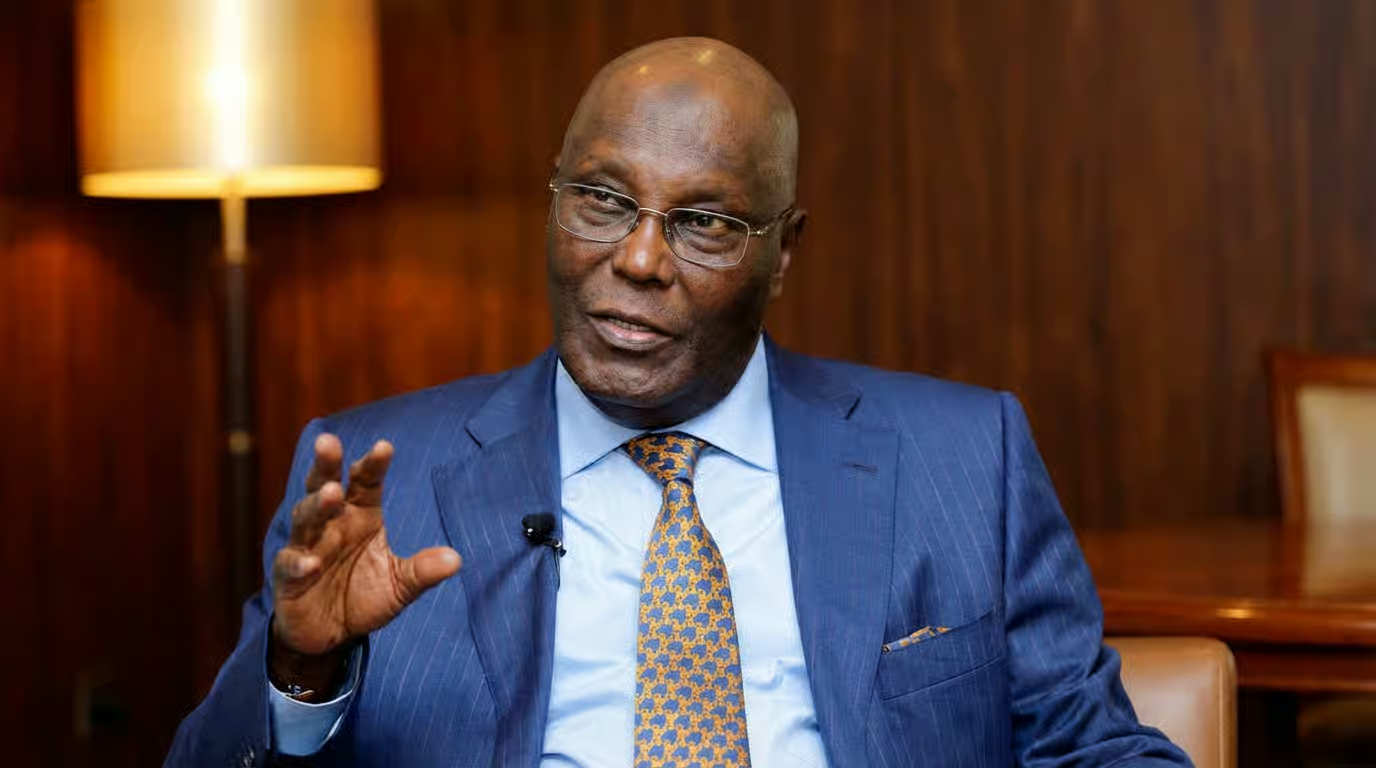
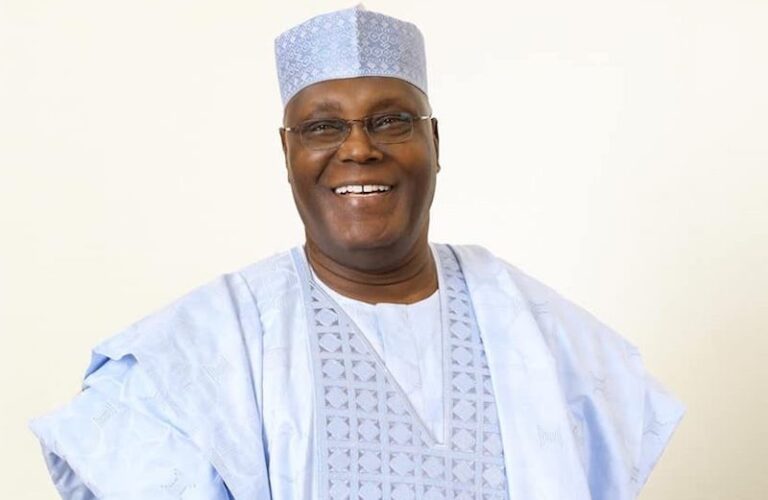
The masses’ fury requires a vessel. Anger without organisation is just noise. That vessel is the African Democratic Congress. That candidate is Atiku Abubakar. As Vice President, Atiku presided over an economy that grew from $58 billion to $270 billion in GDP, delivered 15.3 per cent peak growth, the highest in Nigeria’s history, and architected the telecoms liberalisation that connected millions to the modern world. The contrast with the present is not merely political. It is civilisational. Between a man who built and a man who has dismantled.
David Mark’s ADC, fortified by Kwankwaso’s mass base, by the political networks of Amaechi, El-Rufai, and Aregbesola, represents the most formidable opposition coalition since 2015. The arithmetic does not favour the incumbent. It never did.
Between a man who built and a man who has dismantled. That is the choice Nigeria faces in 2027.
VI. THE VERDICT OF HISTORY
History is writing its verdict on Bola Ahmed Tinubu, and the verdict is not kind. He took power, and made the nation a carcass. He took the struggling economy from his APC predecessor Buhari and strangled it. He took a people already burdened and broke their backs. He removed a subsidy without protecting the poor. He devalued the naira without stabilising the economy. He presided over a security catastrophe without a single serious strategic intervention. He weaponised INEC against the democratic process he swore to uphold. He mistook the silence of the exhausted for the consent of the governed.
The Nigerian people have been patient. Patient through military rule and annulled elections. Patient through stolen oil wealth and collapsed infrastructure. Patient through insurgency and floods. But patience is not passivity. It is the compression of a spring that will, in 2027, release with a velocity no incumbency machinery can absorb.
Tinubu can compromise INEC. He cannot compromise 220 million people.
He can capture institutions. He cannot capture history.
He can buy silence. He cannot buy time. And time, in a democracy fuelled by suffering, belongs to the poor.
Mr President may have the palace. He does not have the people. And in the end, the people are the only verdict that matters.
He can buy silence. He cannot buy time. And time, in a democracy fuelled by suffering, belongs to the poor.
Aare Amerijoye DOT.B
Director General
The Narrative Force
thenarrativeforce.org