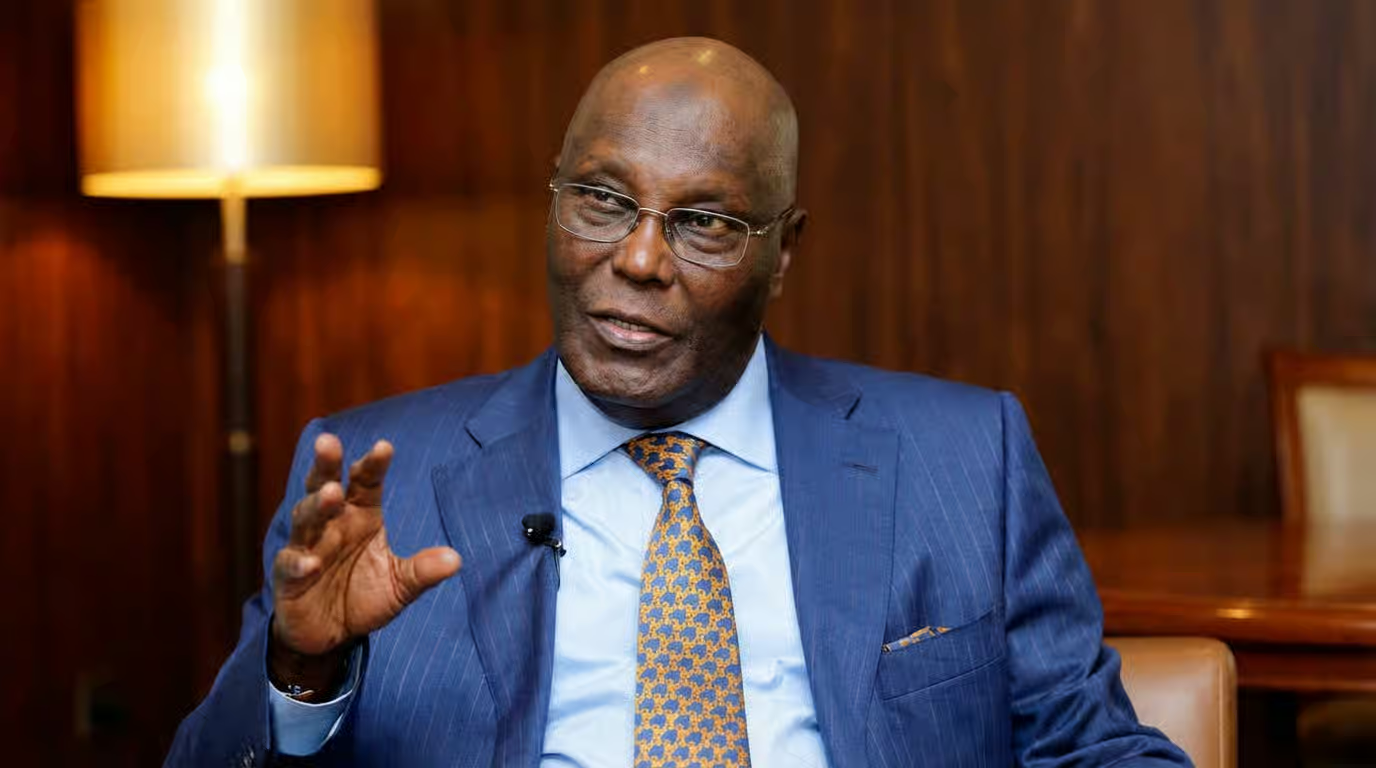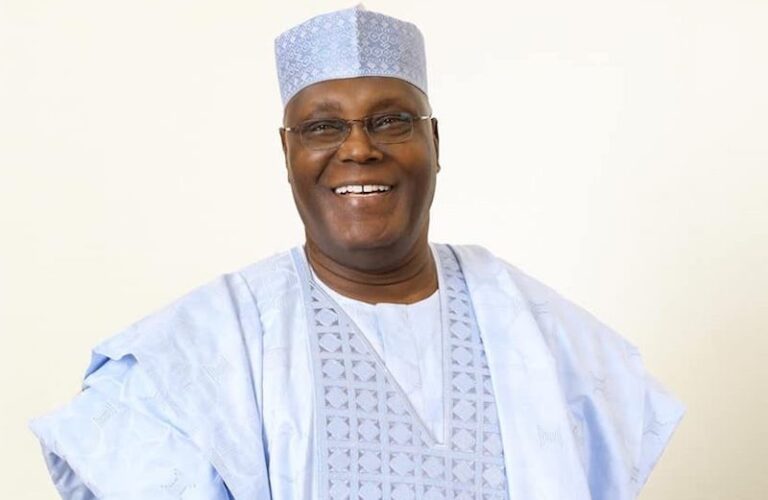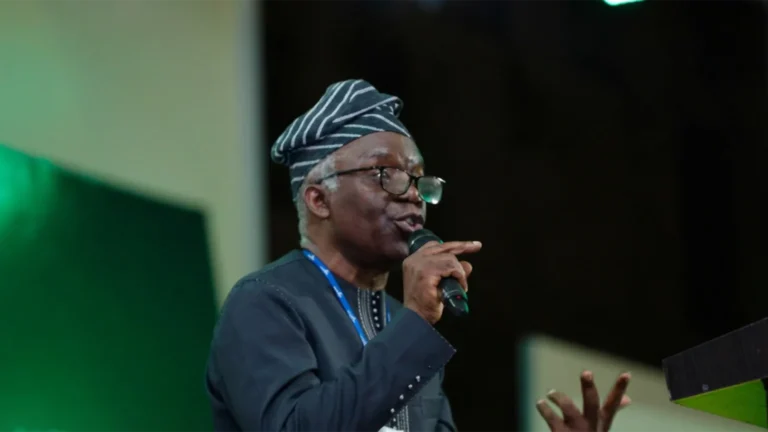
How Tinubu turned democratic promise into civilian dictatorship and why Atiku Abubakar and the ADC are Nigeria’s only path back to dignity.
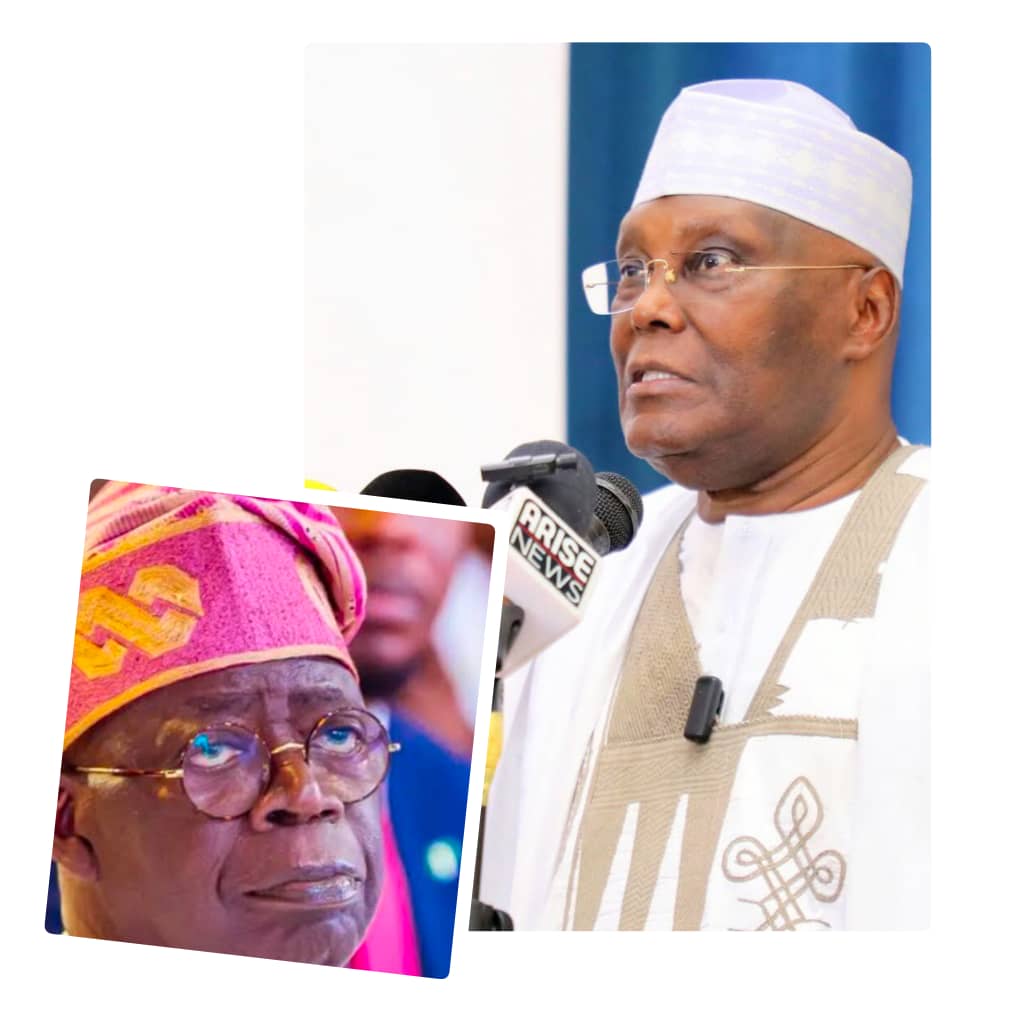
Aare Amerijoye DOT.B
Nigeria has been here before. Not under a uniform. Not under a decree. But under the suffocating weight of a civilian administration that wears the vocabulary of democracy while practising the mechanics of authoritarian rule.
History teaches a hard lesson this nation has paid for repeatedly in lost decades, buried potential, and the quiet exodus of its most brilliant minds: that the most dangerous dictator is not always the one who arrives in a khaki uniform. Sometimes the most dangerous dictator arrives in a flowing agbada, carrying a broom, speaking the language of change , and stealing the future in plain sight.
Bola Ahmed Tinubu arrived with a broom. He told Nigerians he would sweep the house clean. What he has swept, with brutal efficiency, is the savings of the poor, the earnings of the working class, the purchasing power of the naira, and the credibility of Nigerian institutions.
He has swept away the elementary dignity of a people who dared to believe that governance could actually serve them. Two years into this administration, Nigeria does not feel swept clean. Nigeria feels stripped bare. The house is not tidy. It is empty.
He came with a broom. He swept away our future. What he left behind was not a clean floor. It was bare concrete — and a people abandoned on it, alone.
THE ANATOMY OF CIVILIAN DICTATORSHIP.
Political science has long established that civilian dictatorship is not merely possible — it is, in many ways, more insidious than military rule. The military dictator is at least honest about his contempt for the governed. He announces his coup. He suspends the constitution openly. He dares you to object at the barrel of a gun.
The civilian dictator is craftier and more patient. He keeps the institutions nominally intact. He holds elections, stages primaries, conducts inaugurations with full ceremonial pomp. But behind that scaffolding of democratic theatre, the essential transaction of power is identical to any military junta: the many are made to serve the interests of the very few.
Examine the Tinubu administration through this lens and the picture is unambiguous. The fuel subsidy removal of May 29, 2023 was announced on Inauguration Day itself — without a single social safety net in place, without a phased withdrawal strategy, without the basic courtesy of prior national consultation.
Inflation, which stood at approximately 22 percent when Tinubu assumed office, surged past 33.95 percent by December 2024 , the highest rate recorded in nearly three decades, according to the National Bureau of Statistics. The naira, which exchanged at N461 to the dollar on May 29, 2023, crashed past N1,600 to the dollar by early 2024 , a collapse of over 70 percent that obliterated the life savings of tens of millions of ordinary Nigerians in less than twelve months.
These numbers are not partisan accusations. They are the published data of Nigeria’s own National Bureau of Statistics, the Central Bank of Nigeria, and the World Bank’s Nigeria Economic Update.
And yet the administration does not govern as though it recognises a crisis. It governs as though the crisis is the point. Every emergency circular, every opaque CBN directive, every sudden suspension of an institution that dares to assert its independence carries the unmistakable signature of a government that regards the Nigerian state not as a public trust but as a personal estate.
Inflation at 33.95 percent. The naira down 70 percent in twelve months. Fuel prices that devour a worker’s daily wage before he reaches the factory gate. This is not governance. This is the systematic impoverishment of a nation by those sworn to protect it.
HIS TURN. NOT NIGERIA’S TURN.
There is a statement Bola Tinubu made, before and after the 2023 election, that deserves to be inscribed permanently into the national memory. The statement was this: “It is my turn.” Three words. The most honest political declaration uttered by a Nigerian presidential candidate in a generation. Not “it is Nigeria’s time.” Not “the people have chosen me.” Not “I offer myself in service.” It is my turn.
That statement is the unguarded confession of the civilian dictator. It is the explicit articulation of a philosophy of governance in which the presidency is not a mandate earned from the electorate but a prize claimed by a patron whose investment in the political machinery of a nation has finally come due.
When a man tells you that power is his turn, he is giving you the complete manual for how he will govern. He will govern for himself. He will govern for his network. He will govern as a man collecting a debt, not as a servant answering a call. And Nigeria, to its immense cost, has discovered that this was no idle boast. It was a precise statement of intent.
Nigeria heard him, and Nigeria answered. Over 14 million Nigerians, when given the choice at the ballot box in February 2023, chose someone other than Tinubu. Atiku Abubakar received 6.984 million votes. Peter Obi received 6.101 million votes. The combined arithmetic of Nigerians who voted against the APC presidential candidate exceeded the votes declared for Tinubu by millions.
The Presidential Election Petition Court, in its September 2023 judgment, had before it documented evidence of manipulated results, corrupted IREV upload processes, and INEC’s failure to comply with its own lawful regulations , evidence submitted across petitions running to several thousand pages of exhibits.
The courts upheld the result. But no court ruling can erase what the Nigerian people know in their bones: that the mandate of 2023 was not freely given. It was extracted. The difference between a verdict and a truth is the difference between what power can enforce and what history will record.
Over 14 million Nigerians said NOT TINUBU at the ballot box in 2023. That verdict was overruled by those who hold the machinery. In 2027, the people hold the machinery. And they will use it.
WHAT ATIKU BUILT: THE RECORD THE APC CANNOT ERASE.
The enemies of Atiku Abubakar have invested enormous energy constructing a caricature. They have traded in innuendo, recycled allegations, and the politics of relentless distraction. But the record is stubborn. It does not bend under propaganda. It does not fade under repetition. It stands in the cold, unforgiving light of documented national performance.
When Atiku Abubakar served as Vice President of the Federal Republic from 1999 to 2007, Nigeria’s Gross Domestic Product expanded from approximately 36 billion dollars to over 166 billion dollars , a growth trajectory unmatched before or since in this republic’s economic history. Foreign direct investment grew from 1.1 billion dollars to over 6 billion dollars.
The telecommunications sector was liberalised under his direct chairmanship of the National Council on Privatisation — an intervention that shattered the monopoly of NITEL, birthed a competitive mobile industry, and connected a nation that had been strangled by analogue isolation. That industry today serves over 220 million subscriber lines and underpins commerce, banking, agriculture, healthcare and education across every state of the federation.
This is not a campaign claim. It is the documented record of the World Bank, the IMF, and the archived quarterly reports of Nigeria’s own Central Bank.
This is the man that Tinubu’s APC asks Nigerians to set aside. This is the architect of measurable national growth they pit against a presidency whose singular verifiable achievement, two years in, is the organised destruction of Nigerian purchasing power.
The comparison is not a contest of ideologies or regions or religions. It is a contest between a builder and a demolisher. Between a man who governed at the highest level and produced growth, and a man who governs at the highest level and produces collapse. Nigerians do not need an economist to navigate that choice. They need only the price of garri, the cost of diesel, the school fees paid in borrowed money, and the memory of what life felt like before this administration arrived with its broom.
Atiku built. Tinubu has destroyed. GDP from $36bn to $166bn under one man’s watch. Economic freefall and national humiliation under the other’s. This is not argument. This is the arithmetic of governance — and Nigerians can count.
A MESSAGE TO EVERY EKITI SON AND DAUGHTER
Ekiti State , the land of honour, of learning, of men and women who have never confused noise for wisdom or pressure for truth — occupies a special place in Nigeria’s democratic conscience. Ekiti people produced some of the finest constitutional minds, the most principled educators, and the most uncompromising defenders of due process this nation has ever known.
They are not a people easily deceived by the dressing of power. They weigh evidence. They consult history. They remember.
And Ekiti people remember precisely what this administration has done to their teachers the very backbone of Ekiti’s identity ,whose real wages have been consumed by inflation to the point where a month’s salary no longer covers a month’s transport.
They remember the small traders of Ikole, Ado-Ekiti, Aramoko, Ikere and Omuo whose businesses have been gutted by a collapsed currency and unaffordable diesel. They remember the civil servants who built their retirement calculations on a naira that no longer exists. Ekiti people know the difference between a government that serves and a government that extracts. They are living that difference every single day.
The ADC’s mobilisation in Ekiti is not an external imposition. It is a homecoming of political purpose. Every ward, every local government, every polling unit across this great state is a staging ground for the 2027 verdict.
The invitation to every Ekiti son and daughter is not ceremonial. It is urgent. Register. Organise. Secure the delegate. Defend the vote. The land of honour must deliver an honourable result and that result is written in the name of Atiku Abubakar on the ballot of the African Democratic Congress.
Ekiti produced scholars, patriots and defenders of democracy. In 2027, Ekiti will not be a spectator. Ekiti will be the turning point. The ADC is the vehicle. Atiku is the candidate. The verdict is waiting to be delivered.
THE COALITION IMPERATIVE: WHY THE ADC IS THE VEHICLE.
Nigeria’s democratic history teaches one lesson with the consistency of iron: no single opposition formation, however credible its candidate and however deep its regional roots, can dislodge an incumbent administration that commands the full apparatus of the federal state without a coalition that consolidates the opposition vote.
This is not pessimism. It is the mathematics of Nigerian electoral reality, and mathematics is not susceptible to wishful thinking.
In 2015, the APC was itself the product of exactly this logic. The ACN, the CPC, the ANPP and a significant PDP faction recognised that fragmentation was the best friend of incumbency, and that unity was the only path to victory. They merged. They mobilised. They won.
Muhammadu Buhari, who had contested and lost three previous presidential elections, became President of the Federal Republic not because he suddenly became more popular but because the opposition finally stopped dividing the vote and started multiplying the force. The lesson of 2015 is written in permanent political ink: a united Nigerian opposition is invincible.
The African Democratic Congress carries that lesson into 2027 with both hands. It enters the election cycle with national structures, geopolitical spread, and a candidate in Atiku Abubakar whose name is not merely recognised across Nigeria’s thirty-six states — it is respected, because it is attached to a record.
What the ADC now requires is the galvanisation of every Nigerian who voted opposition in 2023, and the mobilisation of the millions who stayed home in the paralysis of despair. Those millions are not apolitical. They are exhausted. There is a difference. And exhaustion, properly organised, becomes the most dangerous force in democratic politics. It becomes a landslide.
The Narrative Force exists to ensure that the argument for this coalition is made at full volume, in every medium, to every audience, without apology and without fatigue. The work is not theoretical. It is structural, organisational, and unrelenting. The 2027 mandate is not a dream. It is a plan in execution.
A united Nigerian opposition has never lost. In 2015, unity ended sixteen years of PDP. In 2027, unity will end the APC’s assault on Nigerian dignity. The ADC is the coalition. Atiku is the candidate. History does not repeat itself but it does rhyme, loudly, for those willing to organise.
THE VERDICT OF HISTORY.
Every civilian administration in Nigerian history that governed with arrogance instead of accountability, that treated the state as personal inheritance rather than public trust, that suppressed dissent through patronage rather than the persuasion of results, has been delivered ultimately to the judgement of history and history has never been kind.
The PDP’s sixteen years of accumulated impunity ended in the people’s verdict of March 2015. The APC that swept in on the promise of change has itself become what it replaced, only more brazen, only more contemptuous, only more convinced that the patience of the Nigerian people is inexhaustible. It is not. Every flood has a bank. Every patience has a breaking point. And 2027 is that point.
The reckoning will not come from newspapers alone, though the role of a free press in naming power honestly is not decorative ,it is structural to democracy’s survival. It will not come from social media alone, though the velocity with which truth now travels has permanently altered the cost of political lying.
It will come, as democratic verdicts must always come, from citizens who carry their voter cards with the gravity of a weapon, who know their polling units as intimately as they know their own streets, who arrive on election morning not in hope but in purpose, who stand their ground against intimidation as men and women who know that their vote is not a favour to a politician — it is a command to power.
That is the final demand of this moment. Not despair. Not the hollow comfort of online outrage that changes nothing. Not the paralysis of cynicism that hands the field to those who depend on the absence of organised resistance.
The demand is organised, disciplined, purposeful democratic action. The kind that converts righteous anger into governance. The kind that transforms arithmetic into authority. The kind that takes a nation by the collar and walks it back from the edge. Nigeria has done it before. Nigeria will do it again. And this time, the foundation will not be the false promise of a broom. It will be the proven record of a builder.
It is Atiku. It is ADC. It is 2027. It is Nigeria’s time and Nigeria’s time cannot be stolen twice.
History is not written by those who complain loudest. It is written by those who organise hardest, mobilise widest, and vote with the full weight of their conviction. Nigeria’s chapter of renewal is open. The pen is in your hand. Write it with your ballot.
Aare Amerijoye DOT.B
Director General,
The Narrative Force