Aare Amerijoye DOT.B
There are moments in a nation’s life when the market becomes more honest than the parliament.
When the price of rice speaks louder than campaign speeches.
When the cost of bread humiliates statistics.
When a mother stands before a pot and calculates not flavour, but survival.
Nigeria is living through such a moment.
This is not hardship in theory. It is hardship that queues in markets at dawn. It is hardship that reduces protein to memory. It is hardship that turns salary into illusion before the month is half spent.
Across the country, food inflation has not merely increased; it has invaded the psychology of the average family. A basket of tomatoes that once cost ₦8,000 now demands ₦23,000 or more. Rice that once sustained households now drains income in days. Transport fares rise faster than wages. Small businesses close quietly to avoid the humiliation of visible collapse.
Reality does not negotiate.
It records.
And it is recording everything.
When theory collides with the kitchen
Economic models look elegant in policy documents. Inflation looks brutal in a market stall.
Inflation enters kitchens without invitation. It shrinks meals without apology. It forces parents into sacrifices their children must never fully understand.
Two years ago, ₦50,000 could stretch across food, transport, and modest obligations. Today, it dissolves under groceries alone. What used to be weekly budgeting has become daily rationing. What used to be modest comfort has become calculated survival.
But the deepest tremor is within the middle class.
The teacher who once saved small amounts monthly now withdraws savings to cover rent.
The civil servant who once managed school fees with planning now negotiates extensions.The young professional who once dreamed of home ownership now postpones indefinitely.
The middle class is the stabiliser of any economy. When it begins to compress, confidence collapses silently.Consumption slows. Investment retreats. Anxiety spreads. A shrinking middle class is not just a social issue; it is an economic alarm bell.
That alarm is ringing.
A currency that struggles to stabilise invites imported inflation.A production base that fails to expand invites scarcity.A reform process without cushioning invites shock.
Shock without sequencing produces volatility.Volatility without productivity produces inflation.Inflation without wage growth produces despair.
The elite debate policy. The market absorbs consequence.
The architecture of consequence
Nations rarely implode dramatically. They weaken gradually , through purchasing power decay, enterprise contraction, and erosion of trust.
Consider the structural contrast.
When reforms are abrupt but productivity has not been scaled, prices spike before incomes adjust.When currency confidence weakens, import costs transmit immediately into food and fuel.When small enterprises cannot access stable credit, they reduce staff or close quietly.
Now consider a different architecture.
When agricultural productivity expands deliberately, supply increases and price pressure eases.When investor confidence stabilises currency expectations, import volatility reduces.When fiscal decentralisation empowers states to compete productively, economic diversity grows.
One path compresses opportunity.The other expands it.
One tolerates prolonged strain.The other engineers relief.
The difference is not rhetorical.It is structural.
Imagining another trajectory
Imagine a Nigeria where market prices stop surprising families.
Where food supply expands because farmers are financed, protected, and connected to efficient logistics. Where storage facilities reduce waste and stabilise supply cycles. Where transport costs decline because infrastructure works and fuel volatility moderates.
Imagine walking into a market and knowing that the price of rice next week will not double without warning. Imagine small businesses planning six months ahead without fearing currency swings. Imagine young graduates choosing opportunity at home instead of scanning visa portals in frustration.
Imagine a naira that signals confidence rather than anxiety. Imagine investors entering not tentatively, but decisively. Imagine states competing to attract industry instead of competing for federal allocation.
Imagine predictability replacing panic.Expansion replacing contraction. Production replacing dependency.
When productivity rises, supply strengthens.When supply strengthens, prices stabilise.When prices stabilise, purchasing power returns.When purchasing power returns, dignity returns.
And when dignity returns, a nation breathes again.
That is not fantasy. It is economic sequencing executed competently.
The meaning of the bridge
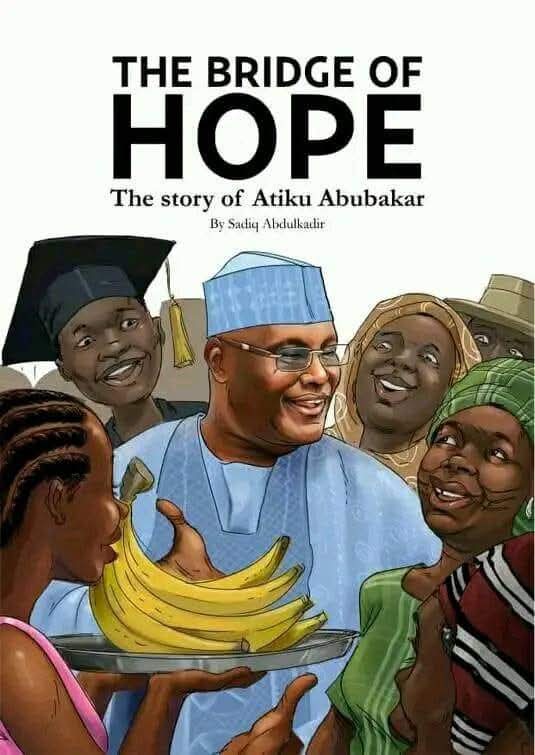
The symbolism of The Bridge of Hope is neither sentimental nor decorative.
A bridge connects two realities.
On one side stands compression , shrinking meals, unstable markets, anxious households, contracting enterprises.On the other side stands recalibration , structured reform, disciplined execution, productive expansion, restored confidence.
Hope is not naïve optimism. It is belief anchored in credible architecture.
Bridges are not built through applause. They are constructed through design.
Nigeria is not asking for spectacle. It is asking for structure.
Supermarket receipts have become political documents.Fuel pumps have become economic verdicts.Market stalls have become national scorecards.
History is precise in seasons like this.
It does not prolong volatility indefinitely.It does not reward sustained compression.It does not ignore prolonged strain.
Nations pivot when pressure accumulates.They recalibrate when endurance reaches its limit.They choose expansion over exhaustion.
Nigeria now stands at that pivot.
Between continuation and correction.Between strain and structure.Between anxiety and architecture.
Bridges are built when necessity becomes undeniable.
And necessity is no longer whispering.
It is speaking.
Aare Amerijoye DOT.B
Director General,
The Narrative Force