Aare Amerijoye DOT.B
“Nigeria is not suffering because the APC is unbeatable. Nigeria is suffering because too many people who could vote chose silence. That silence must end in 2027.”
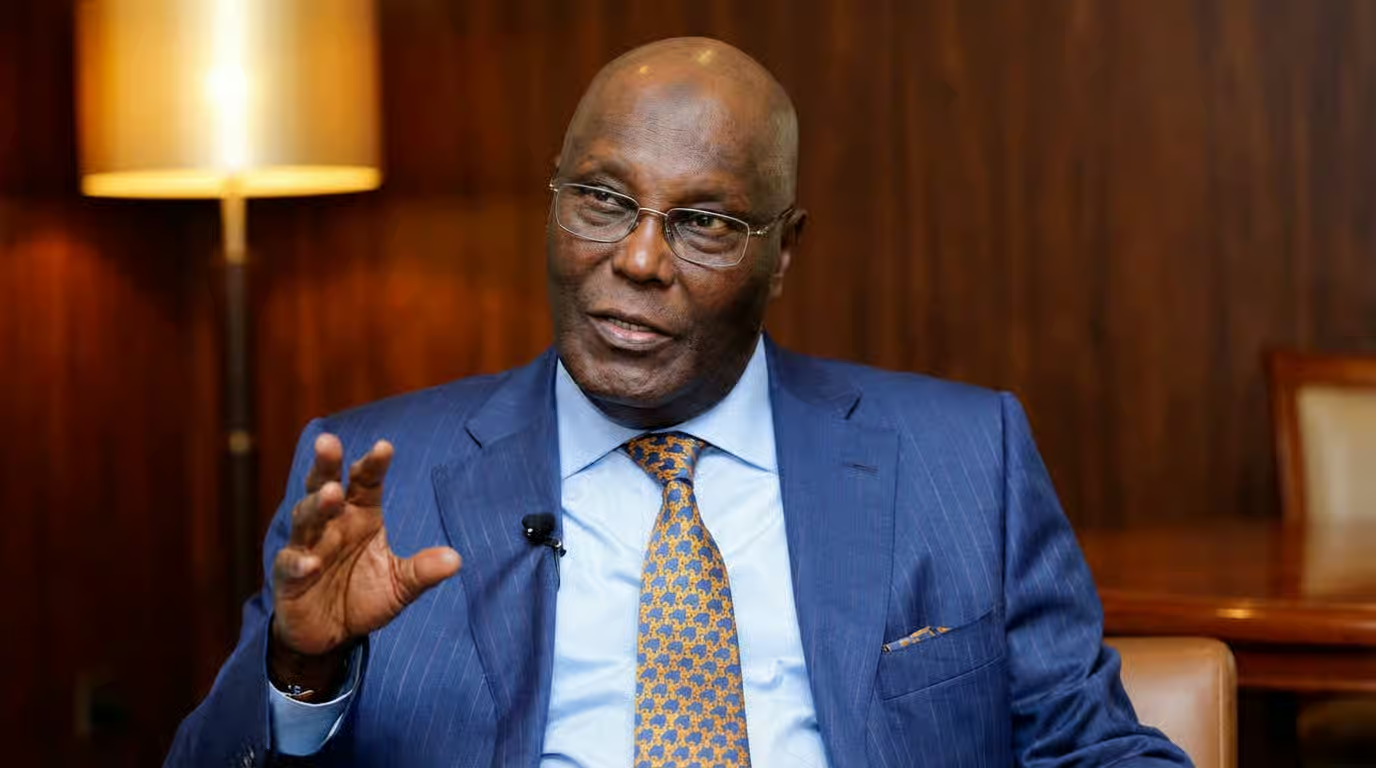
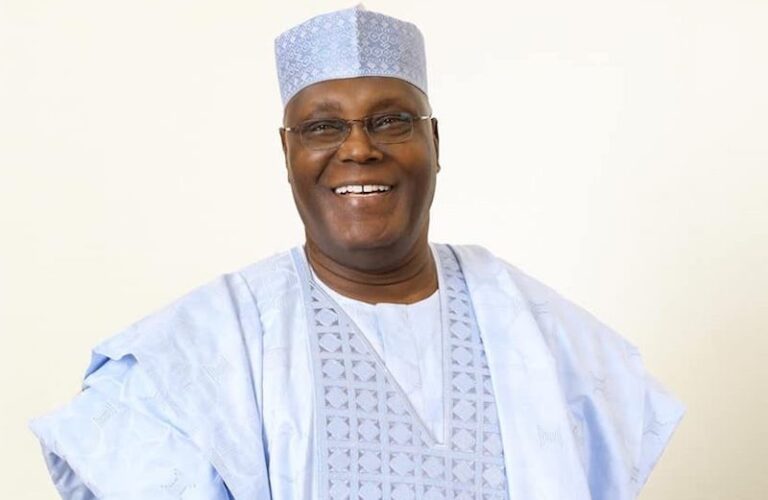
Within the African Democratic Congress today sit two of the most consequential political figures in Nigeria’s contemporary democratic history. Atiku Abubakar, former Vice President, five-time presidential contestant, and the man whose 2019 campaign produced 11.91 million votes, the highest opposition presidential vote total ever recorded in Nigerian electoral history.
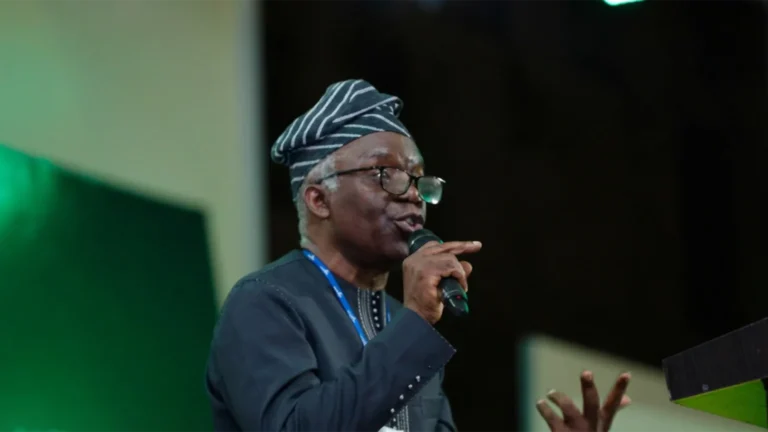
And Peter Obi, former Governor of Anambra State, the 2023 phenomenon whose campaign mobilised a genuinely unprecedented wave of youth energy, delivering 6.1 million votes through sheer civic inspiration.
These two men are not in rival parties. They are in the same party. They are, whether their respective online camps acknowledge it or not, on the same side of the most important political contest Nigeria will face this decade.
And the fact that Obi supporters are currently burning irreplaceable time in digital rivalry against Atiku and daily friction commentary is not merely tactically foolish. It is a sabotage of the very mission that brought both men into ADC.
This article is addressed directly to every ADC member, supporter, sympathiser, and leader. The message is simple, urgent, and non-negotiable: the party is larger than any aspirant, the mission is larger than any personality, and 2027 will not wait.
Let us establish the foundational truth that every ADC member must carry into every conversation, every ward meeting, and every community engagement from today. Nigeria is not governed by the APC because Nigerians love the APC.
Nigeria is governed by the APC because millions of Nigerians who are suffering under this administration either did not register to vote, did not collect their PVC, or did not turn up on election day.
This is not a small failure. It is a civilisational failure of self-belief, and it is the single greatest threat to Nigeria’s democratic future. ADC must confront it without flinching.
Consider the devastating arithmetic of Nigerian electoral participation. In the 2023 presidential election, INEC registered approximately 93.5 million voters. Total valid votes cast were barely 25 million, meaning roughly 68 million registered voters stayed at home.
Sixty-eight million. In a country convulsing under economic anguish, sixty-eight million registered voters chose silence over their own salvation. That silence did not just elect a government. It licenced suffering.
And the warning signs have not abated. The recent local government elections conducted across the Federal Capital Territory delivered a turnout so devastatingly low that it must be described not as an electoral exercise but as a democratic emergency.
In Nigeria’s seat of federal power, in the very territory that houses the institutions of national governance, eligible voters stayed away in numbers that should alarm every opposition leader, every party official, and every Nigerian who genuinely believes that the ballot is the instrument of change.
When apathy takes root in Abuja, it does not stay in Abuja. It spreads its roots into the national political soil and poisons the very possibility of popular democratic expression.
The FCT local government elections have now confirmed, with painful local specificity, that apathy is not merely a national abstraction. It is a ward-by-ward, community-by-community crisis that is actively eroding the opposition’s greatest natural advantage, which is the sheer numerical weight of Nigerians who want change but have not yet been convinced that their participation will deliver it.
Bola Tinubu won the presidency with 8.79 million votes, less than 10% of Nigeria’s registered voter population. This is not a testament to his popularity. It is a testament to the catastrophic, self-defeating phenomenon of voter apathy that Nigerian opposition movements have chronically failed to confront with the seriousness it deserves.
The 2027 election will not be decided by any political machine. It will be decided by whether ordinary Nigerians decide that their vote is worth casting. The trader in Onitsha whose margins have been destroyed by inflation. The civil servant in Makurdi whose salary buys half what it bought two years ago.
The graduate in Kaduna who cannot find work. The mother in Owerri stretching a shrinking income across growing family needs. Converting that suffering into organised, registered, mobilised voter participation is ADC’s primary mission. Everything else is secondary.
Let us be honest about what each man brings, because honesty, not flattery, is what this moment demands. Atiku Abubakar brings depth. He brings the organisational memory of five presidential campaigns across Nigeria’s six geopolitical zones. He brings relationships with communities, professional bodies, and grassroots structures built across three decades of active national politics.
He brings governmental experience as Vice President, eight years of understanding how Nigeria’s federal architecture actually functions, meaning he speaks about fixing this economy not as aspiration but as institutional knowledge. His 11.91 million votes in 2019 were built ward by ward, relationship by relationship, across every state in the federation.
He brings something else that no other aspirant in this race can match: a formidable financial and political war chest assembled across decades of business enterprise and political investment, and a global network of connections spanning international financial institutions, foreign governments, and global policy circles that positions him uniquely to restore Nigeria’s battered credibility on the world stage.
A candidate who can walk into rooms in London, Washington, Dubai, and Beijing and be received as a serious, known, and respected figure is not merely a presidential aspirant. He is a ready statesman. And in a moment when Nigeria’s international standing has suffered grievously, that distinction is not a luxury. It is a necessity.
Peter Obi brings energy. He carries the trust of millions of young Nigerians who had abandoned the political process before his 2023 campaign gave them a reason to return. He brings a reform credential and cross-regional appeal, particularly amongst youth and urban voters, that complements rather than duplicates Atiku’s organisational strengths.
His 6.1 million votes represented a demographic awakening Nigerian politics had not seen in a generation. Together, these two men carry complementary mandates that, properly united, represent a force no incumbent can comfortably face at the ballot box.
Together, their combined 2023 vote total of 13.08 million exceeded Tinubu’s 8.79 million by nearly five million votes. Votes that existed amongst the people but were split between two separate structures that could not unite in time.
The lesson is not that they lacked supporters. The lesson is that uncoordinated passion cannot defeat organised patience.
In 2027, inside ADC, that coordination is possible. But it must be built now, not at a press conference six weeks before the election, but across twelve or eleven months of deliberate, ward-level relationship building between both camps, converting their respective bases into one unified ground force.
Peter Obi is not yet the candidate of the Party. Atiku Abubakar is not yet the candidate of the Party. What exists today is a party with two exceptional figures, both carrying genuine national mandates, both with every reason to work together towards 2027. Peter Obi’s greatest contribution to Nigeria’s liberation may not be as presidential flagbearer.
It may be as the man who delivers the youth vote, the South-East vote, and the urban professional vote to an ADC presidential campaign led by Atiku Abubakar, the most experienced, most nationally networked, and most financially resourced opposition figure in this race.
A Peter Obi who campaigns vigorously as Vice Presidential candidate for ADC’s candidate and converts his passionate base into polling unit soldiers is not diminished. He is essential.
His supporters must understand that his future, and theirs, lives inside a winning ADC, not outside a fragmented opposition. Both camps must decide whether 2027 is about their aspirant or about Nigeria’s 33.95% inflation, quintupled fuel costs, 300% electricity tariff increases, and a naira that shed over 70% of its value in under a year.
The answer must always be Nigeria. Not a name. Not a camp. Not a social media following. Nigeria, and the millions of her people whose daily dignity has been systematically dismantled by an administration that neither anticipated their pain nor prepared for its consequences.
Nigeria’s 2027 election will be won in the streets, the markets, the churches, the mosques, the motor parks, and the community meetings, not on Twitter. It will be won by ADC members who go back to their wards and register ten unregistered voters.
By supporters who ensure their neighbours collect their PVC. By delegates who return from every meeting as mobilisation commanders, not commentators.
The ADC member spending daily hours online critiquing aspirants whilst doing nothing in their polling unit is not an activist. They are a spectator. And spectators do not win elections. They attend autopsies.
When ADC wins, the councillor wins. The senator wins. The local government chairman wins. The ordinary Nigerian crushed under this administration’s weight wins. Winning is collective.
The work must therefore be collective, beginning today, in every ward, across every state, at every polling unit in this federation.
The question is not which aspirant you prefer. The question is what you are personally doing to convert one more suffering Nigerian into one more motivated ADC voter. Answer it with action. Not tomorrow. Today.
It does not stop you from promoting your preferred aspirant. That is your democratic right and nobody can take it from you. But every honest ADC member must know and internalise this truth: making injurious statements against any aspirant within this party does not strengthen your preferred candidate. It weakens the party. And a weakened party cannot win. And if ADC does not win, nobody you are fighting for wins either.
Promote with passion. Organise with urgency. But never forget that the party is the vehicle, and a vehicle you damage on the journey cannot deliver you to the destination.
Aare Amerijoye DOT.B
Director General,
The Narrative Force