A Strategic Charge to Every ADC Member in the Wake of the FCT Area Council Elections, February 2026
Aare Amerijoye DOT.B
I. THE FCT RESULT: READ IT CORRECTLY OR MISREAD YOURSELF INTO DEFEAT.
On 21 February 2026, the APC swept five of six FCT Area Council chairmanship seats. Christopher Maikalangu won AMAC with 40,295 votes. The ADC came second with 12,109. The narratives now flooding social media oscillate between despair and delusion. Both responses are luxuries the ADC cannot afford.
Read the data without emotion. AMAC alone has 837,338 registered voters. Total accredited on election day: 65,676, which is fewer than 8 percent turnout. The APC did not win because Abuja loves Tinubu. It won because, within a catastrophically thin turnout, its machine was more organised at the polling unit. This is not evidence of APC dominance. It is evidence of ADC absence.
The sharpest indictment comes from 2023. Peter Obi won the FCT presidential vote with 59 percent. Tinubu managed 19 percent. Those voters did not migrate to the APC between 2023 and February 2026. The naira has not recovered. Food remains unaffordable. Insecurity festers.
The APC brought a machine. The ADC brought a mood. Machines win. Moods do not. The FCT election is a diagnosis, not a death sentence. The prescription is not more lamentation. It is organisation.
II. THREE DELUSIONS THAT MUST BE KILLED TODAY
The greatest threat to the opposition is not the APC. It is the comfortable lie, the argument that soothes sentiment whilst guaranteeing defeat. Three such lies are presently circulating with dangerous velocity and they must be confronted without diplomatic softening.
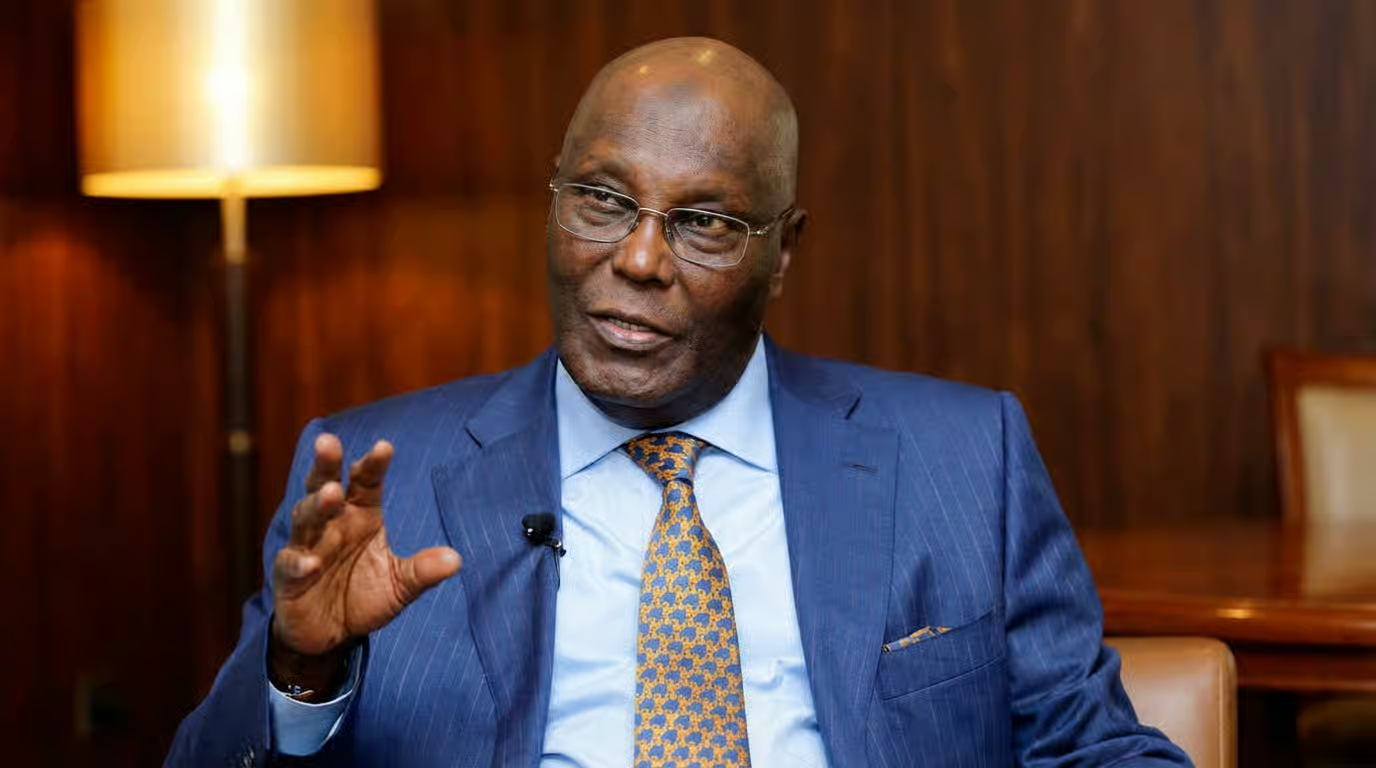
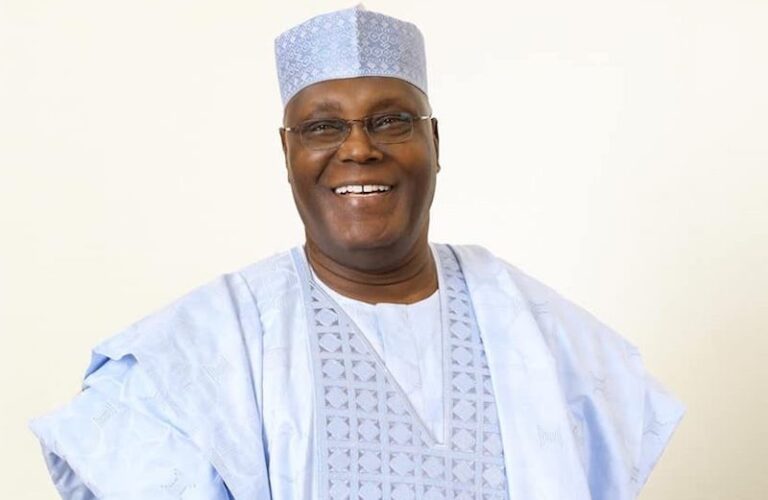
The first is that Atiku Abubakar should not be the presidential candidate. Strip away the emotion and read the ballot. In 2023, running against an incumbent’s resources, a fragmented PDP, and the extraordinary momentum of Labour Party’s insurgency, Atiku still won nine states in the North. Five in the North East, Adamawa, Bauchi, Gombe, Taraba, and Yobe. Four in the North West, Kaduna, Katsina, Sokoto, and Kebbi.
This is not the footprint of a spent force. This is the deepest, most durable electoral infrastructure in Northern Nigeria, built over thirty years of political investment, personal loyalty networks, and ethnic-political trust stretching from the Fulani pastoral heartlands and the Hausa urban strongholds of the North West, to the Kanuri historic centres, the Shuwa Arab communities, and the Babur, Marghi, Bura, and Bade homelands of the North East. Deny him the ticket without naming a specific alternative who delivers those same nine states, and you have written Tinubu’s re-election speech for him.
The second delusion is the belief that the North will enthusiastically fall in behind Peter Obi as a presidential candidate. It will not, and candor requires that we say so without flinching. If Obi wins in 2027 and serves out two full constitutional terms, the North would not see the presidency again until 2035 , twelve unbroken years on the outside looking in. And that assumes goodwill that does not exist: few in Northern Nigeria would trust Obi to serve even a single term without the region paying a steep political price.
The numbers make the grievance concrete. Southern Nigeria would have accumulated 21 years and one month in the presidency, while the North would have managed a mere 10 years and 11 months. That is not an abstraction. It is a ledger that Northern political actors read carefully and do not forget.
To acknowledge this is not tribalism. It is a frank recognition of the power-rotation sensitivities of a region that accounts for nearly half of Nigeria’s population ,sensitivities that are historically grounded, politically legitimate, and cannot be wished away with appeals to merit or momentum.
Obi’s 2023 electoral map makes the structural problem plain. His votes were overwhelmingly concentrated in the South East, parts of the South South, and urban youth corridors scattered across the country. That coalition, however energetic and genuine, cannot on its own satisfy the constitutional requirement of 25 percent of votes across 24 states.
Clearing that bar demands Northern consolidation, and Northern consolidation of that magnitude will only follow a Northern presidential candidate. To pretend otherwise is not a strategy. It is self-indulgence.
The third and most operationally lethal delusion is that Atiku and Obi can afford to drift separately until the formal campaign season opens. Political coalitions are not built at press conferences. They are built across eighteen months of deliberate, ward-level relationship cultivation, policy alignment, and trust architecture.
Every week the two camps spend in unnecessary friction is a week Tinubu’s machine consolidates local government chairmen, distributes federal contracts as political currency, and cements its polling unit presence. Time is not neutral. It is the APC’s most powerful resource right now.
III. THE COALITION IS READY. NOW THE PEOPLE MUST ACT.
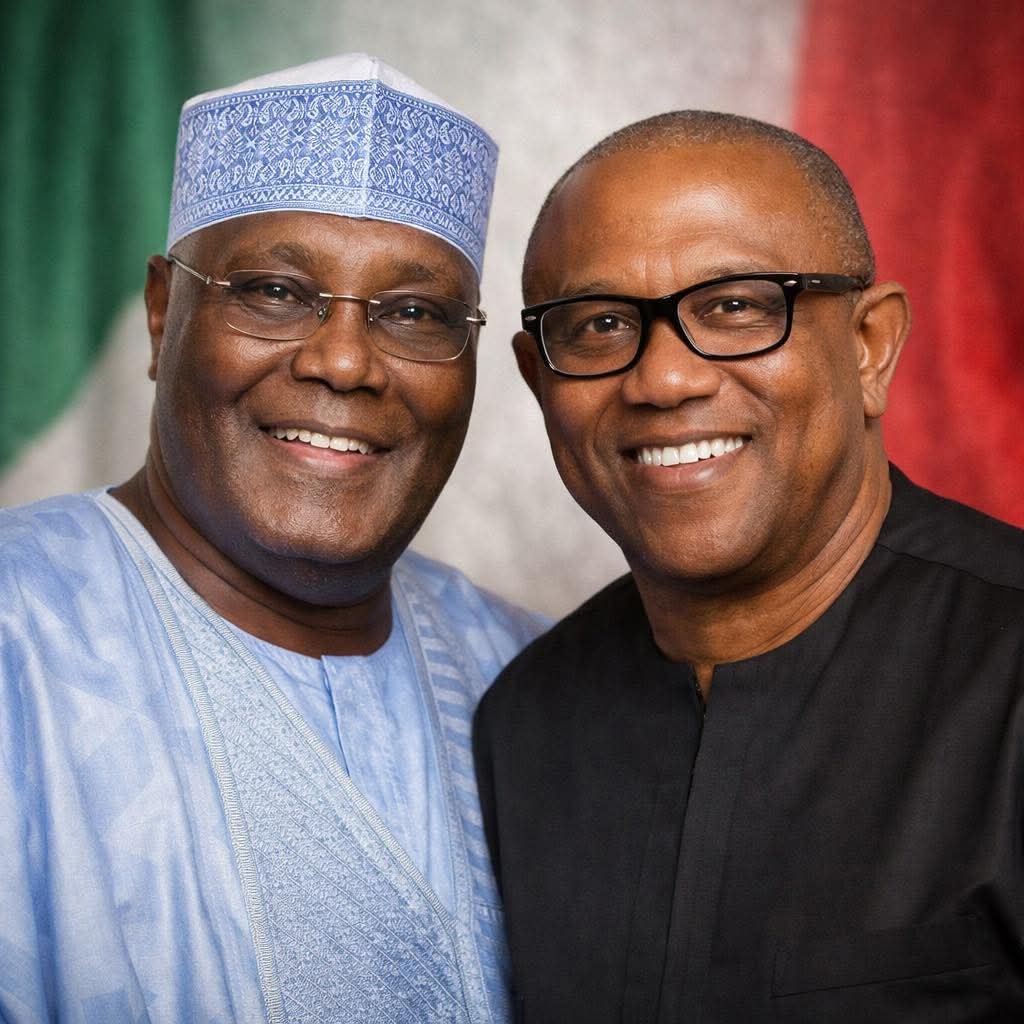
The ADC today possesses something no Nigerian opposition has previously held going into a presidential election. Atiku Abubakar, Peter Obi, Rotimi Amaechi, and Nasir El-Rufai, four of the most consequential opposition figures in modern Nigerian politics, are now operating under one roof, in one party, with one mission.
Atiku, having participated in the unveiling of the ADC in July 2025 and worked assiduously to galvanise people into the party, formally completed that commitment in November 2025, resigning from the PDP and declaring unequivocally for the coalition opposing Tinubu.
On the last day of 2025, Peter Obi followed in Enugu, declaring that they were ending the year with the hope that 2026 would begin a journey of rescuing their country. Together, Atiku and Obi collectively garnered over 13 million votes in 2023, whilst running against each other on separate tickets, splitting resources, confusing voters, and fighting on two separate organisational fronts.
United under one banner, that arithmetic is devastating to the APC before a single new voter is added.
IV. THE CHEMISTRY OF ATIKU AND OBI: WORKING THE FORMULA
In chemistry, titration is not merely knowing the endpoint. Every reagent must be added precisely, in sequence, or the experiment is contaminated regardless of how clearly the answer is written. The Atiku and Obi ticket is Nigeria’s 2027 titration endpoint. The answer is visible. The formula must now be executed.
Their electoral maps do not overlap. They complement. Atiku’s North East and North West combined with Obi’s South East and South South create a national base that already exceeded Tinubu’s 2023 total in raw votes, 13.08 million against 8.79 million. The opposition did not lose the 2023 election. It lost unity. Restore unity and the arithmetic is overwhelming before a single new voter is mobilised.
But the alliance requires more than a joint announcement. It requires, first, visible and sustained public cooperation on national issues beginning immediately, joint statements on economic policy, insecurity, and educational collapse. Not merely because the optics are useful, though they are, but because the Obi voter base, young, idealistic, and constitutionally suspicious of transactional politics, must see demonstrated alignment over time before it will trust it.
Obi must articulate clearly and repeatedly why this alliance represents genuine governance transformation. Atiku must continue to demonstrate, through the calibre of people around him and through clear, measurable policy commitments, that his experience, national reach, and long-tested leadership uniquely equip him to meet the demands of this defining moment.
Second, they must produce a published joint governance compact, not a vague manifesto, but a specific, measurable document committing to concrete reforms in economic restructuring, security architecture, anti-corruption mechanisms, and federal character. Nigerians are not voting against Tinubu on faith alone. They are voting for something. Give them something credible.
Third, the internal architecture of the alliance must be negotiated now, the presidential ticket configuration, the party platform, campaign resource allocation by region, and post-victory governance responsibilities. These conversations are uncomfortable precisely because they require both camps to discuss power before they hold it. They are also non-negotiable. Every alliance in Nigerian history that deferred these questions found them exploding publicly at the moment of maximum vulnerability.
V. THIS VICTORY BELONGS TO EVERYONE. ACT LIKE IT.
But here is where the conversation must shift, permanently, irreversibly, and without apology. The victory of ADC in 2027 is not Atiku’s project alone. It is not Obi’s project alone. It is not the project of any single presidential aspirant. Stop reducing a national liberation mission to a personality contest.
The man who wants to be a councillor in Borno must want ADC to win with the same burning urgency as the man being considered for the presidency. The woman seeking a State House of Assembly seat in Imo must organise her ward with the same ferocity as any national figure. The aspiring local government chairman in Kogi, the prospective National Assembly member in Sokoto, the individual who hopes for a federal appointment, a state appointment, a local government posting, every single one of these people has a direct, personal, material stake in 2027 that goes far beyond their admiration or criticism of any presidential aspirant.
When ADC wins, the councillor wins. The chairman wins. The lawmaker wins. The appointee wins. The ordinary Nigerian crushed under the weight of this APC administration wins. Winning is collective. Therefore the work must be collective.
Anyone within the ADC who is online daily critiquing presidential aspirants whilst doing nothing in their polling unit is not an activist. They are a spectator performing the costume of participation. Spectators do not win elections. They attend autopsies. Every ADC member must ask one question, beginning today. What am I personally deploying, my resources, my time, my energy, towards winning my polling unit for ADC? Not for Atiku. Not for Obi. Not for any aspirant.
For ADC. For yourself. For your community’s liberation from the anguish this APC administration has visited upon ordinary Nigerian lives.
VI. THE PEOPLE ARE THE MAJORITY. GO AND REACH THEM.
The most dangerous myth in Nigerian opposition politics is that elections are decided by the powerful. They are not. They are decided by the registered voter in Kasuwan Magani who does not know if his vote matters. By the market woman in Onitsha who has her PVC but has never been spoken to by any party agent. By the young man in Maiduguri who voted in 2023 and stayed home for the FCT council election because nobody came to remind him why it mattered.
These people are the majority. They are also, at this moment, the unreached. And they are reachable, not through television alone, not through viral posts alone, but through direct, physical, personal political engagement at the ward, at the polling unit, in the market, at the mosque gate and the church door, at the motor park and the community meeting.
This is the engagement that converts sympathy into votes, converts anger into turnout, and converts a popular coalition into an actual government. Nigeria has 176,846 polling units. In 2023, Tinubu’s margin of victory averaged fewer than 50 votes per polling unit over his nearest competitor.
Fifty votes. The most powerful office in Africa’s most populous nation was decided by a margin that a single committed ADC organiser, armed with a voter register and genuine community relationships, could have closed in their street alone. The people were there. The organisation was not. This must never happen again.
VII. THE STREET AND THE SCREEN. NEITHER ALONE IS ENOUGH.
A clarification is urgently required about the role of social media in this campaign, because the confusion between digital activity and political work is actively costing the ADC votes. Social media is a tool. It is a real tool, a powerful tool, and a tool the ADC must wield with sophistication, consistency, and strategic intentionality.
Trending a narrative, exposing APC failures, amplifying the ADC’s policy positions, building a visible national coalition identity, reaching the educated urban voter who lives online, these are legitimate and necessary functions. They must be done. They must be done well. They must be done every day.
But social media work and field work are not alternatives to each other. They are not options from which a party chooses according to preference or comfort. They are simultaneous, parallel, mutually reinforcing obligations, and the neglect of either is a strategic gift to the APC.
The party that trends online but is absent at the polling unit will win the argument and lose the election. The party that has polling unit presence but no digital voice will be outnarrated and outmanoeuvred in the information space that increasingly shapes voter perception before election day arrives. Both. Simultaneously. Without compromise.
The ADC member who is gifted at social media must ensure that their digital work is paired with a specific physical responsibility, a polling unit, a ward, a community where they are known, present, and working. The ADC member who is comfortable with field work must understand that their community level conversations are amplified when reinforced by the national digital narrative the party is building.
One without the other is an incomplete weapon. Both together are irresistible. But if a choice of emphasis must be made, if time or resources demand prioritisation, the field wins every time. Votes are cast at polling units, not on timelines. The ballot box does not accept retweets.
VIII. 176,846 POLLING UNITS. YOUR NAME AGAINST ONE OF THEM.
The ADC needs a minimum of 100,000 named, trained, accountable polling unit commanders across Nigeria. Not sympathisers. Not followers. Commanders, people assigned by name to a specific unit with a specific INEC code, responsible for knowing every registered voter within it, ensuring PVC collection, conducting consistent voter education conversations in the weeks before the election, and guaranteeing turnout on election day itself.
This is not the responsibility of the presidential aspirants alone. It is the responsibility of the ADC member who lives in that community, who knows those voters by face and by name, who has the moral authority that comes from shared suffering and shared hope. The aspirant at the top of the ticket provides the national narrative and the political gravity that makes the party credible at scale. The polling unit commander provides the last mile human infrastructure that converts that credibility into counted votes.
Neither can substitute for the other. Both are indispensable. The ADC councillorship aspirant in Nasarawa must own ten polling units. The State Assembly aspirant in Delta must own thirty. The National Assembly aspirant in Kano must own a hundred.
Owning a polling unit means knowing it, working it, and being accountable for its result, not as a favour to the presidential candidate, but as an investment in your own electoral future and your community’s liberation from a government that has made the cost of survival a daily crisis for ordinary Nigerians.
When the ADC wins the presidency, the structure that made it possible is the same structure that wins local government chairmanships, State Assembly seats, National Assembly seats, and senatorial zones. There is no separation between these battles. They are fought on the same terrain, by the same people, with the same tools.
Build the structure for all of them simultaneously and all of them become winnable. Neglect it entirely and there is no presidential win to discuss.
IX. ORGANISE NOW OR MOURN LATER. THE CHOICE IS YOURS.
The ADC has assembled what 2023 lacked, a unified coalition with Northern reach, Southern depth, and a combined vote history that arithmetically overwhelms the APC. The house is built. The architecture is sound. The political heavyweights are inside.
What remains is the people. The 93 million registered voters whose daily suffering under this APC administration is the most powerful campaign resource in Nigerian political history, if it is channelled through organisation rather than dissipated through lamentation.
The people who cannot afford garri are in the polling units. The people whose children cannot access quality education are in the polling units. The people who have watched the naira destroy their savings, their businesses, and their dignity are in the polling units.
They are waiting, not for another speech, not for another trending hashtag, not for another online debate about which aspirant deserves the ticket, but for an ADC member to come to their door, look them in the eye, and say: Your vote matters. I will be here on election day. We will walk to that polling unit together.
That conversation, multiplied across 176,846 polling units by 100,000 committed ADC members who have each accepted personal responsibility for their immediate political terrain, is what defeats the APC in 2027. It is not above any aspirant. It is not beneath any member.
It is the collective duty of every single person who carries the ADC card and has the audacity to want Nigeria to be different.
Stop blaming. Start building. Win your polling unit. The liberation of Nigeria begins there.
For every ADC member, presidential aspirant and councillorship candidate alike, who understands that the difference between victory and another autopsy is organised people showing up.
Aare Amerijoye DOT.B
Director General,
The Narrative Force.