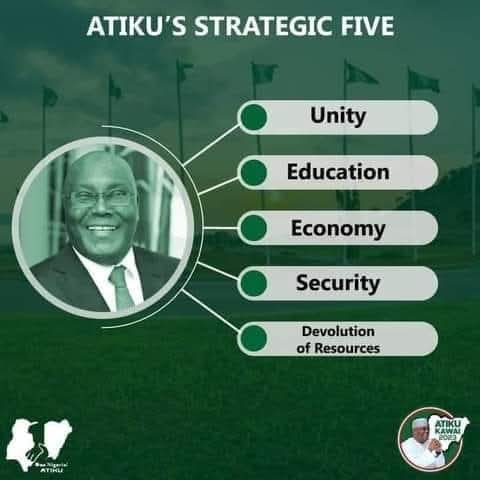
The crises that have defined Nigeria’s Fourth Republic have deepened under Tinubu. In 2027, Atiku Abubakar offers the reset this country desperately needs.
Aare Amerijoye DOT.B
AT the dawn of Nigeria’s Fourth Republic in 1999, the diagnosis was already clear. The nation was battered by poverty, decayed infrastructure, a strangled telecommunications industry, collapsed public health services, and a democracy too fragile to survive bad governance.
Nearly three decades later, that diagnosis reads not as history but as current affairs. The problems that greeted civilian rule in 1999 are still with us. In several critical areas, they are considerably worse. And that is the most damning indictment of every administration that has governed Nigeria since that hopeful May 29, none more so than the Tinubu administration.
THE POVERTY TRAP: DEEPER THAN EVER
Under President Tinubu, things have not merely stagnated. They have deteriorated at a pace that shocks even veteran observers of Nigerian governance. The removal of the petrol subsidy was executed without preparation, without a cushioning mechanism, and without a credible transition plan. It detonated an inflation spiral that has devoured the purchasing power of ordinary Nigerians.
The naira has collapsed beyond 1,500 to the dollar. Food inflation has pushed millions of households into hunger. Real wages have been shredded. This is not responsible economic management. It is the management of decline.
THE POWER CRISIS: NOTHING HAS CHANGED.
In 2026, Nigeria still cannot reliably power its homes or its industries. The national grid has collapsed multiple times in the past year alone. Load-shedding remains a daily reality. Manufacturers who can afford it run on diesel generators. Those who cannot fold their operations. The Tinubu administration has had three years to confront this crisis. It has chosen not to.
WHAT TINUBU HAS DONE TO TELECOMS.
Nigeria’s telecommunications sector, once a beacon of what liberalisation could achieve, is now under assault. In early 2025, the Nigerian Communications Commission imposed a unilateral 50 per cent tariff increase on consumers already buckled under the weight of runaway inflation. There was no genuine consultation. There was no relief mechanism.
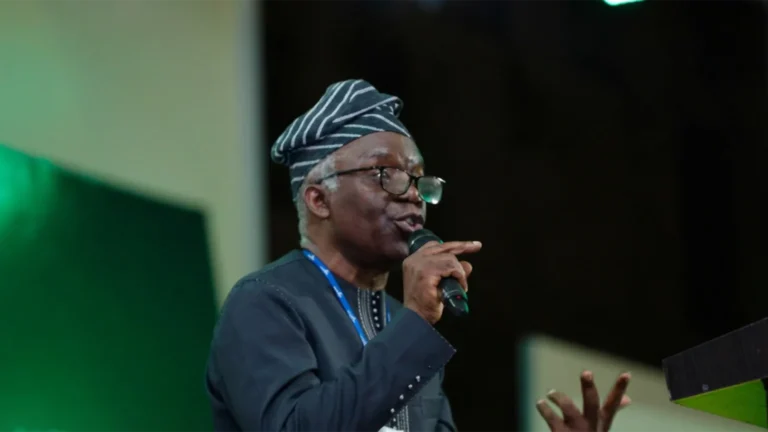
Human rights advocate Femi Falana SAN described it as an assault on the poor. Former World Bank Vice President and anti-corruption champion Oby Ezekwesili called it a governance failure of the first order. They were right. A government that uses regulatory agencies to extract more from struggling citizens rather than protect them has forfeited its claim to responsible governance.
THE ARITHMETIC OF 2027
The Tinubu presidency has been haunted from its first day by the legitimacy deficit of an election widely questioned by citizens and civil society. Courts affirm electoral results. They do not manufacture public confidence. That must be earned through performance, and on that measure, this administration has failed decisively.
The mathematics of 2027 favour an organised opposition. In the 2023 presidential election, the combined votes of the Peoples Democratic Party and the Labour Party exceeded Tinubu’s total by a significant margin. Add the Alliance for Democratic Change’s growing grassroots infrastructure, and the coalition anchored by Atiku Abubakar enters 2027 with both the electoral arithmetic and the moral argument firmly on its side.
THE MAN FOR THIS MOMENT
Nigeria needs more than a change of face in Aso Rock. It needs a change of direction, backed by institutional knowledge, a credible reform agenda, and the will to implement.
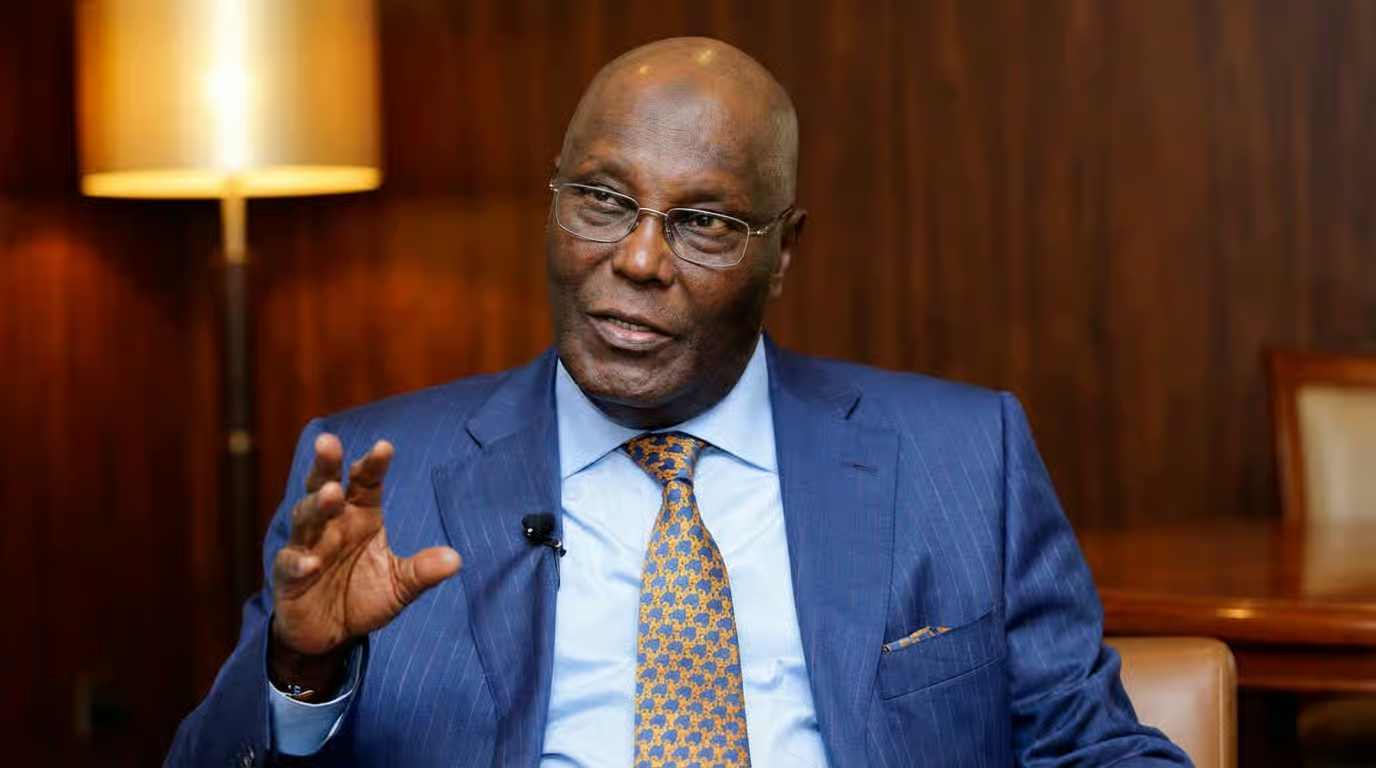
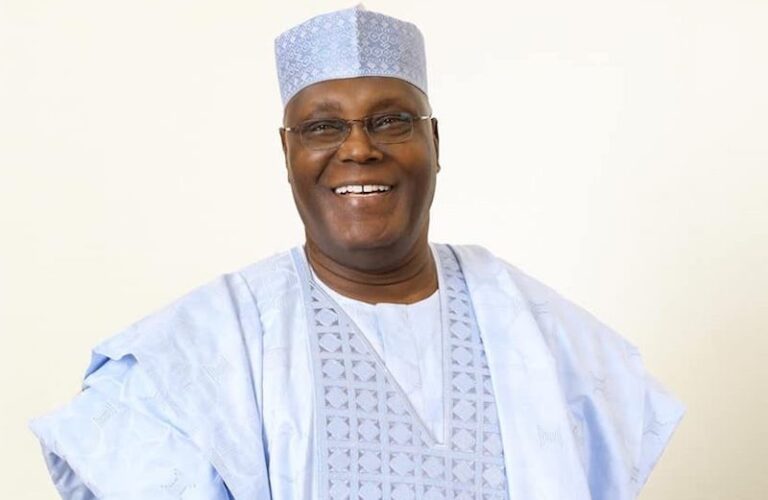
Atiku Abubakar brings all three. His policy network, his investment in education, and his detailed economic agenda covering macroeconomic stability, fiscal federalism, infrastructure renewal, and a predictable investment climate are the foundations of a serious recovery programme. These are not vague aspirations. They are the commitments of a man who understands precisely what Nigeria requires and what it costs when leadership fails to deliver.
THE DECISION.
Nigerians are tired. They are hungry. They are angry. But they are still hoping. That hope must be channelled into deliberate political action in 2027.
This election is not a routine contest. It is a referendum on whether Nigeria chooses to continue its drift into managed poverty, or to finally elect a leader with the mandate, the team, and the resolve to turn this country around.
Nigeria has been here before. It knows what real leadership looks like. In 2027, it must choose it.
The combined opposition votes in 2023 exceeded Tinubu’s total. The arithmetic is there. What 2027 demands now is the argument, and Atiku Abubakar has the coalition, the agenda, and the resolve to make it decisively.
Aare Amerijoye DOT.B
Director General
The Narrative Force (thenarrativeforce.org)