THE CASE FOR THE ONLY MAN WHO CAN SAVE THIS NATION
Aare Amerijoye DOT.B
April opens its gates over a nation that deserves far better than what it has been handed.
To the trader in Kano whose stall grows emptier by the week. To the mother in Anambra buying garri with borrowed money. To the graduate in Lagos whose certificate has become a boarding pass out of Nigeria. To the farmer in Benue afraid to walk his own land. To the pensioner in Ekiti watching the naira dissolve what decades of service built.
To every Nigerian who woke up this April morning still fighting for survival: this new month belongs to you. Not because the hardship has ended. Not because the electricity returned. Not because the price of food has relented. But because you are still here, still standing, still refusing to be broken.
And that refusal is the seed of everything that is coming.
Suffering does not last forever. History is not kind to governments that abandon their people. The political reckoning gathering from the markets of Onitsha to the farms of Kebbi, from the campuses of Zaria to the fishing communities of Badagry, tells us plainly that 2027 will not be 2023.
But to understand where Nigeria must go, we must first reckon honestly with where it stands, and how it got here.
I. THE NUMBERS DO NOT LIE. NIGERIA WAS ROBBED
Let us begin where political cowardice usually retreats: with the arithmetic of power.
In the 2023 presidential election, the Independent National Electoral Commission declared Bola Ahmed Tinubu the winner with 8,794,726 votes out of more than 93 million registered voters. From that slender numerical base, a government was erected and christened democracy.
Yet the numbers tell a far more unsettling story.
Atiku Abubakar received 6,984,520 votes. Peter Obi received 6,101,533 votes. Rabiu Kwankwaso received 1,496,671 votes.
Together, that is 14,582,724 Nigerians who voted against the APC candidate.
Fourteen and a half million citizens spoke in opposition. Eight point seven million carried the day. The majority voice was fractured; the minority consolidated power.
That is the brutal arithmetic of Nigeria’s electoral tragedy.
14,582,724 opposition votes versus 8,794,726 APC votes. The people spoke. Division handed victory to power.
When the opposition fragments, the APC survives not by superior ideas but by the mathematics of division. Unity among reform forces instantly transforms the electoral battlefield.
There is no political machinery powerful enough to withstand the collective will of a united Nigerian electorate.
II. ELEVEN YEARS OF APC: THE STATISTICS OF FAILURE
The APC came to power in 2015 on three promises: security, economic revival, and the eradication of corruption.
Eleven years later, the record stands before history like an indictment.
On security, millions of Nigerians have been displaced from their ancestral homes. Entire communities across Zamfara, Katsina, Sokoto, and parts of the North-East live under the shadow of banditry and insurgency. Farmers abandon their fields. Students attend school under the fear of abduction. Rural economies collapse under the weight of insecurity.
On the economy, the contrast is equally devastating.
In 2015 the naira exchanged at roughly ₦197 to the dollar. By 2024 it had plunged beyond ₦1,500 to the dollar. Inflation surged past 33 per cent, while food inflation exceeded 37 per cent, punishing ordinary Nigerians whose incomes have remained stagnant.
The National Bureau of Statistics further confirmed that over 133 million Nigerians now live in multidimensional poverty. Behind that statistic are families who skip meals, traders who cannot restock their stalls, graduates who cannot find employment, and parents who watch their children abandon the country in despair.
133 million Nigerians in poverty. A collapsing currency. A nation rich in resources yet poor in hope.
On the question of anti-corruption, the moral authority of the ruling establishment has steadily eroded. Transparency International continues to rank Nigeria poorly among global corruption indices. Major financial scandals dominate headlines while public trust steadily declines.
Eleven years after assuming power, the APC’s legacy stands defined not by transformation but by disillusionment.
III. ATIKU’S RECORD: WHEN NIGERIA ACTUALLY WORKED
History, however, remembers a different chapter.
Between 1999 and 2007, during the Obasanjo-Atiku administration, Nigeria witnessed one of the most consequential reform periods in its modern economic history.
During that era, Nigeria’s GDP expanded from roughly $58 billion to about $270 billion, reflecting an economy undergoing structural liberalisation, private sector expansion, and unprecedented growth momentum. At its peak, the economy recorded double-digit growth rates, placing Nigeria among the fastest-growing economies in the developing world.
Equally significant was Nigeria’s historic exit from the Paris Club debt burden, a relief valued at approximately $30 billion, which freed the nation from a crippling cycle of foreign debt dependency.
Telecommunications liberalisation, championed during that period, transformed Nigeria from a country where telephone lines were a luxury into the largest telecommunications market in Africa, with hundreds of millions of active connections powering the digital economy Nigerians rely upon today.
Beyond public policy, Atiku Abubakar also demonstrated a personal commitment to educational development through the establishment of the American University of Nigeria in Yola, an institution that has produced thousands of graduates and expanded opportunities for young Nigerians.
These were not theoretical ambitions. They were practical achievements. Nigeria once worked because reform was treated not as rhetoric but as policy.
IV. THE COALITION: AN ARITHMETIC OF NATIONAL RECOVERY
Today a new political architecture is emerging.
Within the African Democratic Congress, a historic alignment of political forces is gradually taking shape, one capable of altering Nigeria’s political trajectory.
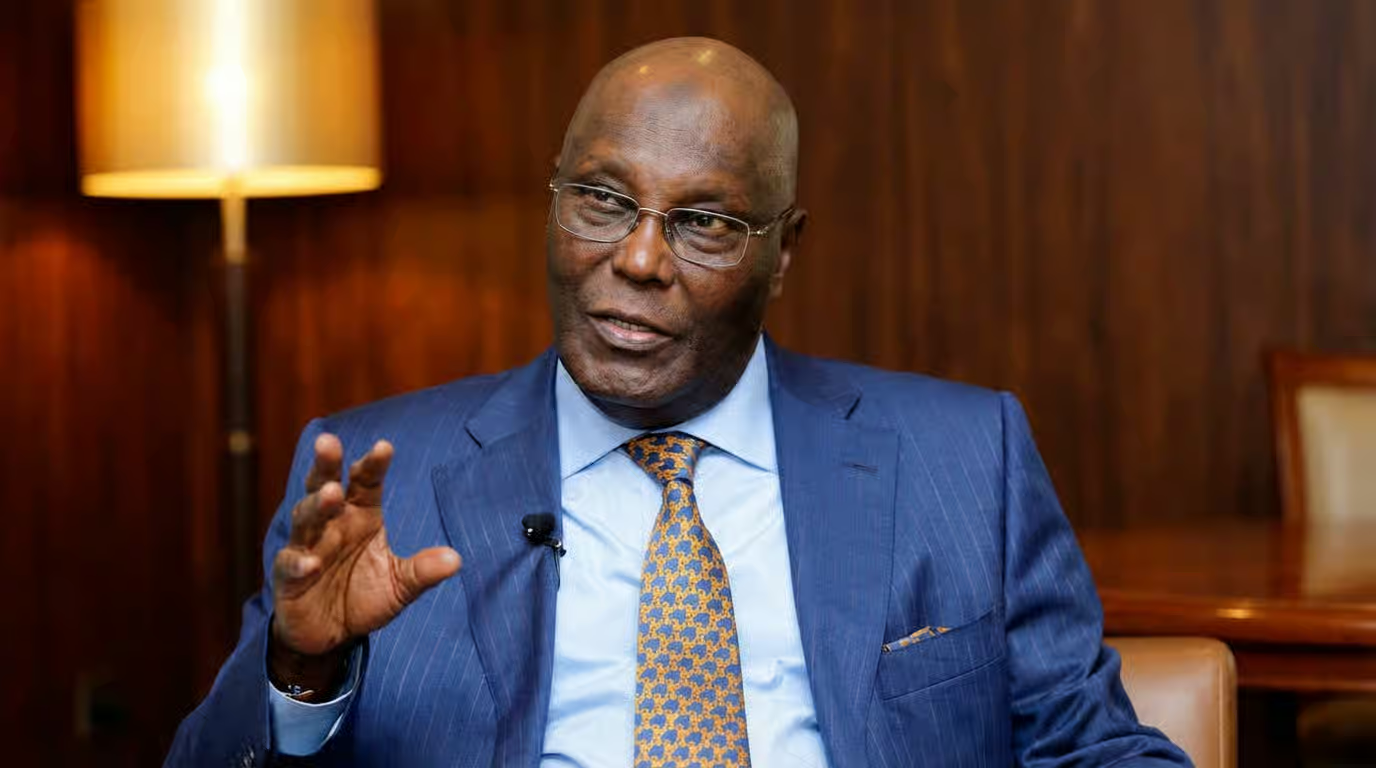
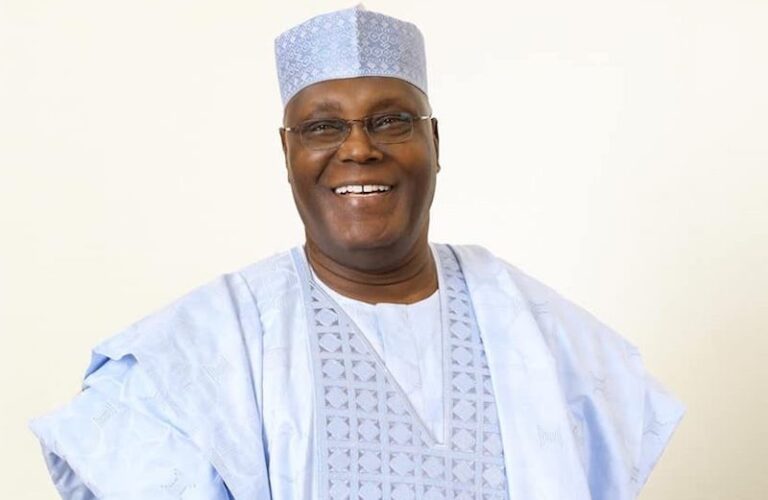
Atiku Abubakar represents decades of administrative experience, economic reform credentials, and national reach.
Peter Obi brings fiscal discipline and a governance reputation rooted in prudence and accountability. As Governor of Anambra State, he left substantial financial reserves and minimal debt, an almost mythical outcome in Nigerian subnational governance.
Rabiu Musa Kwankwaso commands a formidable grassroots network across the North-West through the enduring Kwankwasiyya movement, a political structure built on loyalty, organisation, and mass mobilisation.
Combined, these political forces represent millions of Nigerian voters across regional, ethnic, and generational lines.
Atiku. Obi. Kwankwaso. This is not merely a political alignment. It is the architecture of national rescue.
V. THE MANDATE OF 2027
Nigeria does not suffer from a shortage of speeches. Nigeria suffers from a shortage of results.
The nation now stands at a historic crossroads.
By 2027, Nigerians must decide whether the next chapter of their national story will be defined by continued economic hardship, deepening insecurity, and political fragmentation, or by a deliberate national effort to rebuild the foundations of prosperity.
Atiku Abubakar has presented a blueprint anchored on economic revitalisation, infrastructure expansion, private sector partnership, and regional economic integration. His vision includes large-scale infrastructure investment, revitalised industrial zones, improved energy supply, and renewed investor confidence.
The objective is simple: to make Nigeria work again.
The millions of Nigerians who have left the country in search of opportunity will not return because of patriotic speeches. They will return when Nigeria once again becomes a place where hard work yields reward, where businesses can thrive, and where the rule of law protects opportunity.
As Aristotle once observed, the fate of empires depends upon the education of their youth. Nigeria’s youth deserve a nation that offers them possibility rather than exile.
The coalition now gathering around Atiku Abubakar represents perhaps the most credible opportunity in a generation to rebuild that possibility.
Nigeria has waited long enough.
The numbers favour change. The history demands correction. The future calls for courage.
2027 will decide whether Nigeria rises or continues its descent. The choice, ultimately, belongs to the Nigerian people.
Aare Amerijoye DOT.B
Director General, The Narrative Force
Aare Atayese of Odo Oro Ekiti