HONESTY IN POLITICS: A BEACON OF INTEGRITY IN A SEA OF DECEPTION.
Aare Amerijoye DOT.B
If there was ever a moment when Nigeria needed clarity, truth, and the courage to confront national darkness, it is now. Before the reader descends into this article, one truth must be stated plainly: Nigeria stands today between enlightenment and illusion, between leadership grounded in honesty and leadership built on deception. The urgency of this contrast is the oxygen of this piece.
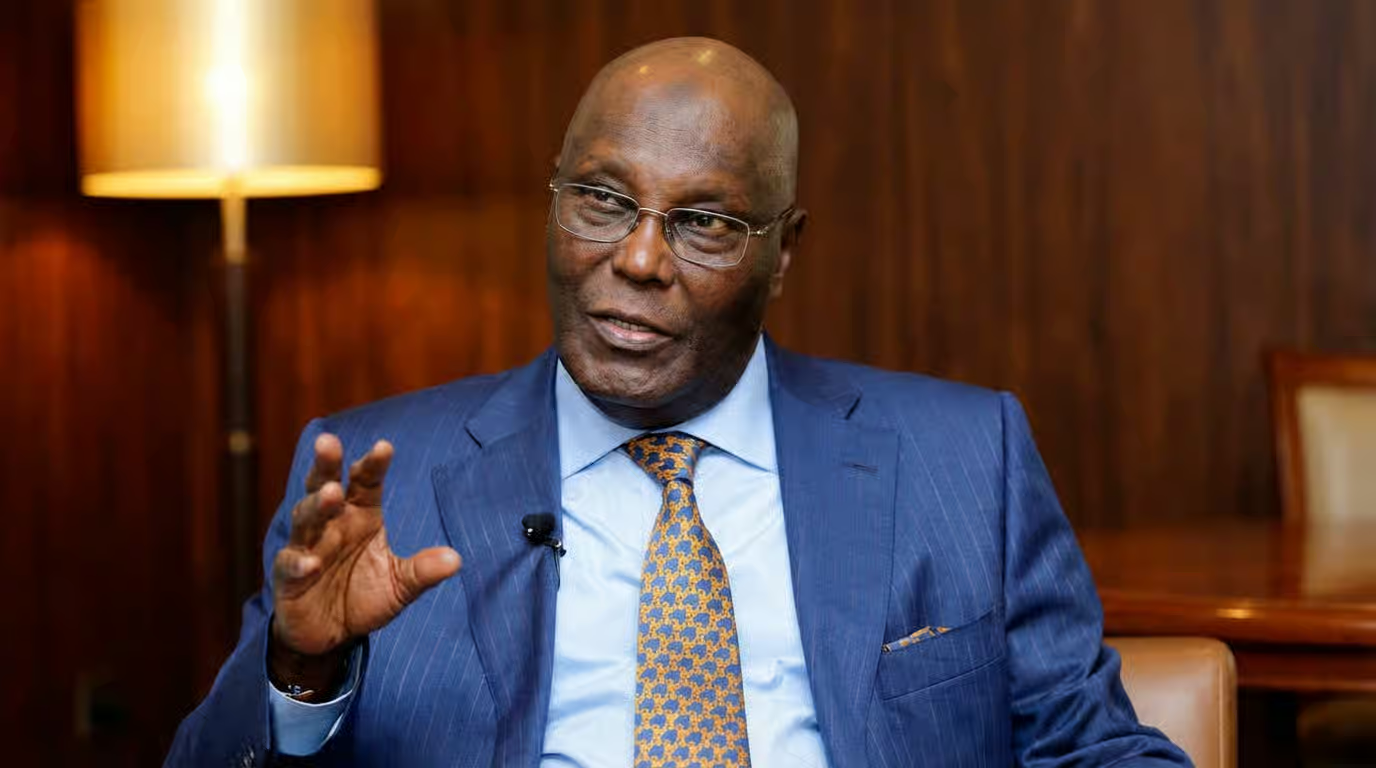
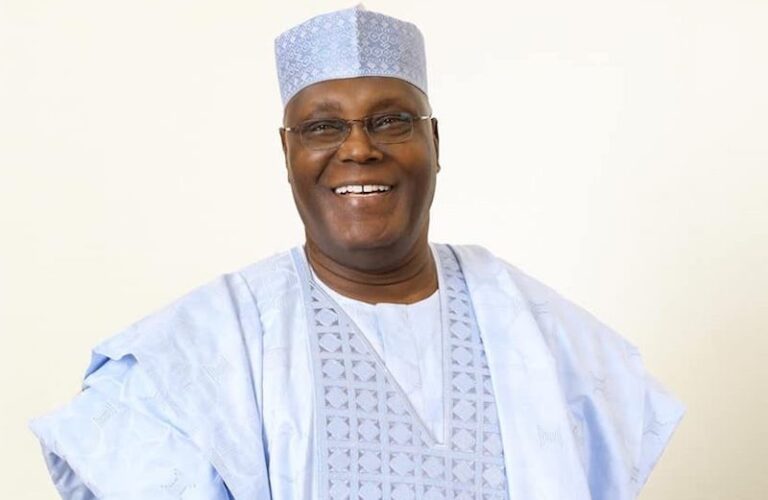
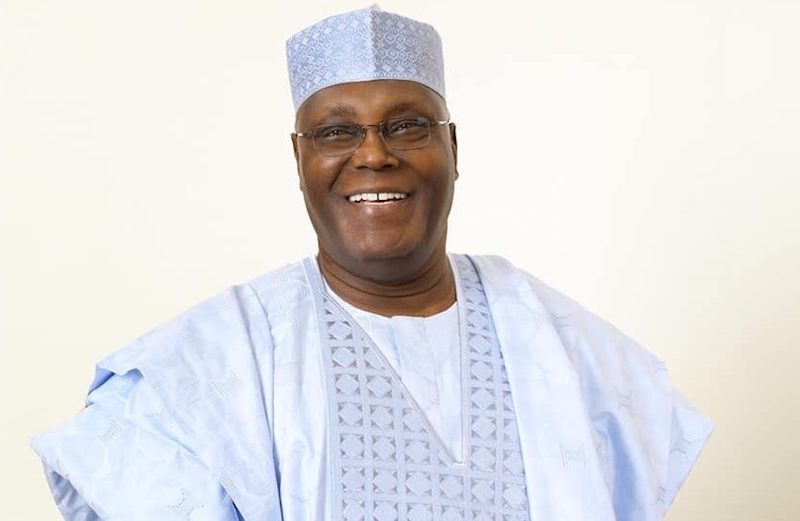
In the heart of Nigeria’s complex political landscape, where shadows of deception often obscure the light of truth, emerges a rare figure, one whose commitment to honesty and integrity remains unwavering. Atiku Abubakar’s journey through the labyrinth of politics is not just a career; it is a testament to the unshakable belief that honesty is not only possible but essential in the world of power, influence, and policy. At a time when Nigerians are gasping for sincerity in governance, his consistency becomes not merely admirable but urgently necessary.
This is where Plato’s Allegory of the Cave becomes painfully instructive. For years, Nigerians have been chained to the wall of political illusions, fed shadows instead of substance, deception instead of truth, and propaganda instead of governance. Tinubu’s supporters , like the prisoners of the cave ,mistake shadows for reality, suffering for progress, and hardship for reform. But Atiku’s supporters are those who have seen the light beyond the cave, those refusing to return to the darkness of imposed ignorance. They walk toward truth, not shadows; toward solutions, not slogans.
But in this same landscape stands a contrasting figure, Bola Ahmed Tinubu, whose governance has become the darkest theatre of economic trickery, policy ambush, and national heartbreak. Where Atiku offers illumination, Tinubu has wrapped the nation in an eclipse of confusion and cruelty. His policies have not only failed but have aggressively deepened poverty, proving that leadership built on deception inevitably collapses under its own contradictions. Today, inflation has climbed beyond 33%, food inflation has crossed 40%, fuel has skyrocketed from ₦185 to over ₦900, and the naira has collapsed from ₦460/$ to almost ₦1,500/$ — empirical proof that deception is expensive.
Imagine, for a moment, a leader who refuses to engage in the elaborate dance of political doublespeak. A man who steps into the arena with a steady resolve, knowing full well that the path ahead is riddled with obstacles, yet still chooses to walk it with clarity and transparency. Atiku Abubakar is that rare leader. His actions tell the story of a man who, in the words of Chief Obafemi Awolowo, “refused to be a servant of the people’s momentary whims, but a servant of their lasting good.” This principle has guided his public interventions, including his repeated warnings on the economy, which reality has now vindicated.
Now compare this to Tinubu’s governance, a regime that thrives on propaganda gymnastics and policy sorcery, where the truth is suffocated, and Nigerians are fed a daily diet of denial while their economy disintegrates. Atiku speaks plainly; Tinubu hides behind noise. Atiku provides solutions; Tinubu provides suffering. This contrast is not conjecture ,it is visible daily in the inflation charts, the weakening naira, and the hunger stalking millions of households.
Consider the countless moments when Atiku could have veered toward the path of convenience, where silence or compromise could have delivered short-term victories. Yet, like the steady hand of a master craftsman, he chose a different way. His integrity was tested when the stakes were high, and his clarity of purpose remained his guide. It is said that “the true test of a man’s greatness is his ability to endure adversity with dignity.” Atiku’s calmness during political storms, even when misrepresented or unfairly attacked, demonstrates that his leadership foundation is built on conviction, not convenience.
Atiku’s composure amidst political storms is not merely a façade; it is a profound statement of his unwavering belief that honesty, even in the most trying times, is a leader’s greatest strength. This composure has become even more striking when contrasted with the erratic nature of Tinubu’s administration, which lurches from one failed experiment to another.
Tinubu, on the other hand, has shown Nigerians the catastrophic consequences of dishonesty at the highest level. His fraudulent promises, his contradictory policy acrobatics, and his reckless governance have plunged Nigeria into a vortex of inflation, hunger, insecurity, and despair. While Atiku withstands storms with dignity, Tinubu manufactures storms with recklessness. Nigerians today are not merely enduring hardship , they are enduring hardship designed by poor governance masquerading as reform.
In a world where politicians often veil their intentions behind layers of ambiguity, Atiku stands out as a man whose words align with his deeds. He has proven time and again that honesty, far from being a liability, is the cornerstone of true leadership. Alhaji Ahmadu Bello once said, “A leader must be true to the people who elect him, for his integrity is the foundation of their trust.” Atiku’s consistency in policy positions, economic forecasts, and national interventions exemplifies this truth with clarity.
Tinubu’s administration has shattered that trust with unprecedented brutality. Every policy feels like a trap, every announcement like a dagger, every economic reform like another funeral procession for the Nigerian middle class. His government thrives on opacity; Atiku champions transparency. One builds trust; the other burns it. This contrast is no longer theoretical , it is lived reality for the butcher, the trader, the teacher, the worker, and the unemployed youth.
Atiku has lived by these words, making transparency and sincerity the hallmarks of his political philosophy. His career, filled with moments of great challenge, reveals that true leadership demands not only conviction but the courage to face the truth, no matter how uncomfortable it may be. Where others bend to political convenience, he stands firm on principle — and history consistently vindicates him.
Tinubu’s refusal to face reality, his arrogance, his imperviousness to advice, his obsession with self-serving economic experiments, has turned Nigeria into a bleeding laboratory of failed ideas. Atiku confronts the truth; Tinubu runs from it. This is why every passing month widens the gap between the leader Nigeria needs and the leader Nigeria endures.
And yet, Atiku’s story is not just one of personal integrity—it is a call to action for all of us. Chief Nnamdi Azikiwe’s words echo in the background: “The true measure of leadership is the ability to transform a nation with truth, justice, and peace.” Atiku, through his career, has shown us that honesty is not just a political tool; it is a weapon for societal transformation. His example reminds citizens that nations rise not on deception, but on values.
Tinubu’s leadership has instead weaponised hardship. He has transformed governance into a pyramid scheme of pain. Where Atiku leads with truth, Tinubu governs with torment. Where Atiku offers justice, Tinubu delivers chaos. Where Atiku builds peace, Tinubu manufactures tension. The daily experiences of Nigerians — fear, hunger, uncertainty — testify more loudly than any political argument.
In the midst of a society where trust in leadership is often in short supply, Atiku’s example is a blazing beacon, a reminder that the political landscape can be reshaped by principles, not just power. While Tinubu’s government collapses under the weight of its own deceptions, Atiku stands as the antidote, the necessary correction, the stabilising force, the moral compass Nigeria urgently needs. This is not sentiment — it is survival.
In politics, where honesty is often seen as a rare commodity, Atiku Abubakar’s career is proof that integrity can not only survive but thrive. His refusal to be swayed by political convenience, his ability to remain true to his principles, and his unshakable commitment to transparency provide a refreshing blueprint for what political leadership should look like. As we navigate this stormy political sea, Atiku’s example stands as a guidepost, reminding us that honesty is not just a virtue, but the very foundation upon which a nation’s future can be built.
Tinubu’s example, by contrast, stands as a warning: that deception destroys nations, incompetence bankrupts futures, and arrogance suffocates democracy. Nigeria needs no further proof; the evidence is already written in the daily suffering of its people.
Atiku is the path forward.
Tinubu is the detour into darkness. Nigeria must choose wisely.
And if ever a nation needed wisdom, it is now. If ever a people needed the courage to reject shadows for substance, it is today. If ever Nigeria needed a leader whose honesty can rebuild a broken nation, that leader is Atiku Abubakar.
Aare Amerijoye Donald Olalekan (DOT.B)
Director General
The Narrative Force.