
“Weeping may endure for a night, but joy cometh in the morning.” — Psalm 30:5
Easter therefore speaks not only to the church. It speaks to nations. It speaks to societies passing through dark seasons. It speaks to peoples who have known disappointment, hardship, and the painful feeling that hope itself has been crucified.
Nigeria today stands at such a moment.
Easter stands in history as the most powerful reminder that truth cannot be buried forever, that justice cannot be permanently silenced, and that a mission founded upon righteousness cannot be destroyed by the schemes of men. It tells the story of a purpose the powerful attempted to extinguish, a message the fearful tried to suppress, and a movement the corrupt believed they had sealed behind a stone. Yet on the third day the stone rolled away, and what the world believed finished began again with greater strength.
To understand our national condition one may return to the parable of the Good Samaritan. A man travelling along the road to Jericho fell among thieves. They stripped him of his garments, wounded him, and abandoned him half dead by the roadside. Those who possessed authority and institutional power saw his condition but walked past him. The priest passed by. The Levite passed by. Those who should have offered rescue became silent witnesses to suffering.
That wounded traveller resembles Nigeria.
A nation once clothed in promise now finds itself battered by economic hardship, insecurity, and growing frustration among its people. The naira struggles under immense pressure. Families labour daily simply to afford food and transport. Farmers leave fertile lands because violence has made their communities unsafe. Graduates roam the streets searching for opportunities that appear increasingly distant. Civil servants work diligently yet discover that their earnings can no longer preserve the dignity of their households.
Nigeria has not arrived at this point by accident. It is the consequence of choices. Governance that too often places privilege above people and power above responsibility has deepened the wounds of the nation.
Yet the parable of the Good Samaritan does not end with abandonment. It ends with compassion.
The Samaritan was not the expected hero of the story. He did not belong to the circle of religious authority. Yet he stopped where others passed. He bound the wounds of the injured man, lifted him upon his own animal, and ensured that care replaced neglect.
Compassion has always been the moral foundation of renewal. Nations rise when leadership rediscovers responsibility to the people.
Within Nigeria’s political landscape the African Democratic Congress is increasingly becoming a platform through which many citizens seek such renewal. It represents a gathering of leaders and citizens who refuse to pass by on the other side while the nation bleeds.
The African Democratic Congress today stands not merely as another political party but as a coalition of voices determined to confront the deep challenges facing Nigeria. At the centre of this effort stands Senator David Mark, a statesman whose long experience in public life has given him a reputation for institutional discipline and steady leadership. His role as National Chairman reflects a commitment to rebuilding democratic structures capable of restoring public confidence in governance.
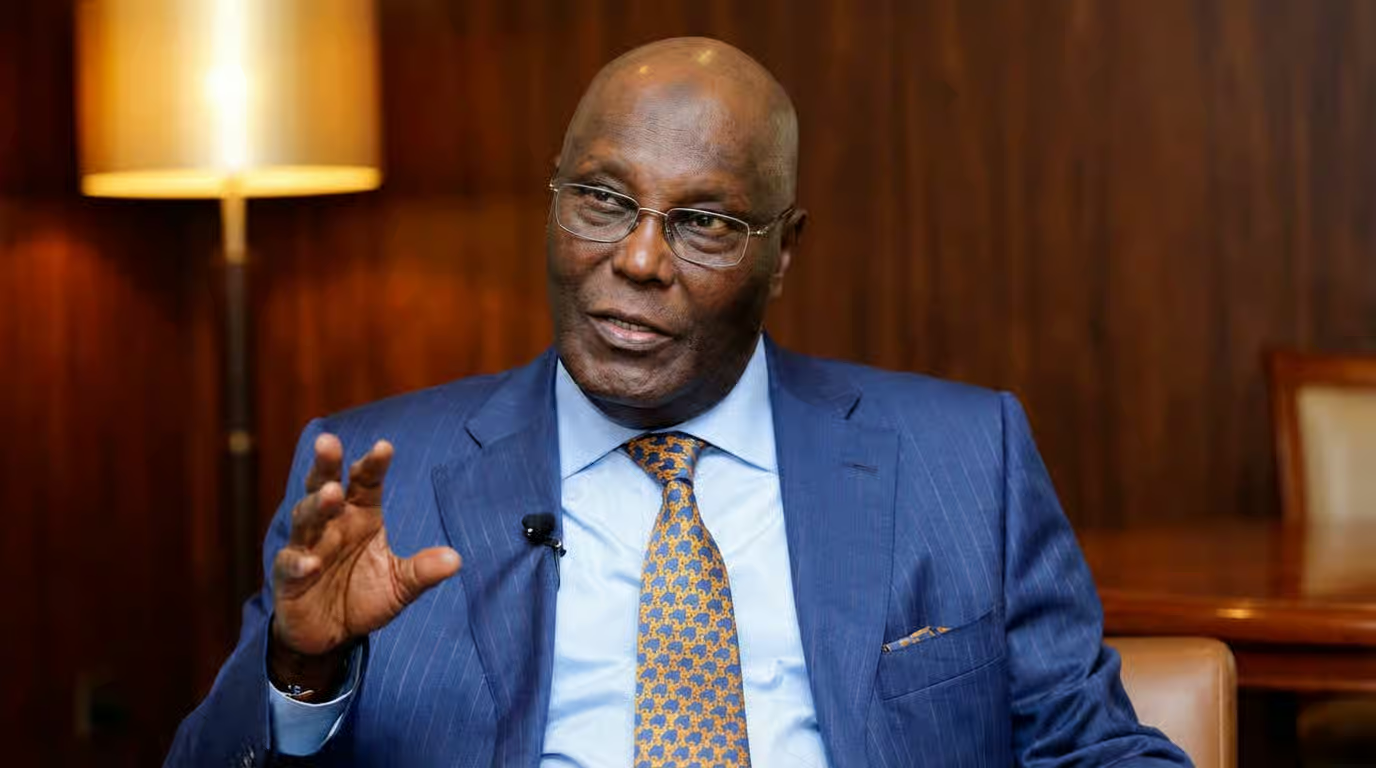
Alongside him stands Alhaji Atiku Abubakar, former Vice President of the Federal Republic of Nigeria and one of the most enduring figures in Nigeria’s democratic journey. For decades Atiku has remained a prominent advocate of economic reform, national unity, and the restoration of opportunity for millions of Nigerians whose hopes have been weakened by hardship.
Within the broader coalition conversation figures such as Peter Obi, Rabiu Musa Kwankwaso, Nasir El Rufai, Rotimi Amaechi, Rauf Aregbesola, Ralph Okey Nwosu, and Aminu Waziri Tambuwal represent the diversity of Nigeria’s political experience. Their presence within discussions about opposition cooperation reflects a growing understanding that Nigeria’s present challenges require unity of purpose rather than fragmented ambition.
Coalitions are never simple to build. They demand compromise, patience, and the willingness to place national interest above personal ambition. Yet history repeatedly demonstrates that meaningful political transformation often emerges when previously separate forces decide to stand together for a greater cause.
The Easter story again provides an important lesson.
Before the resurrection came betrayal.
Jesus was not first delivered to his enemies by foreign authority but by someone who had walked closely within the circle of his followers. Judas knew the mission intimately. He knew where the movement gathered and where it prayed.
Political movements throughout history have experienced similar trials. Internal disputes, legal challenges, and attempts to weaken organisational momentum often appear during the early stages of major coalitions. The African Democratic Congress has also encountered moments of turbulence including legal battles and institutional pressures that some believed would weaken its structure.
Yet Easter teaches that betrayal does not end a mission.
On Good Friday the followers of Jesus believed everything had collapsed. Fear scattered them. The movement that once drew thousands appeared finished.
But Sunday came.
The stone that sealed the tomb was rolled away, and the message that seemed buried returned with greater force than before.
History often moves forward through such moments. What appears finished sometimes reveals unexpected resilience. Political platforms that survive their trials frequently emerge stronger, more disciplined, and more united.
The African Democratic Congress stands within such a season of testing and renewal.
Across Nigeria’s thirty six states ward structures continue their quiet work. Grassroots organisers continue building relationships within communities. Party members continue believing that change remains possible.
These efforts may not always dominate the headlines, yet they form the true architecture of democratic transformation.
The prophet Ezekiel once stood in a valley filled with dry bones which symbolised a people who believed their future had been extinguished. When asked whether those bones could live again he answered with humility that only God knew.
Yet when he spoke as commanded the bones began to move. They came together, flesh formed upon them, and breath entered them until they stood as a vast army.
Nigeria sometimes resembles that valley.
Many citizens feel discouraged by hardship and uncertainty. Yet beneath the frustration lies a powerful spirit of resilience. Nigerians remain among the most industrious and hopeful people on earth. Across markets, farms, universities, and offices citizens continue striving to build lives of dignity and purpose.
Political renewal must draw strength from that spirit.
The African Democratic Congress and the coalition conversations surrounding it represent an evolving effort to channel the aspirations of millions who desire governance that works for the people rather than against them.
For Nigeria to rise again leadership must rediscover compassion. Governance must place citizens at the centre of policy rather than treating them as spectators to decisions that shape their lives.
Easter carries a message for moments such as these. Sacrifice can lead to renewal. Despair can give way to hope. Darkness never possesses the final word.
Nigeria’s democratic journey has never been simple, yet every generation produces men and women willing to struggle for a better future. The leaders, members, and supporters of the African Democratic Congress believe that such a future remains within reach.
As we celebrate Easter let us remember that resurrection follows the darkest nights. The stone that once appeared immovable was rolled away. The tomb that seemed final became the gateway to new life.
Christ is risen.
Nigeria shall rise.
And with courage, unity, and the determination of leaders and citizens who refuse to surrender hope, the African Democratic Congress shall rise with it.