Aare Amerijoye DOT.B
Nigeria stands today at the uneasy intersection between decline and possibility. The statistics alone read like an indictment of leadership failure and a warning to future generations. Unemployment remains entrenched at crisis levels. Inflation has eroded the dignity of labour. Over 133 million Nigerians live in multidimensional poverty, representing not merely economic deprivation but the slow suffocation of human potential. The naira, once a symbol of national pride and continental strength, has endured a catastrophic erosion, falling from ₦197 to the dollar in 2015 to over ₦1,500 today. This is not simply currency depreciation. It is the mathematical expression of lost confidence, weakened productivity, and policy drift.
History teaches that nations rarely collapse in dramatic moments. They decline gradually, through accumulated errors, tolerated incompetence, and the tragic normalisation of mediocrity. The question confronting Nigeria is therefore no longer whether change is necessary. The evidence has settled that argument beyond dispute. The real question is whether Nigeria possesses the political wisdom to entrust its recovery to leadership forged in experience, tested in reform, and guided by coherent vision.
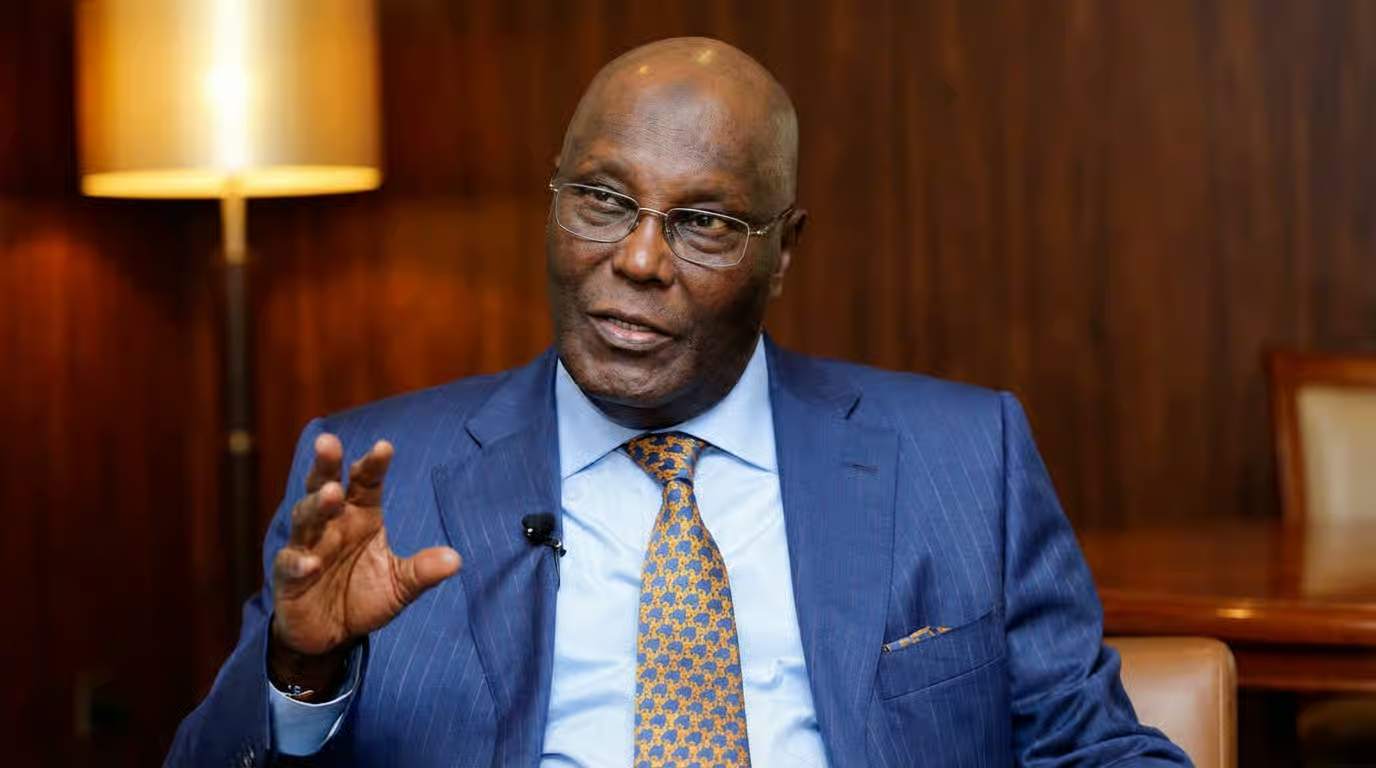
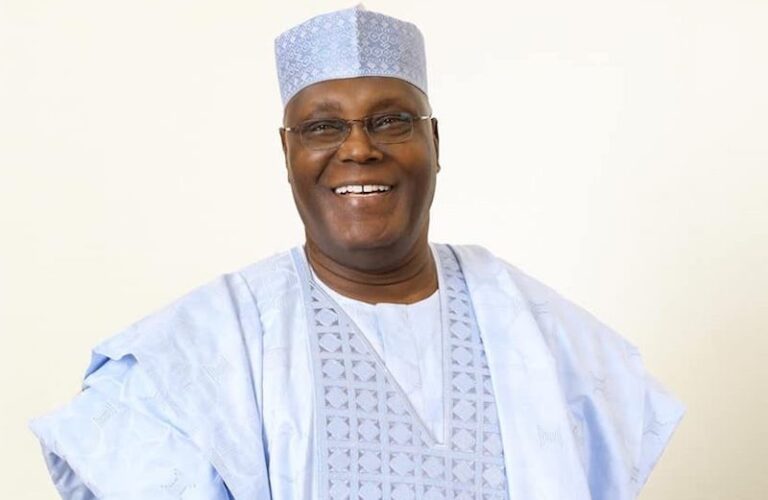
In the grand theatre of Nigerian politics, where promises are plentiful but results are scarce, one figure emerges whose public record invites serious and sober consideration: Atiku Abubakar. This is not a matter of sentiment or personality. It is a matter of administrative history, economic philosophy, and demonstrable capacity. Albert Einstein once observed that the world we have created is a product of our thinking, and it cannot be changed without changing our thinking. Nigeria’s present condition reflects the consequences of leadership thinking that has too often prioritised political survival over economic transformation. National renewal will require a different order of leadership, one capable of converting vision into institutional reality.
The scale of Nigeria’s current crisis is both measurable and alarming. Since 2015, economic growth has struggled to keep pace with population expansion, resulting in declining per capita prosperity. Fuel subsidy removal, though economically defensible in principle, was executed without adequate structural cushioning, unleashing inflationary consequences that disproportionately punished the poor. Food inflation has placed basic nutrition beyond the reach of millions. The World Bank confirms that Nigeria now hosts one of the largest populations of extremely poor people on earth.
Infrastructure, the backbone of modern economic productivity, remains dangerously inadequate. Nigeria generates roughly 4,000 megawatts of electricity for over 200 million citizens, while South Africa produces more than ten times that amount for less than one third of Nigeria’s population. The consequences are visible everywhere: factories operating below capacity, businesses dependent on costly generators, and young entrepreneurs whose ambitions are strangled by unreliable power. Meanwhile, Nigeria continues to lose its most valuable resource, human capital, as doctors, engineers, and skilled professionals migrate abroad in search of functional systems.
This is the context in which the leadership question must be evaluated.
Atiku Abubakar’s public service record provides a case study in institutional reform. As Vice President between 1999 and 2007, he played a central role in the economic liberalisation programme that dismantled inefficient state monopolies and opened critical sectors to private investment. The telecommunications sector offers the clearest example of the transformative power of those reforms. At the dawn of the Fourth Republic, Nigeria had fewer than half a million telephone lines serving its entire population. Access to communication was a luxury reserved for the privileged few. Today, Nigeria boasts over 187 million active telecom subscribers. The sector contributes significantly to national GDP, supports millions of jobs, and serves as a foundational pillar of the digital economy. This transformation did not occur by accident. It was the product of deliberate policy decisions that unleashed private capital and entrepreneurial innovation.
His private sector career further reinforces his administrative credibility. Through enterprise development, investment expansion, and logistics innovation, he demonstrated an understanding of wealth creation that remains rare within Nigeria’s political class. Wealth, in modern economies, is not created by rhetoric. It is created by systems, productivity, and investment. Leadership that understands this distinction is indispensable to national recovery.
His economic philosophy, rooted in fiscal federalism, institutional efficiency, and market-driven growth, reflects the consensus of developmental economics. His policy proposals advocate decentralisation of economic authority, infrastructure expansion, public sector efficiency, and exchange rate rationalisation. These are not abstract theories. They are practical frameworks drawn from global development experience and adapted to Nigeria’s structural realities.
Nigeria’s own history provides evidence that reform is possible under capable leadership. The banking consolidation of the mid-2000s transformed a fragile financial system into a more resilient institution capable of supporting economic expansion. Debt relief negotiations freed Nigeria from unsustainable financial obligations and restored fiscal breathing space. These achievements were accomplished not through miracles but through competent leadership, strategic clarity, and disciplined implementation.
The contrast with Nigeria’s present condition is impossible to ignore.
In 2014, Nigeria was Africa’s largest economy with growing investor confidence, relative currency stability, and expanding middle class optimism. Today, investor confidence remains fragile, inflation undermines planning certainty, and millions struggle daily against economic headwinds. The difference between those two moments is not geography, not population, and not destiny. It is leadership.
Immanuel Kant wisely observed that out of the crooked timber of humanity, nothing perfectly straight was ever made. Nations do not require perfect leaders. They require competent ones. They require leaders who understand systems, respect institutions, and possess the courage to implement difficult but necessary reforms. Leadership, ultimately, is not about popularity. It is about responsibility.
Nigeria now approaches another defining political moment. The decision before Nigerians will shape not merely electoral outcomes but economic trajectories, institutional strength, and national destiny. The choice is between continuity of uncertainty and the possibility of reform grounded in experience.
Atiku Abubakar represents, for many Nigerians, a leadership profile shaped by administrative exposure, economic literacy, and reformist orientation. His record invites scrutiny, but it also offers evidence. His proposals invite debate, but they also provide substance. His candidacy represents not a guarantee, but a credible pathway toward national reconstruction.
The tragedy of nations is not that they lack options. It is that they sometimes fail to recognise them.
Nigeria’s future will not be determined by slogans. It will be determined by decisions.
History, as always, will record whether Nigeria chose decline by hesitation or renewal by courage.
Aare Amerijoye DOT.B
Director General
The Narrative Force