
NIGERIA BLEEDS UNDER APC. THE ADC IS THE ANTIDOTE. 2027 IS THE CURE.
Twelve years. Two presidents. One national calamity. One unavoidable question remains: What will you do about it?
Aare Amerijoye DOT.B
Let us speak plainly. Let us abandon euphemism. Let us set aside diplomatic varnish and the tired etiquette of pretending that national suffering is merely a matter of policy disagreement.
No. Nigeria is in pain.
The people are groaning under burdens too heavy to bear. The markets are convulsing. The factories are sliding into silence. Hospitals have become theatres of despair. Schools stand like abandoned promises. Across the land, hope itself is being rationed more strictly than food.
Yet in Abuja, the All Progressives Congress proceeds with troubling indifference, insulated by privilege while millions of Nigerians count not their blessings, but their losses.
This is not ordinary misgovernance. This is not a routine administrative failure.
This is a sustained and devastating assault on the dignity, welfare, and future of the Nigerian people.
And every Nigerian who still carries within them even the faintest ember of hope must now confront one urgent and historic question:
What are you going to do about it?
The answer must be loud, clear, disciplined, and decisive:
JOIN THE AFRICAN DEMOCRATIC CONGRESS. REGISTER TODAY. ORGANISE YOUR COMMUNITY. MOBILISE YOUR WARD. AND LET US TAKE NIGERIA BACK IN 2027.
“The hottest places in hell are reserved for those who, in times of moral crisis, preserve their neutrality.”
— Dante Alighieri
Nigeria stands in the midst of such a moral and political crisis.
This is not the hour for spectatorship.
This is not the season for fatigue dressed up as wisdom, nor cynicism masquerading as sophistication.
This is the hour for conviction, organisation, and action.
I. THE ARITHMETIC OF AGONY: WHAT APC HAS DONE TO YOUR POCKET
When President Bola Ahmed Tinubu stood before Nigerians in May 2023 and announced the removal of fuel subsidy, he did not merely unveil a policy adjustment.
He detonated an economic shock inside every Nigerian household.
In a single moment, the cost of living surged violently upward. Petrol prices climbed from around N189 per litre to well above N1,000 in many parts of the country. Transport fares soared almost overnight. Food prices doubled, then rose again.
The cost of cooking gas, diesel, kerosene, electricity, school fees, rent, healthcare, and basic household survival collapsed into one suffocating avalanche of hardship.
Ordinary Nigerians, who neither designed the system nor profited from its distortions, were left alone to bear its crushing consequences.
Consider the figures carefully, because behind every statistic lies a household in distress, a table with less food, a parent with fewer answers, and a future growing dimmer by the day.
A bag of rice that sold for around N22,000 in 2022 now sells for well above N80,000. A litre of groundnut oil has climbed from about N800 to more than N3,500.
The naira, which exchanged at roughly N460 to the dollar in 2022, plunged past N1,700 by 2024, shredding purchasing power and eroding business confidence.
Inflation surged beyond 33 per cent, one of the highest levels seen in decades, devouring wages, pensions, savings, and stability with a cruelty that policy apologists cannot plausibly defend.
According to multidimensional poverty data widely cited by the World Bank and Nigerian authorities, more than 133 million Nigerians now live in multidimensional poverty.
This is not an opposition slogan.
It is not the invention of a partisan newsroom.
It is a stark indictment of a state that has failed far too many of its citizens for far too long.
Nigeria now carries one of the largest concentrations of poverty anywhere in the world.
Former Minister of Education and former World Bank Vice President Oby Ezekwesili has repeatedly warned that Nigeria’s poverty crisis is inseparable from elite capture, institutional decay, and a governance structure that serves power before people.
Her conclusion is sobering and difficult to dispute.
What is broken in Nigeria is not cosmetic. It is systemic.
This is the legacy confronting us.
This is the Nigeria that APC governance has deepened.
And the question must now be asked with complete seriousness:
Who gave any government the moral licence to govern this badly while the people suffer this profoundly?
II. THE HUMAN FACE OF APC’S FAILURE
Statistics are important, but they are cold.
Numbers describe decline, but only human lives reveal its cruelty.
Behind every percentage point is a real person.
Behind every inflation graph is a family cutting meals in half.
Behind every exchange-rate collapse is a trader whose capital has evaporated.
Behind every policy pronouncement stands a citizen somewhere in quiet despair, carrying the burden of decisions taken far beyond their reach.
There is the widow in Ekiti who sold her late husband’s motorcycle simply to keep food in the house, only to discover that even sacrifice no longer stretches far enough.
There is the graduate in Kano who has submitted hundreds of job applications and received nothing in return but silence and the slow erosion of hope.
There is the trader in Onitsha who borrowed money to restock her shop, only to watch the exchange rate swallow her profit margins.
There is the fisherman in Bayelsa whose waters are poisoned while regulatory institutions look the other way.
There is the yam farmer in Benue whose harvest was destroyed by armed violence and who received neither compensation nor justice.
There is the civil servant in Abuja whose salary arrives already defeated, devoured by inflation before it can sustain a household.
And there is the mother in Lagos forced to choose between her child’s school fees and hospital bills.
These are not abstractions.
These are Nigerians.
They are our neighbours, our relatives, our colleagues, our fellow citizens.
They are living evidence of a state that has too often governed with insensitivity, indecision, and alarming detachment from the conditions of everyday life.
While ordinary Nigerians struggle to fill their fuel tanks and spend their nights performing anxious household arithmetic, too many in the political class continue to live behind walls of comfort.
Students withdraw from school because their parents cannot pay fees.
Public officeholders commission extravagant residences.
Pensioners wait endlessly for entitlements earned through decades of service.
Privilege gathers around power with scandalous ease.
This is not governance in any noble sense.
It is a grotesque imbalance between rulers and citizens, between privilege and pain, between official comfort and public misery.
And Nigerians are paying the price in hunger, fear, and broken expectations.
III. THE BLOOD TAX: SECURITY UNDER APC IS A NATIONAL DISGRACE
There is another tax Nigerians are paying under this order.
It is not paid in naira.
It is paid in fear.
It is paid in displacement.
It is paid in grief.
It is paid in blood.
Across the country, peace increasingly feels like a luxury.
Farmers in parts of the North-West and North-Central approach their farmlands with dread.
Communities in the North-East continue to live under the shadow of insurgency and displacement.
Kidnapping has become a thriving criminal enterprise across highways, villages, schools, and places of worship.
In the South-East, prolonged instability has suffocated economic life.
Across Benue, Plateau, Taraba, Ekiti, and other parts of the federation, violence has repeatedly turned fertile land into fields of mourning.
The humanitarian consequences are staggering.
The Lake Chad Basin crisis alone has displaced millions of people, with Nigeria bearing a severe share of the burden.
Food insecurity in conflict-affected zones has reached alarming levels.
Entire communities now live one attack away from collapse.
Distinguished human rights lawyer Femi Falana SAN has consistently argued that the failure of the Nigerian state to protect lives and property amounts to a profound betrayal of the social contract.
He is correct.
A government that cannot secure its farms, its roads, its schools, and its communities is failing in the most basic duty for which governments exist.
Yet what has APC too often offered in response?
Committees.
Summits.
Condolence statements.
Administrative reshuffles.
Press briefings polished for the cameras.
Meanwhile the killings continue.
The kidnappings continue.
The fear continues.
A government that cannot protect its people forfeits the moral confidence of those people.
No propaganda can govern a frightened nation into peace.
No slogan can heal a country bleeding from ungoverned wounds.
IV. THE ADC ALTERNATIVE: A NEW MOVEMENT FOR A NEW NIGERIA
At this point, some weary Nigerians may ask a familiar question.
What difference does another platform make?
Have Nigerians not been disappointed before?
Those questions are understandable.
But they must not be allowed to become surrender.
Despair is not strategy.
Cynicism is not intelligence.
Exhaustion is not a political programme.
The African Democratic Congress represents more than an escape from disappointment.
It represents a political opening.
A platform broad enough to receive reformers, professionals, youth, workers, patriots, and citizens tired of both the failures of the ruling party and the contradictions of older political structures.
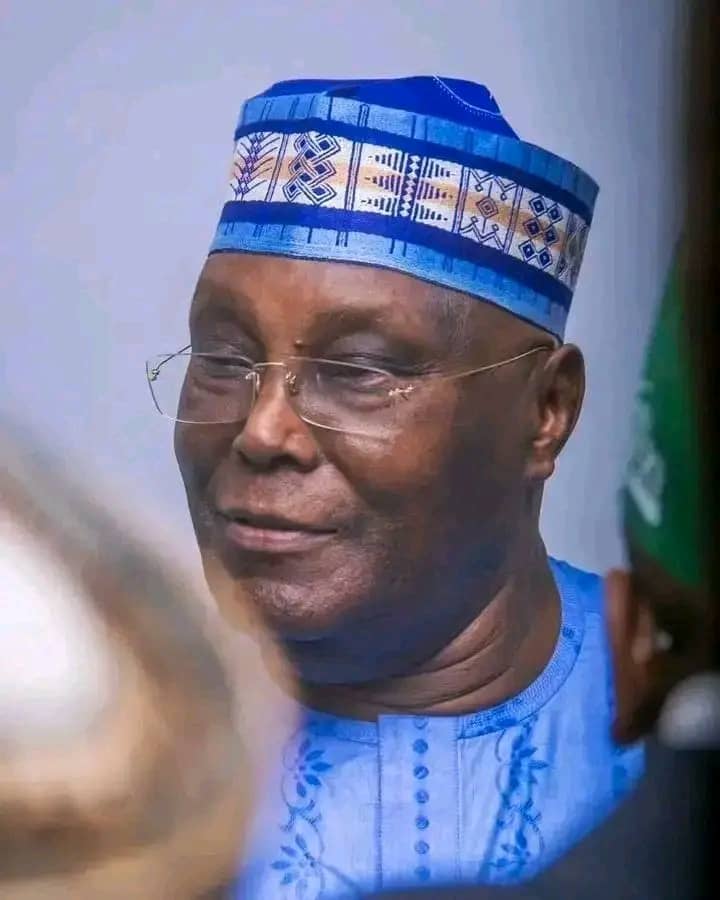
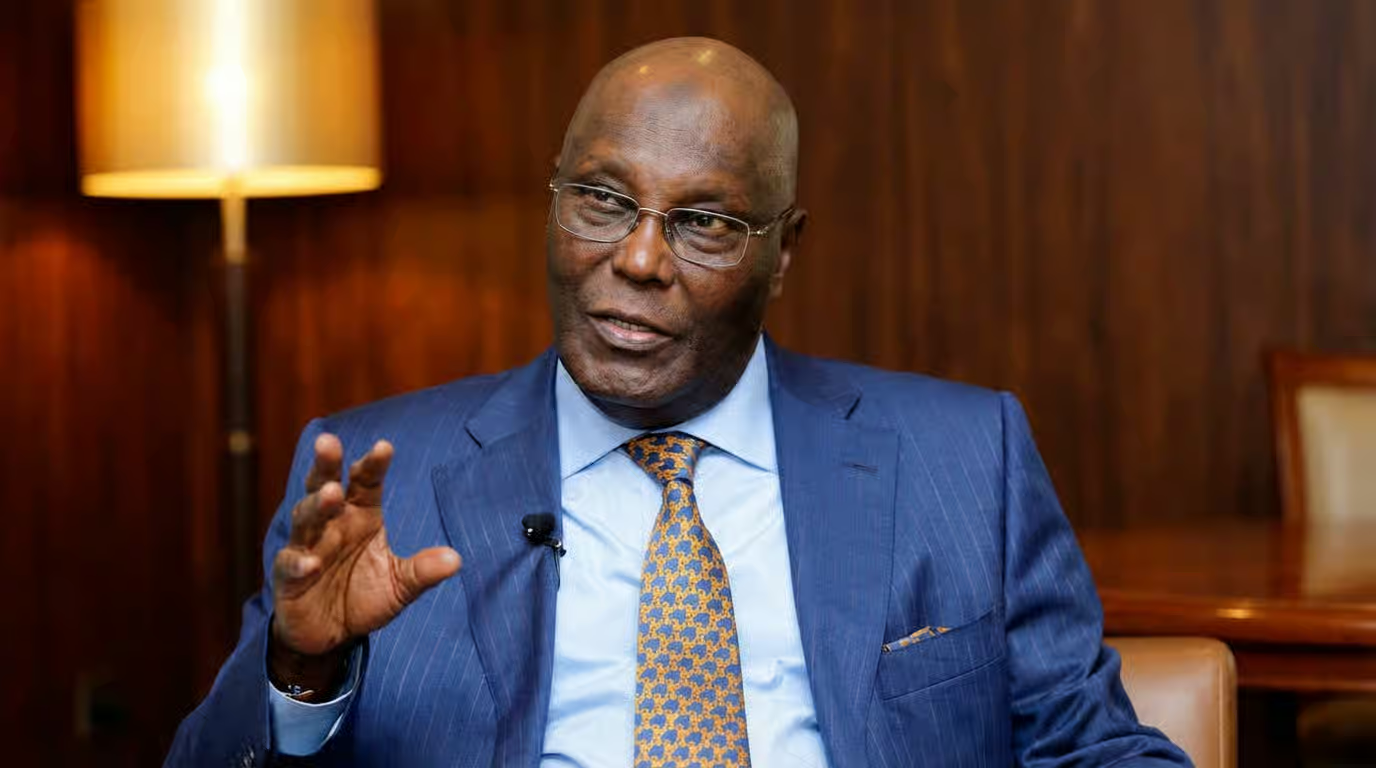
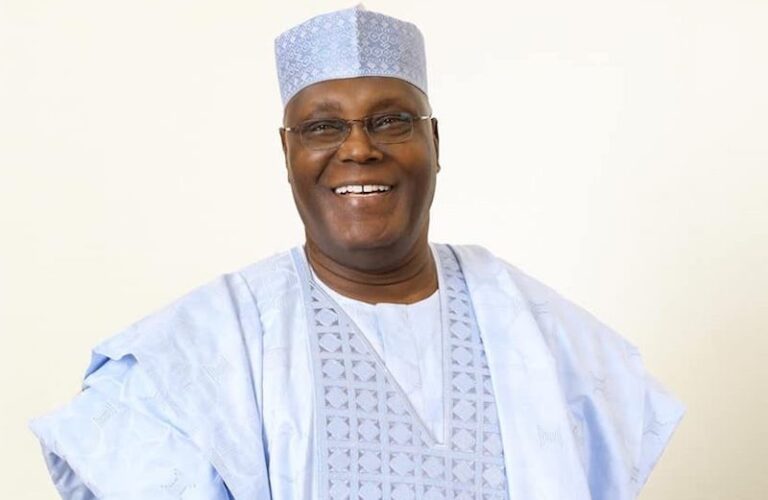
At the centre of this movement stands Atiku Abubakar, a statesman whose record includes major economic reforms.
During his tenure as Vice President between 1999 and 2007, Nigeria witnessed substantial economic expansion and the liberalisation of the telecommunications sector.
That reform alone transformed Nigeria’s economy and placed communication tools into the hands of millions of citizens.
His vision for 2027 is grounded in practical statecraft.
Restructuring the federation.
Rebuilding the security architecture.
Attracting productive investment.
Restoring macroeconomic confidence.
And placing governance once again in service of productivity, accountability, and national cohesion.
Nigeria does not need another era of reckless improvisation.
It needs accountable, data-driven governance.
That is the promise around which the ADC is now being organised.
V. YOUR REGISTRATION IS YOUR REVOLUTION
Anger without organisation is noise.
Pain without structure becomes lamentation.
Outrage without strategy produces nothing but exhaustion.
That is why registration matters.
Every Nigerian angered by the cost of food should register.
Every unemployed graduate should register.
Every struggling trader should register.
Every displaced farmer should register.
Every citizen who believes Nigeria can be better must register.
Registration is the foundation of political power.
The party card is not a token.
It is an instrument.
The register is not merely a list.
It is the architecture of democratic resistance.
VI. THE VERDICT OF HISTORY IS BEING WRITTEN NOW
History will ask a simple question.
What did you do when Nigeria was burning?
Were you part of the rescue?
Or merely a spectator?
The APC has had years in power.
It has held immense authority and resources.
Yet the outcomes remain devastating.
Hardship.
Inflation.
Insecurity.
Diminished hope.
Enough.
Nigeria deserves better.
Nigeria demands better.
And in 2027, Nigerians must choose better.
Stand up.
Register.
Organise.
Mobilise.
Vote.
And defend that vote.
Nigeria does not belong to APC.
Nigeria does not belong to Tinubu.
Nigeria belongs to Nigerians.
And Nigerians must reclaim it.
Aare Amerijoye DOT.B
Director General
The Narrative Foce

Enough is enough
Comrade, you have captured the sentiment of millions in four words. Enough is indeed enough. The Nigerian people have endured beyond the limits of patience. 2027 is the collective exhale of a nation that has suffered long enough. Thank you for standing with The Narrative Force.