
Among the elders of the savannah, there is an old African parable told when communities drift toward ruin. It says that when the drumbeat of hunger becomes louder than the drumbeat of celebration, the village does not ask who dances best; it asks who remembers the path to the river. In another telling, a child asks why the elders no longer argue during a drought, and the answer comes softly: “When the sky withholds rain, wisdom is no longer about words, but about wells.” An old philosophical tale tells of a village where hunger had become so familiar that people stopped calling it suffering and began calling it life.
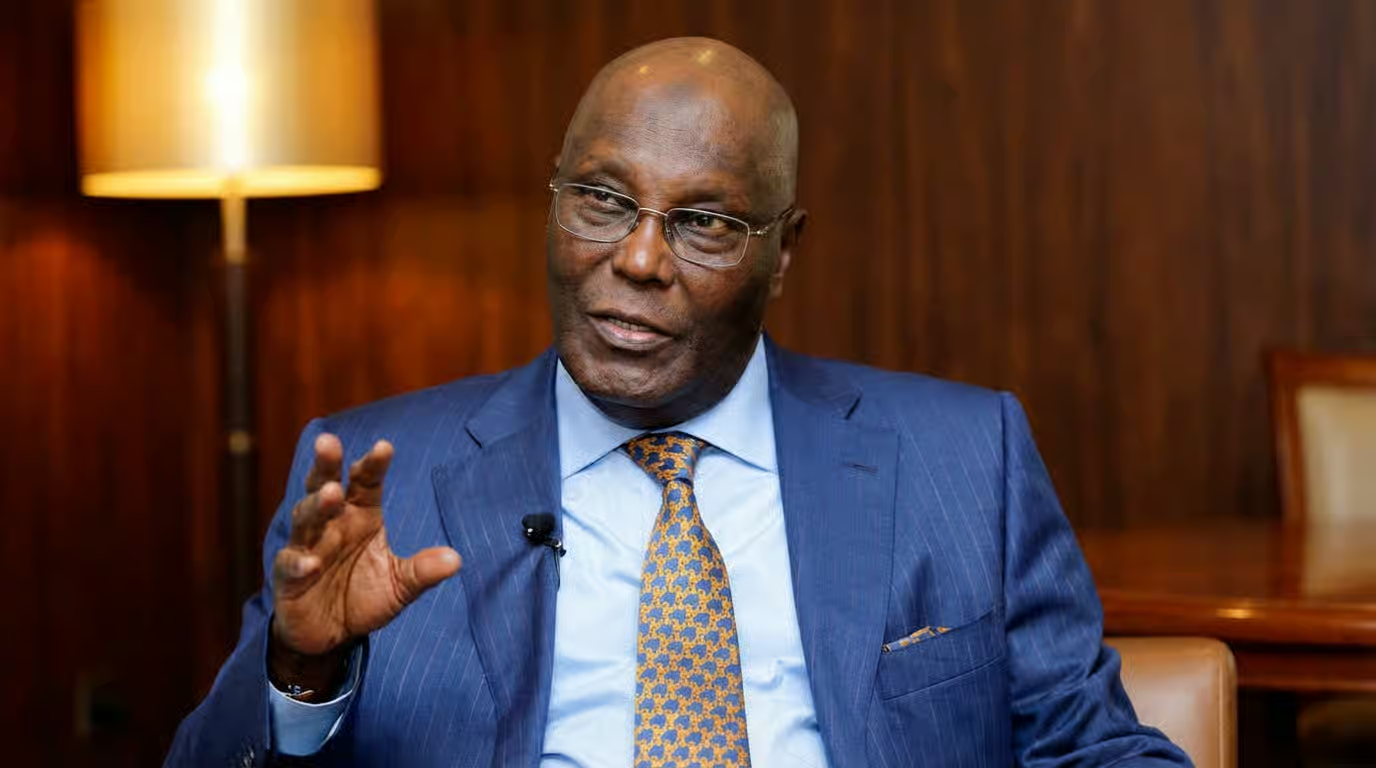
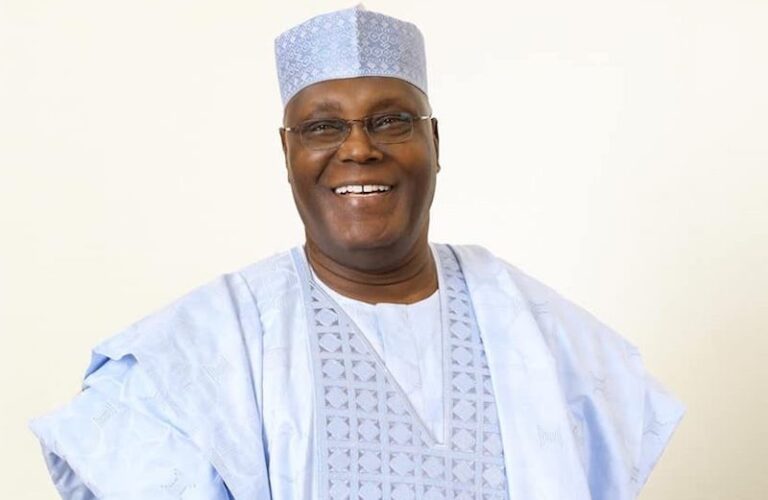
One evening, an elder gathered the people and asked a single question: “When the house is burning, do you debate the colour of the flames, or do you look for who knows where the water is?” That question silenced arguments, reordered priorities, and exposed a timeless truth,when pain becomes collective, leadership stops being about personality and becomes about capacity, conscience, and direction. Nigeria has reached that moment. And at its centre stands Atiku Abubakar, not merely as a man seeking office, but as an idea too large to be buried, too coherent to be silenced, and too enduring to be erased.
Atiku is no longer just an aspirant seeking to be a candidate on a ballot. Atiku has become an ideology. A philosophy in motion that insists democracy must be real, not ritualistic; that federalism must function, not merely exist in textbooks; and that unity must be built on justice, not enforced by intimidation. In a political environment polluted by shortcuts and strongman theatrics, his insistence on institutions is not moderation,it is rebellion.
This is precisely why Atiku unsettles his critics. You cannot smear an idea into irrelevance. You cannot assassinate a philosophy with propaganda. You cannot defeat a movement by recycling old accusations. Those who attack Atiku are not truly fighting a man; they are fighting coherence, memory, and a stubborn national yearning for fairness. When arguments fail, repetition becomes strategy,but ideas grounded in institutional logic tend to outlive propaganda.
At the grassroots, where hunger has become a daily companion and hope is rationed like a luxury, the people understand this struggle instinctively. Atiku, the suffering Nigerian people are strongly with you. They may not speak in policy papers or television soundbites, but they speak through empty pots, stalled businesses, idle graduates, and restless nights. Their loyalty is not manufactured; it is born of pain and expectation.
As Elizabeth Blackwell once observed, “The purpose of life is not to be happy. It is to be useful, to be honourable, to be compassionate, to have it make some difference that you have lived and lived well.” In the eyes of millions battered by economic cruelty, Atiku’s relevance lies precisely here, in usefulness, in compassion, and in the stubborn insistence that leadership must make a difference in the lives of the many, not the comfort of the few.
Over time, Atiku has transcended party labels. He has become a political platform of values. Liberals find space in him; conservatives find reassurance. Youths see opportunity; elders recognise stability. Regions long bruised by exclusion see an open door; faiths often weaponised against one another find calm in his equilibrium. This breadth of appeal is not accidental. It is the natural pull of inclusive politics in a fractured land.
Atiku is, at his core, a democrat by conviction, not convenience. He understands that democracy is noisy and imperfect, yet indispensable; that competition strengthens parties; that dissent sharpens governance; and that power without accountability is national sabotage. In an era where internal party democracy is treated as an inconvenience, his posture is disruptive,and therefore threatening to authoritarian impulses.
More than this, Atiku is a unifier, not the kind who demands silence in the name of unity, but the kind who listens, negotiates, and persuades. He recognises what many refuse to admit: no region can permanently dominate Nigeria, no group can be ignored indefinitely, and no nation survives sustained exclusion. Unity, to Atiku, is not the absence of disagreement; it is the presence of balance.
This moral burden is heavy, but it is not new. As Alice Meynell so piercingly warned, “It is the cause, not the death, that makes the martyr.” In Nigerian politics, the cause is clear: dignity for the poor, justice for the excluded, and a state that works for its citizens. It is this cause, not ambition,that has kept Atiku standing, season after season, against the tide of convenience and compromise.
He is also, unmistakably, a nationalist with economic clarity. His patriotism is measured not in chest-thumping rhetoric, but in jobs created, industries revived, schools funded, and lives stabilised. It is institutional, economic, and human. It rests on a simple but radical proposition: the Nigerian state must work for the Nigerian people,not for a privileged few, not for cronies, not for sectional interests, but for the many.
This is why Atiku endures. Ideas endure. Movements regenerate. Philosophies adapt and survive pressure. And Atiku has become all three,an unavoidable presence in Nigeria’s democratic conversation, a reference point by which political eras are measured, and a prism through which the nation’s anxieties and aspirations are refracted.
To stand with Atiku, therefore, is not blind loyalty to an individual. It is allegiance to a vision. It is the choice of institutions over impulses, inclusion over exclusion, unity over division, competence over chaos, and hope over fear. It is political reason asserting itself against cynicism.
Leader, we are fully with you. ✊
Not because politics demands it,but because history, suffering, reason, and the future keep pointing in your direction.
Aare Amerijoye DOT.B
Director General,
The Narrative Force