Aare Amerijoye DOT.B
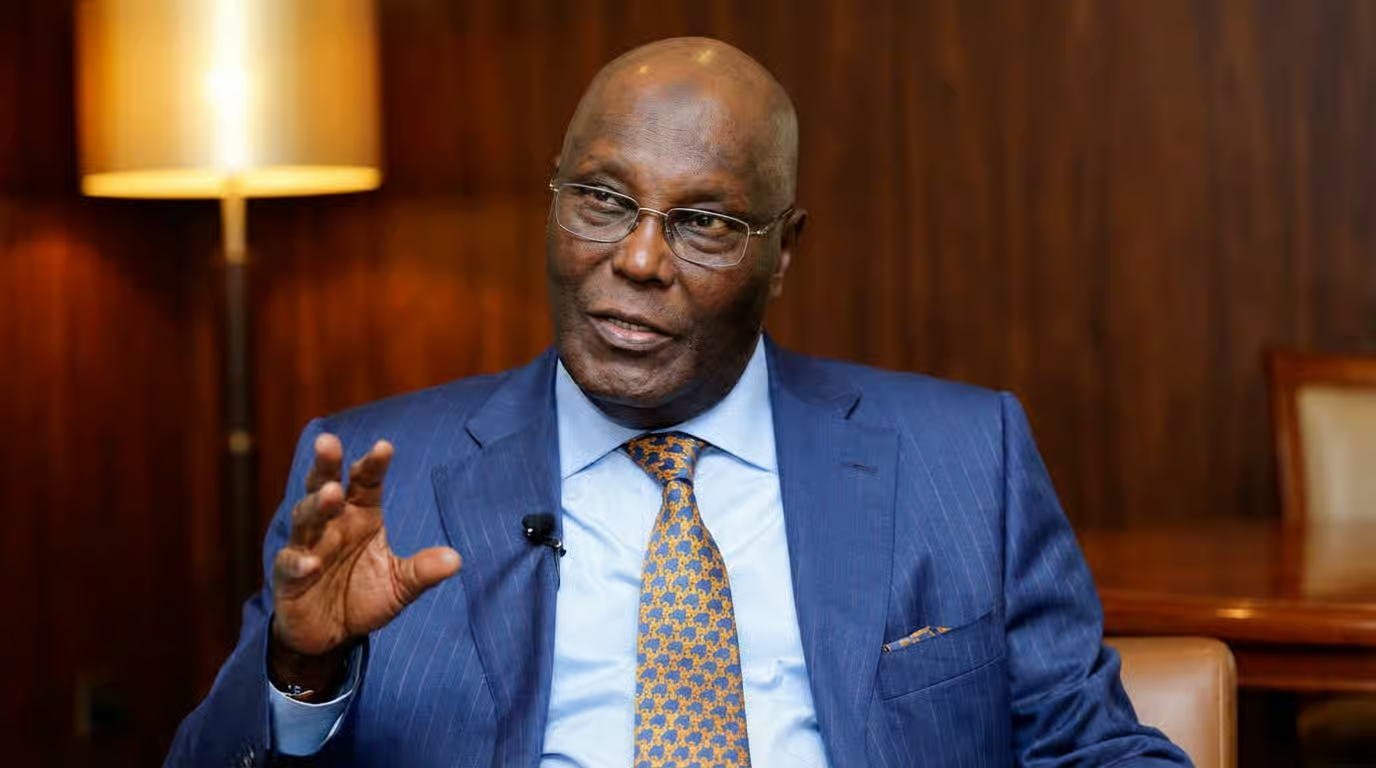
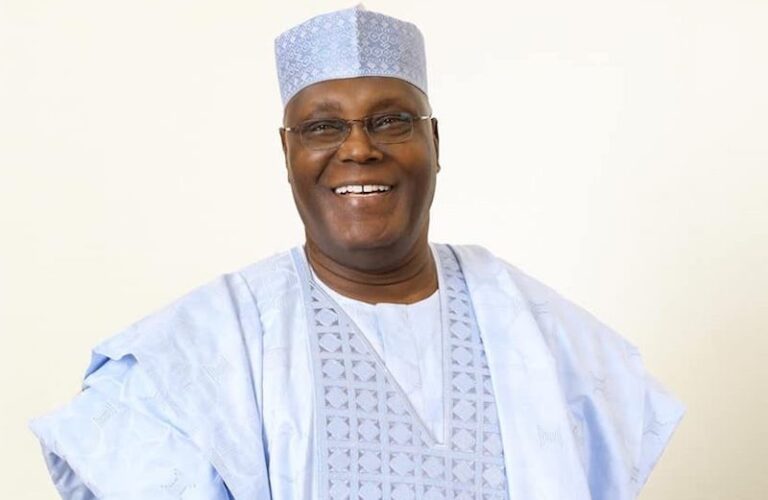
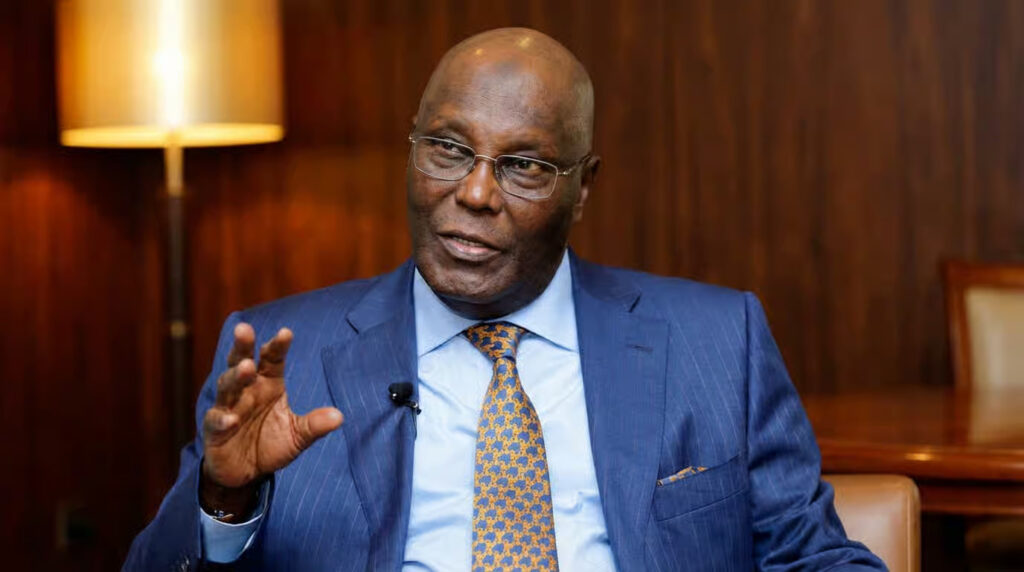
Atiku Abubakar: Ideology, Philosophy, Unifier, Democrat, Nationalist.
History is not shaped by the loudest voices. It is shaped by the most enduring ideas. Nations rise and fall on the strength of the philosophies that guide their leadership. And in moments of national uncertainty, when institutions tremble and citizens begin to question the future, societies instinctively search for figures whose political lives represent more than ambition. They search for men whose careers embody a governing philosophy.
Nigeria today stands in such a moment.
Across the vast landscape of its political conversation, one name continues to recur with unusual persistence, cutting through the noise of propaganda, the fatigue of economic hardship and the cynicism of partisan quarrels.
That name is Atiku Abubakar.
To describe Atiku merely as a presidential candidate is to describe a mountain as a stone. It may not be entirely wrong, but it is woefully incomplete. Atiku Abubakar represents something deeper in Nigeria’s political evolution. He represents an ideology, a governing philosophy, and a democratic tradition forged over decades of national engagement.
Atiku is an ideology, a philosophy, a political force, a unifier, a democrat and a nationalist.
And millions of Nigerians stand firmly with him.
I. AN IDEOLOGY: THE MAN AS A GOVERNING DOCTRINE.
Political ideologies are rarely born in academic theory alone. They emerge from the lived realities of societies grappling with real problems.
Atiku Abubakar’s political doctrine rests upon four foundational principles: a united Nigeria, a liberalised and competitive economy, accountable governance, and the uncompromising defence of democratic institutions.
These principles have not been invented for electoral convenience. They have been refined through more than four decades of political participation, economic investment and national advocacy.
His policy framework has consistently argued for restructuring Nigeria’s fiscal architecture, strengthening federalism and allowing producing regions greater derivation revenues in order to stimulate local development.
His economic proposals envision the attraction of thirty billion dollars annually in foreign direct investment and the creation of hundreds of thousands of new jobs through a private-sector-driven growth strategy.
This is not the language of populism.
It is the language of structural reform.
It is the blueprint of a nation waiting for disciplined implementation.
II. A PHILOSOPHY: PRIVATE ENTERPRISE AS NATIONAL LIBERATION
At the heart of Atiku Abubakar’s philosophy lies a conviction that government must enable prosperity rather than monopolise it.
Long before it became fashionable in policy circles, he argued that economic vitality grows when citizens are empowered to create, innovate and compete.
His establishment of the American University of Nigeria in Yola in 2004 stands as one of the clearest expressions of this belief. It demonstrated that world-class educational institutions could emerge from private initiative within Nigeria itself.
This philosophy carries enormous relevance in a country where UNESCO reports more than ten million children remain out of school and youth unemployment continues to threaten social stability.
Atiku’s argument is straightforward: government must create an enabling environment where citizens can prosper through enterprise rather than remain dependent on fragile state patronage.
In a nation searching for sustainable economic direction, this philosophy is not merely persuasive.
It is indispensable.
III. A UNIFIER: STITCHING A FRACTURED NATION
Nigeria’s diversity is both its greatest strength and its most persistent political challenge.
With hundreds of ethnic groups, multiple religious traditions and vast regional disparities, the task of holding the federation together demands unusual political sensitivity.
To govern Nigeria is to conduct a permanent negotiation of unity.
Atiku Abubakar has long demonstrated an instinct for bridge-building across Nigeria’s complex social landscape.
Throughout his political life he has worked with leaders from every region and faith tradition. His political alliances have consistently reflected a commitment to national balance rather than sectional dominance.
His 2019 presidential ticket with Peter Obi, an Igbo Christian from the South-East, symbolised a vision of Nigeria that transcends narrow identity politics.
It affirmed a simple truth: Nigeria can only prosper as a united republic.
A nation that governs for one region cannot govern for long.
IV. A DEMOCRAT: PRINCIPLE ABOVE POWER
Democracy is not merely the conduct of elections. It is the preservation of constitutional limits.
One of the defining moments of Nigeria’s democratic history came during the attempted constitutional amendment for a third presidential term in 2006.
At that critical moment, Atiku Abubakar, then serving as Vice President, openly opposed the proposal.
His resistance came at great personal and political cost. Yet that opposition contributed significantly to the preservation of Nigeria’s constitutional order.
The philosopher Edmund Burke once wrote: “The only thing necessary for the triumph of evil is for good men to do nothing.”
Atiku chose not to do nothing.
His career since then has reflected a consistent commitment to democratic procedure. Electoral disputes have been pursued through the courts rather than through destabilising confrontation.
Such restraint is not weakness. It is the discipline of democratic conviction.
V. A NATIONALIST: INVESTING IN NIGERIA
True nationalism is not expressed through speeches alone. It is demonstrated through long-term investment in one’s country.
By this measure, Atiku Abubakar stands among the most consequential Nigerian nationalists of his generation.
Through educational institutions, business ventures and economic initiatives, thousands of Nigerians have benefited from opportunities created within the country.
The American University of Nigeria alone has produced graduates now contributing to governance, entrepreneurship and civil society across the nation.
Rather than exporting capital abroad, he has consistently invested within Nigeria’s economic environment.
That choice reflects a deeper faith in the country’s future.
VI. A NATION AT A CROSSROADS
Nigeria’s current challenges are severe.
Economic pressures have intensified. Inflation has strained household incomes. Millions continue to face multidimensional poverty, according to official statistical reports.
Infrastructure deficits, energy shortages and security concerns remain pressing national issues.
These realities demand leadership that combines experience with clarity of direction.
Nigeria cannot afford governance by improvisation.
It requires a deliberate programme of reform.
VII. THE MOMENT FOR SERIOUS LEADERSHIP
At moments of national difficulty, politics must rise above theatrics.
The question facing Nigeria is not merely who will contest the next election. The question is who possesses the intellectual preparation, institutional respect and national vision required to guide a complex republic through turbulent times.
Leadership must be more than personality.
It must represent a coherent governing philosophy.
For many Nigerians, Atiku Abubakar represents such a philosophy.
VIII. THE ADC AND A NEW POLITICAL ALIGNMENT
The African Democratic Congress has increasingly emerged as a platform for political realignment among Nigerians seeking a credible alternative within the democratic system.
Across multiple states, new grassroots structures are forming as citizens explore political options capable of addressing the country’s governance challenges.
The momentum reflects a broader national search for leadership that prioritises competence, economic reform and democratic stability.
IX. OUR DECLARATION
There comes a moment in the life of every nation when neutrality becomes indistinguishable from resignation.
Nigeria has reached that moment.
The decisions made in the coming electoral cycle will shape the future of over two hundred million citizens.
Leadership must therefore rise above slogans and embrace serious national responsibility.
Atiku Abubakar’s long political journey reflects decades of experience, resilience and institutional engagement.
For many Nigerians, he represents not merely a candidate but a governing philosophy rooted in democratic conviction and economic reform.
And in moments of national uncertainty, ideas often matter more than personalities.
ATIKU 2027
NIGERIA DECIDES
Restructure. Rebuild. Reclaim.
Aare Amerijoye DOT.B
Aare Atayese of Odo Oro Ekiti
Director-General
The Narrative Force