Aare Amerijoye DOT.B
Each time I survey the wreckage of Nigeria’s recent years, I do not feel despair for its own sake. I feel urgency. Urgency born of the conviction that this nation, rich in human potential and natural endowment, is capable of far more than the diminished existence it has been condemned to under a leadership that promised renewal but delivered ruin.
The tragedy of Nigeria is not merely that a government failed. Governments have failed before. The deeper tragedy is that a people of resilience and intelligence are being held back by a political class that has mastered the art of acquiring power while remaining utterly incapable of wielding it for the public good. What we are witnessing is not a governance crisis. It is a crisis of vision, competence, and character at the highest levels of the state.
Let us be clear-eyed about where we stand.
The naira has collapsed to historic lows. Inflation has gutted household savings and driven millions deeper into poverty. Fuel subsidies were removed without a cushion for the poor. Electricity tariffs have surged. Telecoms costs have risen sharply. The ordinary Nigerian is paying more for less, in every dimension of daily life. And the government’s response has been, in the main, a combination of denial, deflection, and delay.
This is not an accident. It is the predictable consequence of entrusting national leadership to those who lack the capacity, the preparation, and the commitment to govern a complex, diverse, and strategically vital nation.
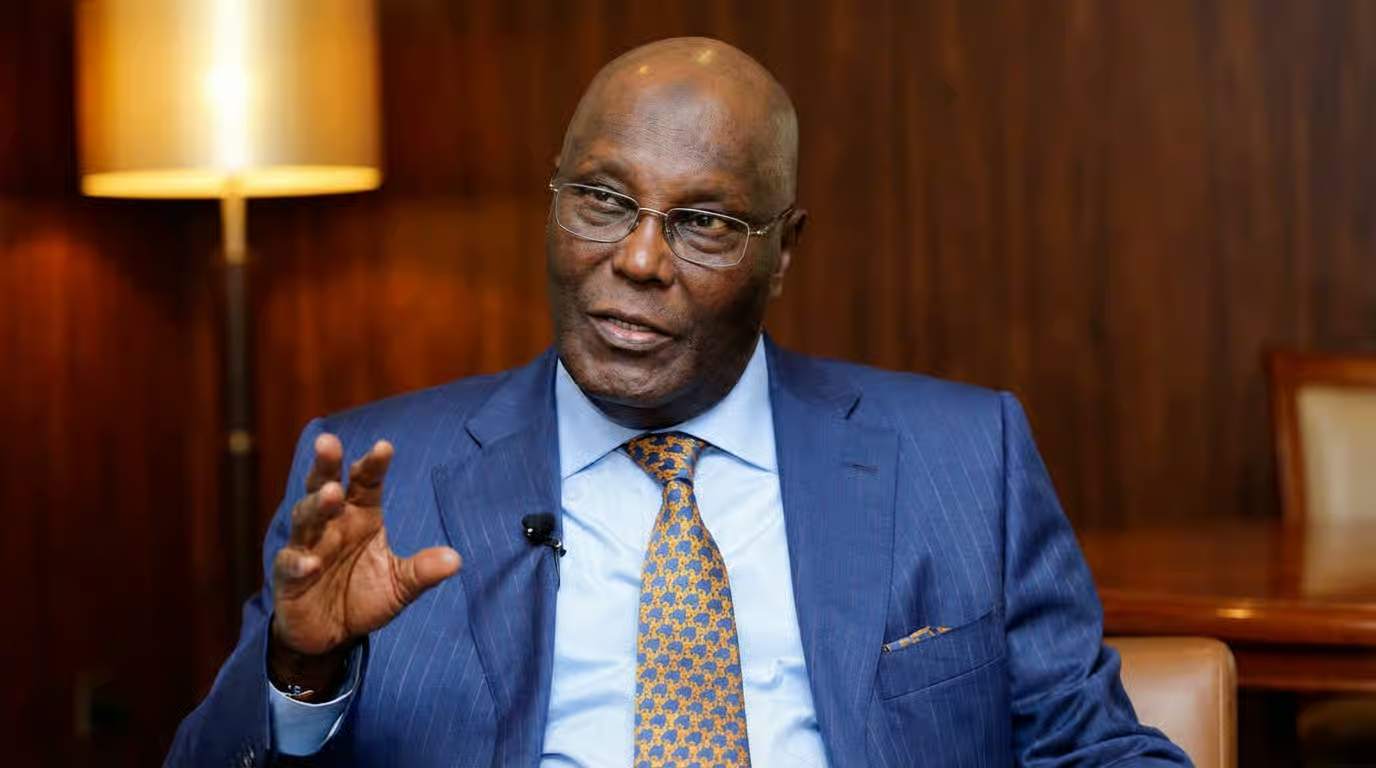
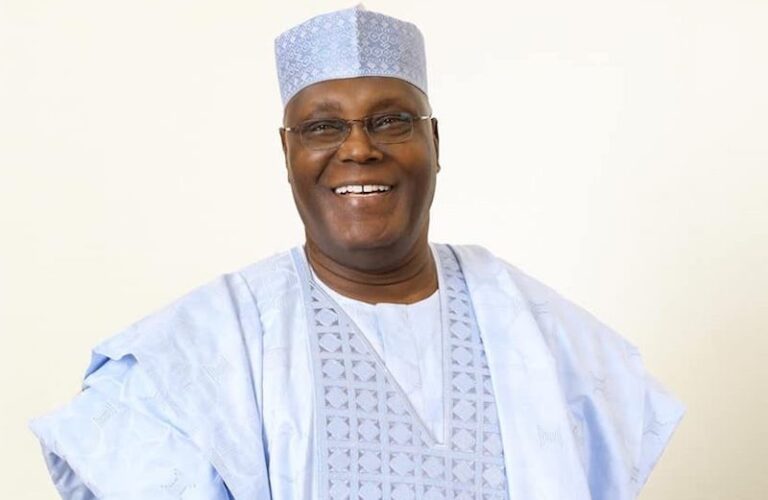
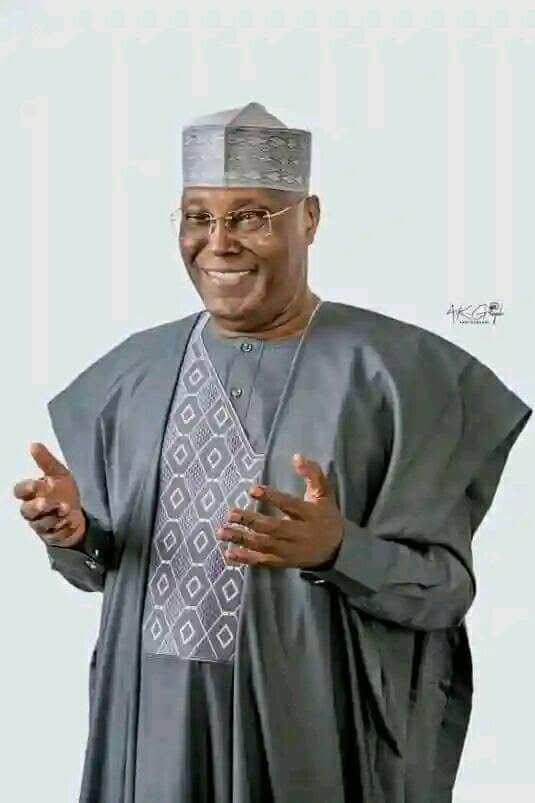
Nigeria does not need managers of decline. Nigeria needs builders of prosperity. It needs Atiku Abubakar.
THE INDICTMENT OF THE PRESENT.
How does a nation blessed with vast oil wealth remain so comprehensively poor?
How does a leading crude oil producer continue to import refined petroleum like a dependent economy, decades after independence?
How does a country of over 200 million people, with some of the most talented citizens on the African continent, continue to haemorrhage human capital through emigration while failing to create the conditions for prosperity at home?
How do oil-producing communities remain theatres of neglect, where infrastructure is absent, hope is scarce, and development is spoken of only in the language of broken promises?
These are not rhetorical mysteries. They are the documented consequences of governance failures that span administrations, but which have deepened catastrophically under the present government. When Nigerians voted in 2023, they were promised competence. They received confusion. They were promised prosperity. They received hardship. The APC has presided over Nigeria’s most acute economic contraction in recent memory, and it has offered, in response, little more than excuses dressed as policy.
The numbers confirm what ordinary Nigerians already feel in their bones. The naira, which exchanged at roughly 460 to the dollar at the start of the Tinubu administration, has since fallen beyond 1,500 to the dollar at its worst. Headline inflation breached 33 per cent in 2024, one of the highest rates recorded in Nigeria’s modern economic history. These are not abstract figures. They represent school fees that cannot be paid, medicines that cannot be bought, and businesses that cannot survive
WHAT ATIKU ABUBAKAR REPRESENTS.
Against this backdrop of failure, there is a figure whose record, whose preparation, and whose vision stand in stark contrast to the diminished standard Nigeria has come to accept as normal.
Atiku Abubakar is not a political fantasy. He is a documented reality. As Vice President of the Federal Republic from 1999 to 2007, he was a central architect of one of the most consequential periods of economic reform in the nation’s history.
It was during his tenure that Nigeria’s telecommunications sector was liberalised, transforming a broken state monopoly into a dynamic, competitive industry that today connects over 200 million subscribers and contributes significantly to national GDP. That single reform changed the lives of ordinary Nigerians in ways that are still felt every day. In 2001, when liberalisation took effect, Nigeria had fewer than 500,000 telephone lines. Within a decade, that figure had surpassed 90 million active connections. That is what deliberate, courageous economic reform looks like in practice.
It was during that era that Nigeria’s economy grew at an average rate of approximately 7 per cent annually, with GDP expanding from roughly $46 billion in 1999 to over $166 billion by 2007. Debt burden reduced. The foundations of a more diversified economy began to take shape. Foreign direct investment increased.Privatisation introduced accountability into sectors long characterised by inefficiency and rent-seeking.
These are not claims. They are records. And records are exactly what a nation in crisis needs to examine when choosing who to trust with its future.
Atiku’s economic blueprint is not built on slogans. It is built on experience, evidence, and a proven understanding of how prosperity is created at scale.
Atiku understands that Nigeria’s recovery will require more than rhetorical commitments. It will require a deliberate dismantling of the structures that perpetuate poverty, a serious investment in infrastructure and human capital, credible engagement with the global investment community, and a government that operates with transparency and accountability.
He has the private sector credibility to engage Nigerian and international investors as an equal. He has the institutional knowledge to reform public systems that have grown rigid with patronage and inefficiency. He has the pan-Nigerian identity, built across decades of relationships with communities from every geopolitical zone, to lead a country that badly needs a unifying hand.
It is also worth addressing directly what some in northern Nigeria have raised as a concern: that Atiku’s time has passed, or that the ADC platform is too nascent to carry a national contest. These are legitimate questions that deserve honest answers rather than dismissal. Atiku at his current stage is not a candidate coasting on nostalgia. He is a candidate whose relevance has been renewed, not diminished, by the scale of Nigeria’s present crisis. The reforms he championed in the early 2000s are precisely the kind Nigeria desperately needs today. And the ADC, far from being a liability, represents the kind of clean platform unburdened by the failures of the legacy parties that a genuine reform candidate requires.
THE ADC COALITION: A PLATFORM FOR NATIONAL RESCUE.
The African Democratic Congress represents something Nigeria has rarely seen: a coalition assembled around principle rather than purely around power.
The arithmetic of the 2023 election is instructive and cannot be wished away. The combined votes cast for the opposition candidates substantially exceeded those cast for President Tinubu. That is not a footnote. It is a mandate waiting to be properly organised.
The ADC, under the banner of Atiku Abubakar, has the opportunity to consolidate that latent majority into a governing coalition defined not by ethnicity or region, but by a shared commitment to economic transformation, institutional integrity, and democratic accountability.
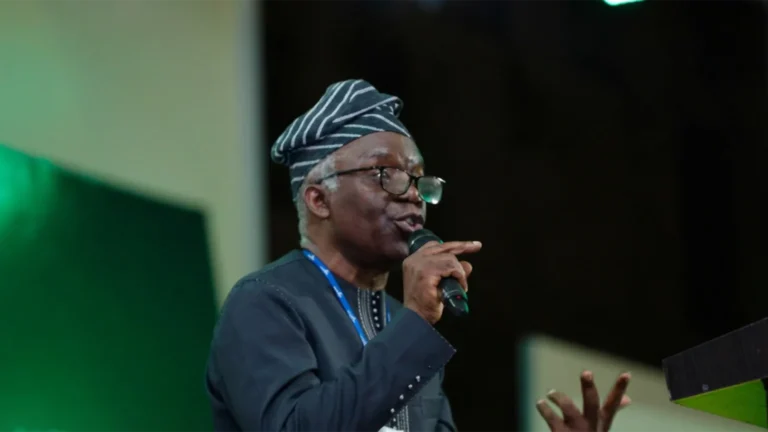
Respected voices across the Nigerian political spectrum, including eminent legal minds such as Femi Falana SAN and reform advocates such as Oby Ezekwesili, have repeatedly called for a politics of substance over sentiment. That call finds its fullest expression in the Atiku-ADC platform.
THE RESPONSIBILITY OF THE CITIZEN.
No national recovery is possible without an informed and engaged citizenry. This must be stated plainly.
When citizens defend failure because of ethnic solidarity, they prolong the suffering of their own communities. When citizens excuse incompetence because of regional pride, they deny their children the future those children deserve. When citizens refuse to demand accountability from their representatives, they become complicit in the decay of the institutions that should serve them.
Nigeria must move beyond the politics of loyalty to individuals and embrace the politics of loyalty to outcomes. The question is no longer which tribe or zone produces the president. The question is: which candidate has the preparation, the record, and the vision to lead Nigeria out of this crisis?
The answer, examined honestly and without sentiment, is Atiku Abubakar.
The future cannot be built on blind loyalty. It must be built on informed choice. We must choose competence over propaganda. We must choose vision over noise.
THE HOUR OF DECISION.
Nigeria stands at a crossroads that is not merely political. It is civilisational. The decisions made by Nigerian citizens, political actors, civil society leaders, and community voices over the next two years will determine whether this country continues its trajectory of managed decline, or makes the turn toward deliberate, structured, and sustainable recovery.
This is the moment to reject the politics of excuses. The moment to demand results, not explanations. The moment to insist that leadership be measured not by what it inherited, but by what it delivered. And it is the moment to recognise that the path from where Nigeria stands today to where it must go requires not merely a change of party, but a change of calibre.
It is the moment to align with a candidate whose entire career has been a preparation for this assignment. A candidate who understands both the diagnosis and the prescription. A candidate who has built businesses, reformed institutions, navigated crises, and demonstrated, in documented and verifiable ways, the capacity to move Nigeria forward.
It is the moment for Atiku Abubakar. It is the moment for the ADC. It is the moment for a new national direction.
History will not forgive hesitation.
Posterity will not reward complacency.
And Nigeria, for all its trials, has not exhausted its capacity for greatness.
The choice, as it has always been, is ours.
Aare Amerijoye DOT.B
Director-General,
The Narrative Force (TNF)