Aare Amerijoye DOT.B
Nigeria is bleeding, not in silence, but in full public display. The markets are crying. The streets are groaning. The young are ageing in frustration. The old are dying in disappointment. The cost of living is no longer “high”, it has become hostile. Hunger is no longer a hardship, it is a national language. Hope has become a luxury item, sold only to the rich. And while the people wrestle daily with the cruelty of survival, governance has turned into an arrogant theatre where excuses are issued like press statements and suffering is treated like an ordinary statistic.
This is not governance. This is punishment dressed in agbada.
And in this national emergency, Nigerians must stop behaving like spectators. We must stop treating elections like entertainment. We must stop rewarding incompetence with applause. Nigeria is not a reality show. Nigeria is a collapsing house. What we need now is not a performer, but a rescuer. Not a noise-maker, but a nation-builder. Not a political gambler, but a competent captain.
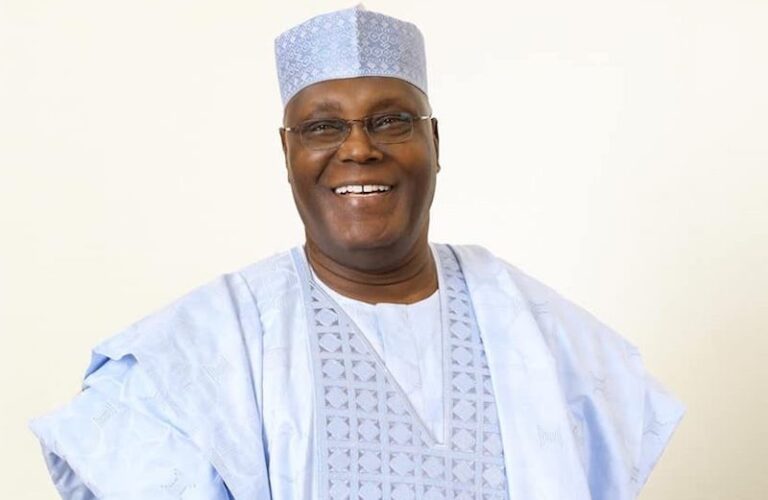
That is why I say it with a clear mind, a steady chest, and an unbreakable conviction: Atiku Abubakar is not just an option, Atiku Abubakar is the corrective answer to Nigeria’s prolonged mistake.
When you mention Atiku, the propaganda merchants begin their ritual of distortion. They speak as if truth is their enemy. They shout as if noise is evidence. They demonise as if hatred is governance. But their anger is not logical, it is strategic. Atiku terrifies them because he represents the end of their profitable chaos. They do not fear him because of what he has done, they fear him because of what he can undo , their confusion, their mediocrity, their desperate grip on Nigeria’s destiny.
Let us face it: Nigeria has tried the experiment of emotional leadership. We have tasted the medicine of arrogance. We have endured the prescription of trial-and-error. We have been forced to swallow policies that look good on paper and feel like poison in reality. We have watched the naira collapse like a man pushed off a cliff. We have seen businesses suffocate. We have seen families disintegrate under financial pressure. We have seen citizens become refugees inside their own country, running from insecurity, hunger, and hopelessness.
Now the question is simple: Do we want to survive, or do we want to continue suffering as a tradition?
Atiku Abubakar stands like a stubborn mountain in the middle of this national confusion. Not because he is begging for sympathy, but because he carries a quality Nigeria has lacked for too long: preparedness. Atiku is not a political accident. He is not a seasonal candidate. He is not an emergency replacement. He is not a social media miracle. He is a studied leader, tested by history, forged by experience, and refined by the hard lessons of national politics.
Plato once declared, “The price good men pay for indifference to public affairs is to be ruled by evil men.” That warning has become Nigeria’s biography. We became indifferent. We tolerated nonsense. We laughed at unseriousness. We celebrated packaging over performance. And now we are paying the price in hunger, insecurity, unemployment, and daily humiliation. This is why the Atiku question is not merely about politics, it is about deliverance.
Atiku Abubakar is a man of national reach, not sectional thinking. He is a bridge in a country threatened by division. He is a voice of unity in a nation where ethnic politics has become a weapon of distraction. He understands that Nigeria cannot be rebuilt with insults. Nigeria cannot be stabilised with propaganda. Nigeria cannot be governed through hatred. Nigeria requires competence, balance, intelligence, and the ability to hold the entire nation together without turning governance into war.
Immanuel Kant challenged mankind: “Dare to know! Have the courage to use your own understanding.” Nigerians must now dare to know the truth: our pain is not accidental, it is engineered by incompetent leadership and sustained by our silence. We must use our understanding. We must open our eyes. We must look beyond party symbols and examine capacity. And if we do, we will see that Atiku is not merely a candidate, he is a rescue mission.
Let us speak about the economy — because that is where every Nigerian now feels the whip. The economy has become a cage. Jobs have become myths. Small businesses are dying like candles in the rain. Prices rise like stubborn smoke and salaries remain like frozen stones. The poor are drowning, and the government is busy praising itself. This is not reform, this is ruin.
Atiku’s economic philosophy is not the language of emotional governance. It is the language of enterprise, investment, productivity, and prosperity. It aligns with Adam Smith’s logic of economic growth through productivity and empowerment. Atiku understands what many politicians do not: you cannot tax a dead economy into life. You must stimulate growth, attract investment, support industries, and create opportunities. That is leadership. That is competence. That is the kind of thinking Nigeria needs, not arrogant experimentation with human lives.
Atiku represents what Nigeria has been denied: a pro-business government with a human conscience.A leadership that understands that poverty is not a slogan, it is a crisis.A leadership that sees hunger not as an opposition exaggeration, but as a national emergency.A leadership that recognises that youths cannot be mocked into patriotism while they are starved into frustration.
Mahatma Gandhi once warned the world, “An eye for an eye ends up making the whole world blind.” Yet today, many leaders want to rule Nigeria with vengeance, hostility, intimidation, and arrogance. Atiku, however, embodies dialogue, reconciliation, and national maturity. He carries the temperament of a leader who can unite the broken fragments of our country and stabilise the political atmosphere enough for economic life to return.
And let us be honest: Nigeria is not suffering because we lack resources. Nigeria is suffering because we lack serious leadership. We have oil, gas, solid minerals, fertile land, human capital, and brilliant youths. What we lack is the competent framework to turn these into national wealth. That framework will not come from political comedians. It will come from a leader who understands governance as a deliberate project, not a lucky appointment.
Atiku Abubakar is that leader.
He has paid his dues. He has walked the corridors of national power. He understands the machinery of government, the complexity of Nigeria, and the urgency of a nation on its knees. He is not learning governance on the job. He is not improvising leadership while citizens are dying. He is prepared, experienced, connected, and capable of assembling the calibre of minds required to fix this country.
Friedrich Nietzsche said, “He who has a why to live can bear almost any how.” Nigeria has been forced to bear too many hows: how to eat, how to survive, how to cope, how to escape insecurity, how to pay school fees, how to buy fuel, how to breathe under this economic suffocation. But Atiku provides Nigeria a why: why hope can return, why prosperity is possible, why unity can be real, why governance can work again.
This is why the Atiku project is bigger than party politics. It is the fight between:
Competence and chaos
Productivity and poverty
Unity and division
Policy and propaganda
National rescue and national ruin
To the voter, I speak directly: this election season must not be business as usual. Your PVC is not a decoration. It is a weapon of liberation. Your vote is not a gift to politicians, it is an investment in your survival. If you do not vote with your brain, you will continue paying with your stomach.
Stop voting for slogans.
Stop voting for noise.
Stop voting for tribal sentiment.
Stop voting for online hype.
Stop voting for cosmetic packaging.
Nigeria needs a leader, not a mascot.
Nigeria needs a builder, not a blame-shifter.
Nigeria needs competence, not propaganda.
Nigeria needs Atiku Abubakar.
Atiku is not just running for office. He is running against hunger.
He is running against insecurity.
He is running against unemployment.
He is running against economic suffocation.
He is running against the national shame that Nigeria has been turned into.
And that is why they fear him. That is why they attack him. That is why they sponsor lies. Because Atiku is the one candidate capable of collapsing their entire industry of deception and replacing it with governance.
This is the moment Nigeria must be wise. The moment Nigeria must be bold. The moment Nigeria must be strategic. We do not need another season of suffering. We need a season of rebuilding. We need a season of prosperity. We need a season where youths can dream again without being punished for dreaming.
In conclusion, let the cynics laugh. Let the haters insult. Let the propagandists scream. History does not respond to noise, history responds to outcomes. And when Nigeria finally chooses competence over confusion, capacity over cosmetics, and leadership over lunacy, one truth will ring like thunder across the nation:
Atiku Abubakar is not just the choice, he is the chance.
Atiku Abubakar is not just a candidate, he is Nigeria’s corrective destiny.
Atiku Abubakar is not coming to decorate power, he is coming to rescue a people.
Let us rise. Let us organise. Let us mobilise. Let us speak to the streets, the campuses, the markets, the churches, the mosques, the diaspora, the professionals, the artisans, the unemployed, the struggling mothers, the frustrated youths.
Because this is not just politics.
This is survival.
Aare Amerijoye DOT.B
Director-General,
The Narrative Force.
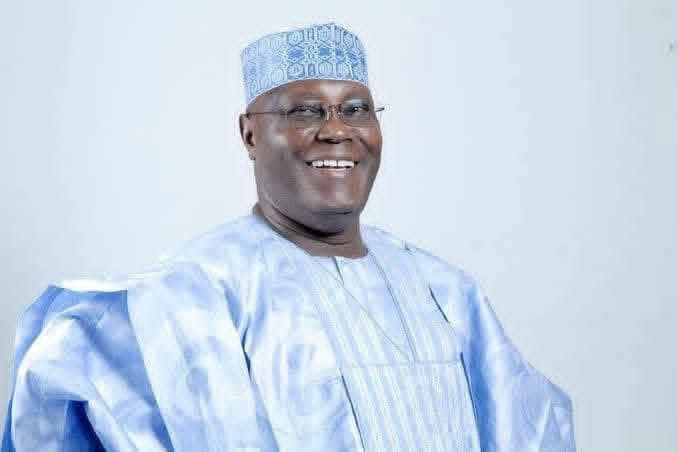

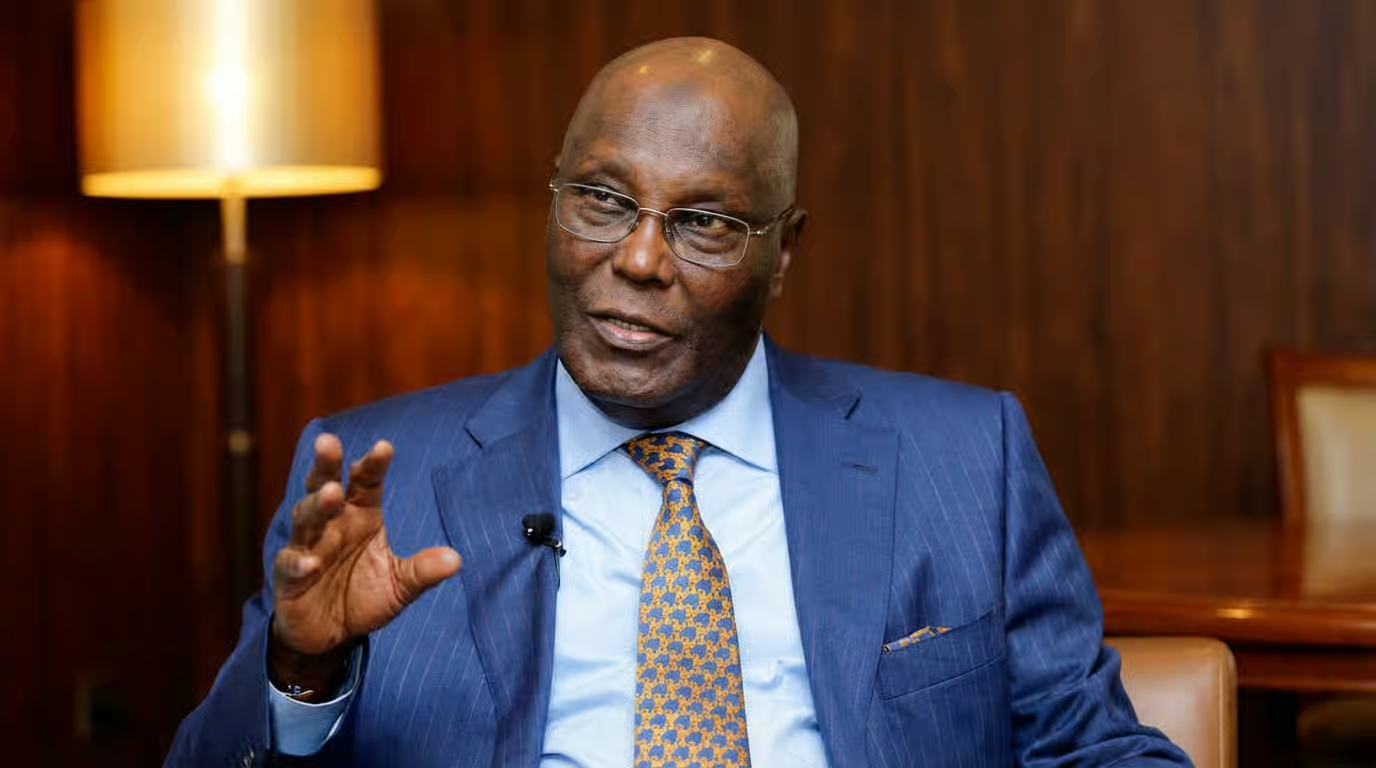

The Narrative Force, in my opinion, is structured to advance the cause of Alhaji Atiku Abubakar GCON. But if the Tinubu administration is a disaster to Nigeria, I can’t see how different the former vice president is from the political class ruling our nation.
Atiku has had his own fair share of scandals and CANNOT be said to be the answer to our problems. Is the part of the problem, if we must view it from the prism of national rebirth, as TNF is wont to propose.
I don’t even see Peter Obi or any other frontrunner politician different from the class of politicians we have now. He did nothing exemplary and spectacularly sustainable in Anambra that we can cheer about.
Do we think that any well-meaning politician can operate so well in this political space called Nigerian Politics without being regarded as a misguided idealist? The man cannot be different from the environment.
Atiku has been an active participant in this political space. He is just a part of the pack. He hasn’t become president because he has been in contention with greater forces (and he knows that), and not because he is any different.
Tinubu is NOT the problem.
Atiku is NOT the answer.
Nigerians have been the problem, and Nigerians will be the answer. And only when we are TRULY ready, not mere wishful thinking.
Thank you for your thoughtful intervention. I genuinely respect your perspective because democracy thrives on reasoned disagreement.
You are correct that Atiku served as Vice President, and history must be examined honestly. However, it is equally important to evaluate outcomes. During that reform era, Nigeria witnessed significant structural changes, including the telecommunications revolution that liberalised the sector and opened it to private participation. What followed was explosive growth in mobile penetration, investment inflows, job creation, and digital connectivity that transformed both commerce and daily life. That transformation did not happen accidentally; it was policy-driven.
In the same period, Nigeria secured Paris Club debt relief, strengthened fiscal frameworks, and implemented privatisation policies that restored investor confidence and macroeconomic stability. These were measurable outcomes.
On Peter Obi, I acknowledge that fiscal discipline in Anambra earned recognition. Governance should always be judged by performance.
Regarding the idea that Nigerians are the problem, I respectfully differ. Citizens operate within the incentives and structures leadership creates. When systems are stable and predictable, productivity rises. When policies create volatility and uncertainty, businesses shrink and savings erode.
The objective of my article is not blind allegiance to personalities. It is a comparative evaluation of economic management, institutional coherence, and national direction. Debate sharpens democracy, and I welcome it.