ATIKU ABUBAKAR, THE MAN FOR THE HOUR.
A NATION ON TRIAL, A REGIME IN THE DOCK, AND THE WORK THAT MUST BEGIN NOW.
Aare Amerijoye DOT.B
What, in truth, does Christmas demand of a nation in moral distress? Is it merely a ritual of lights and hymns, or is it, at its most honest, a season that compels societies to confront their conscience?
Christmas, observed just three days ago on 25th December, is for Christians the remembrance of divine intervention in human history: God stepping into chaos through a chosen vessel to restore order, dignity, and hope. It is therefore not only a festival of joy, but a tribunal of reflection. And reflection, when sincere, indicts before it consoles.
On Christmas morning, while sermons praised endurance and speeches romanticised sacrifice, a harder question insisted on attention: how does a nation celebrate salvation while deliberately sustaining suffering? How does a government preach patience while engineering deprivation? And how long can a people mistake endurance for virtue?
Let us strip away propaganda and confront reality nakedly.
Under the watch of Bola Ahmed Tinubu and the All Progressives Congress, Nigeria has not merely declined; it has been methodically impoverished. This is not an accident of global winds. It is the predictable outcome of policy choices.
As at this Christmas season, flour sells between ₦38,000 and ₦42,000. In 2015, a bag of flour sold for about ₦7,000.
Bread has crossed ₦1,500. In 2015, a standard loaf sold for ₦250 to ₦300.
A 50kg bag of foreign rice now hovers between ₦70,000 and ₦85,000. In 2015, the same bag sold for ₦8,000 to ₦9,000.
Pasta now mocks the poor at ₦700 to ₦900 per pack. In 2015, pasta sold for ₦150 to ₦200.
Palm oil now approaches ₦45,000 for 25 litres. In 2015, 25 litres sold for ₦6,000 to ₦7,000.
Eggs now sell between ₦4,500 and ₦6,000 per crate. In 2015, a crate sold for ₦600 to ₦800.
Diesel now fluctuates between ₦1,200 and ₦1,400 per litre. In 2015, diesel sold for ₦140 to ₦160 per litre.
Petrol now oscillates between ₦870 and ₦900 per litre. In 2015, petrol sold at an official price of ₦87 per litre.
Kerosene now exceeds ₦1,800 per litre. In 2015, kerosene sold for ₦150 to ₦200 per litre.
Cooking gas now passes ₦15,000 for a 12.5kg cylinder. In 2015, the same quantity cost ₦3,000 to ₦3,500.
Domestic air travel now ranges from ₦250,000 to ₦500,000. In 2015, domestic air tickets averaged ₦15,000 to ₦25,000.
2015, before the APC came into power, petrol sold for ₦87 per litre. A full 75-litre tank cost ₦6,525. In that year, ₦6,525 filled a full tank.
In 2025, under Tinubu’s administration, petrol sells between ₦870 and ₦900 per litre. A full 75-litre tank now costs between ₦65,250 and ₦67,500.
In plain terms, what filled ten full tanks in 2015 now fills one tank in 2025. That is a tenfold increase in fuel cost.
This single calculation explains why transport fares have exploded, why food prices have spiralled, and why salaries are now functionally worthless.
Inflation today is above 28 percent. In 2015, inflation stood at about 9 percent.
Poverty today is expanding at an alarming rate. In 2015, Nigeria had not yet been declared the global capital of extreme poverty.
This is not a fluctuation. This is not a temporary spike. This is not global inflation alone.
This is a structural collapse of purchasing power over a decade of APC rule, a collapse that has turned survival into daily arithmetic and citizenship into endurance.
Is this reform or policy violence?
What moral framework governs a regime that watches hunger expand and responds with slogans? Who exactly is sacrificing, and for whose comfort? Tinubu’s administration has perfected a grotesque inversion of responsibility: the state abdicates duty, while the citizen is blamed for suffering. Pain is reframed as reform, hunger is baptised as patriotism, and misery is marketed as inevitability. In this moral inversion, the victim is lectured, the culprit is applauded, and the state absolves itself by sermonising deprivation.
This is not governance. It is economic sadism clothed in policy language, a governing philosophy that normalises suffering, aestheticises pain, and treats mass hardship not as an emergency to be resolved, but as a narrative to be managed. At this point, policy ceases to be technocratic and becomes punitive.
In 2015, before APC rule, the minimum wage stood at ₦18,000 per month. Petrol sold for ₦87 per litre. A full 75-litre tank cost ₦6,525. That wage could fill almost three full tanks of fuel in one month and still leave change.
Fuel was not cheap, but it was within human reach.
In 2025, under Bola Ahmed Tinubu, the minimum wage stands at ₦70,000 per month. Petrol sells between ₦870 and ₦900 per litre. A full 75-litre tank costs between ₦65,250 and ₦67,500. That wage fills barely one tank and, at the higher pump price, not even completely.
At best, a month’s minimum wage now fills one tank and leaves almost nothing for food, rent, transport, electricity, or healthcare.
Fuel prices have risen by over 900 percent. Minimum wage has risen by about 288 percent.
This widening gap explains everything Nigerians are living through: why salaries feel meaningless, why transport devours income, why food inflation never retreats, and why working people remain poor.
A wage increase that only chases fuel is not relief. It is inflation running ahead of dignity.
In 2015, fuel was a tool for movement. In 2025, fuel has become a tax on existence.
Under Bola Ahmed Tinubu, a full 75-litre tank of petrol now costs ₦65,250 to ₦67,500. That single expense now competes directly with the basic pillars of survival.
In many Nigerian cities and semi-urban centres, that same amount now pays one month’s rent for a modest room in a low-income area, or half the monthly rent for a small flat in peri-urban locations.
A basic food basket for a small household now averages ₦55,000 to ₦65,000 per month, if meals are rationed in an average poor home.
Daily transport fares for low-income workers now average ₦1,500 to ₦2,000 per day, amounting to ₦45,000 to ₦60,000 per month.
In effect, one full tank of fuel now equals one month’s rent, or one month’s food, or one month’s transport. Movement, shelter, and nourishment now fight for the same money.
Fuel is no longer just energy. It has become a parallel tax on housing, food, and mobility.
For political office holders, however, fuel is not a burden; it is an afterthought. Across federal and state governments, political office holders earn combined monthly salaries, allowances, and running costs that run into several millions of naira. Convoys consume multiple full tanks daily, funded by public resources. What empties a worker’s month does not register in the conscience of power.
This is the obscenity of the present order.
Fuel prices have become a punishment for the poor and a convenience for power. Wages crawl while allowances sprint. Sacrifice is preached downward, while comfort is constitutionally protected upward.
This is why the crisis confronting Nigeria is not merely economic; it is profoundly moral. When a government becomes indifferent to the arithmetic of survival, it forfeits not only competence, but legitimacy.
A society cannot remain stable when pain is privatised and privilege is socialised. At that point, stability survives only because the poor are exhausted, not because the system is just.
At that point, the demand for change ceases to be ideological. It becomes arithmetic.
The APC’s greatest crime is not incompetence alone; it is arrogant indifference. Faced with collapsing markets and evaporating wages, its apologists gaslight the public, massage statistics, and insult lived reality. Christmas conversations across the country, from markets to motor parks, from offices to living rooms, carried a single refrain: “Only God can help Nigeria now.”
That statement, though sincere, is dangerously incomplete.
Faith without agency is fatalism. Prayer without political responsibility is abdication. History is unequivocal: God does not repair societies without human instruments.
When famine threatened survival, Joseph was positioned. When oppression demanded confrontation, Moses rose. When moral kingship was required, David emerged. When a city lay in ruins, Nehemiah rebuilt. When redemption was necessary, Christ stepped forward. When truth needed expansion, Paul bore the burden. The pattern is eternal: divine intention, human vessel.
Nigeria today is crying for such a vessel.
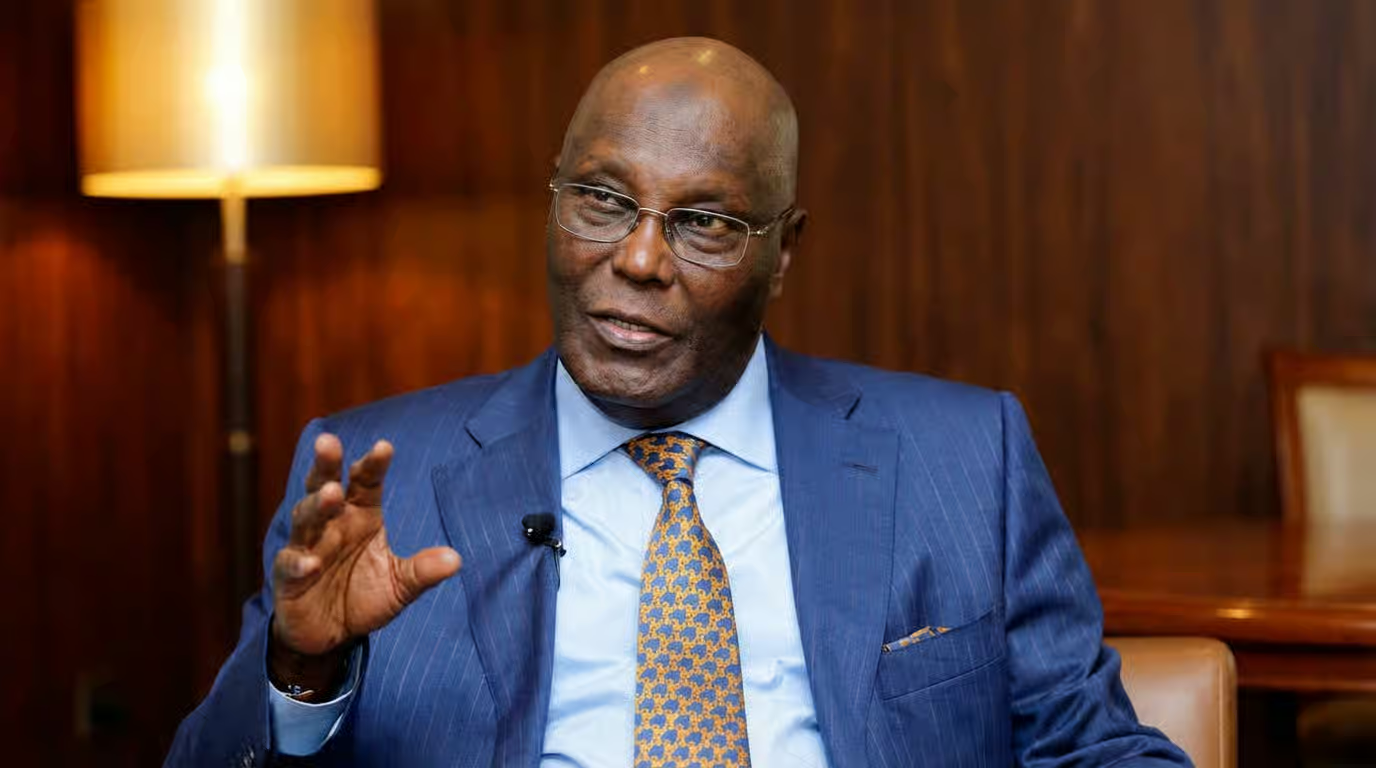
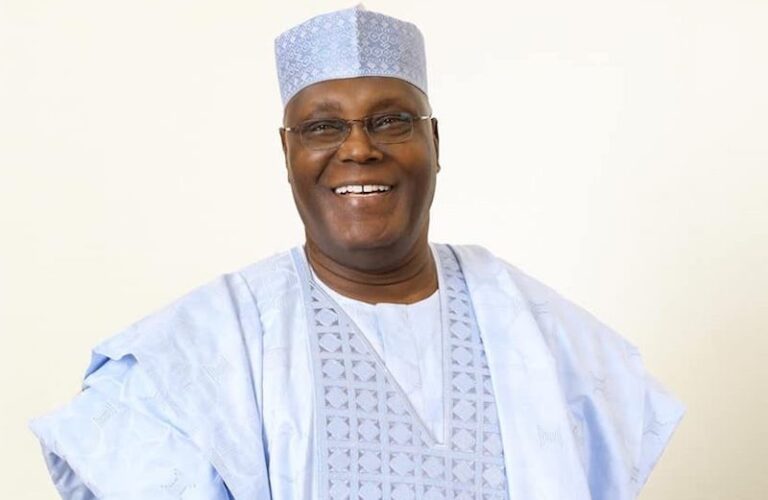
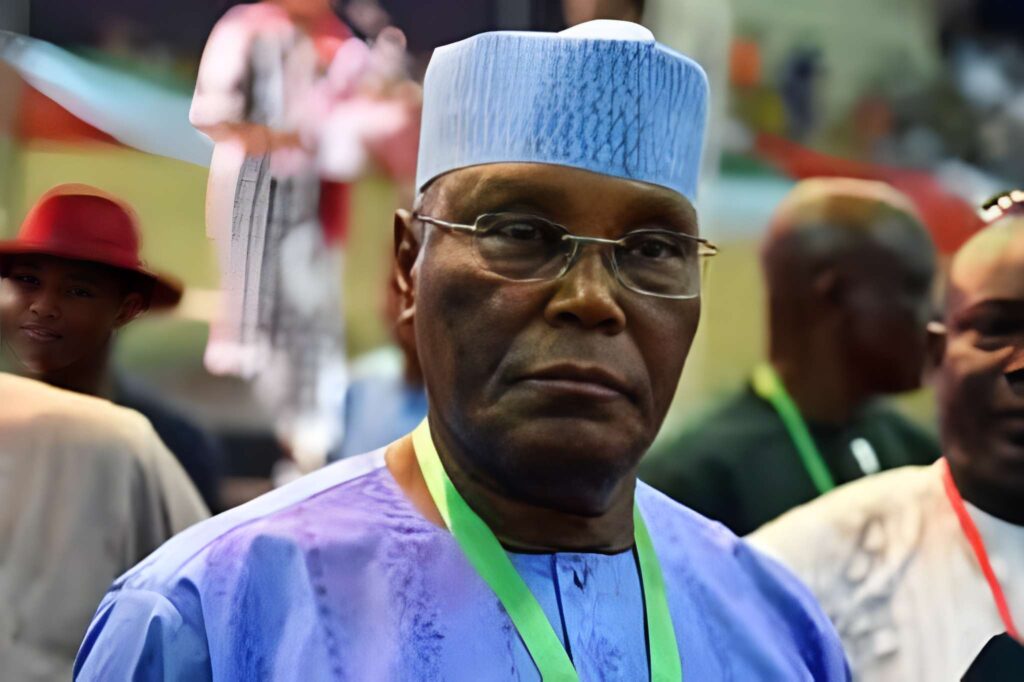
That vessel is Atiku Abubakar.
This is not sentiment, nor partisan reflex. It is the conclusion compelled by evidence. When governance collapses into improvisation, a nation does not require experimentation; it requires capacity. When institutions fracture, leadership must return to structure, competence, and inclusion.
In 2019, at another moment of national reckoning, Olusegun Obasanjo offered a deliberate endorsement of Atiku Abubakar, then Candidate Atiku. His intervention was not about nomination, but about leadership preparedness. He argued that leadership requires an understanding of the fundamentals to be solved, the courage to confront them, the vision to see beyond the immediate, and the readiness to build a credible team of experts, men and women of knowledge and integrity.
Then, it was Candidate Atiku. Now, the same logic must be consciously extended: ADC Candidate Atiku to be , prelude to President Atiku. Time has not weakened that counsel; it has amplified it. The fundamentals have worsened. The courage required has intensified. The need for a formidable national team is no longer optional; it is existential.
Atiku represents capacity over chaos, competence over propaganda, unity over division. Where governance has become punitive, his framework is restorative. Where citizens have been reduced to collateral damage, his philosophy returns the state to service.
But leadership does not operate in a vacuum. Vision requires a vehicle. Rescue requires organisation.
This is where the African Democratic Congress assumes historic significance. The ADC represents a rupture with recycled failure, competence over cabal politics, citizens over courtiers, and structure over spectacle.
If 2027 is the moment of decision, then 2026 is the year of preparation. Nations do not wake up into salvation; they organise their way into it. To the poor masses, those whose lives have been reduced to calculations of survival, this must be said plainly: your suffering is not fate. It is the product of choices made by men in power. And what men have imposed, men can remove.
But removal does not happen by lamentation.
As Nigeria enters 2026, passive despair must give way to mobilisation. This is the year to organise, educate, register, persuade, and defend the future. Hunger is not only economic; it is political. A hungry population is easier to confuse and suppress.
To ADC members, this is not the hour for complacency. A platform does not become a vehicle of history by rhetoric alone. It becomes so by discipline, structure, sacrifice, and relentless engagement.
Every ward must become a classroom. Every market a civic forum. Every motor park a site of political education. Every home a reminder that suffering is not inevitable, and that continuity is a choice.
No rescue succeeds without narrative dominance. Elections are not won on polling day alone; they are won in the months and years preceding it, in the battle for meaning.
What is required in 2026 is vicious and vigorous media work, relentless, coordinated, disciplined, unapologetic. Newspapers, radio, television, digital platforms, WhatsApp broadcasts, Facebook pages, X threads, TikTok explainers, and town halls must become instruments of clarity, not noise.
The poor must hear, repeatedly, why food is unaffordable. They must see who destroyed purchasing power. They must understand how policy choices, not fate, manufactured misery. And they must be shown that an organised alternative exists.
Every ADC structure must become a media node. Every supporter must become a communicator. Silence is no longer neutrality; it is collaboration with failure.
Let 2026 be remembered as the year Nigerians refused to drift, the year preparation replaced procrastination, and the year the APC lost control of the story. Because when 2027 arrives, excuses will expire.
History will ask a simple question: having seen hunger, having known the cause, and having been given time, did Nigeria prepare?
The answer must not be silence.
Aare Amerijoye DOT.B
Director General
The Narrative Force