
Archimedes once startled antiquity with a sentence so simple yet so subversive that it still unsettles power centuries later: “Give me a place to stand, and I will move the world.” To any student of science, his name is not strange. Archimedes of Syracuse was the mind that bent nature to reason, the thinker who decoded buoyancy in a bath, calculated the value of pi with astonishing precision, and designed machines that held invading empires at bay. He did not ask for applause. He asked for a fulcrum. He understood leverage, balance, and the tyranny of wrong placement.
History remembered Archimedes not because he ruled men, but because he understood systems.
Nigeria today groans under weight. Not the absence of resources, but the misplacement of priorities. Not the lack of intelligence, but the poverty of policy empathy. Not the shortage of talent, but the exhaustion that comes when governance becomes an experiment conducted on a hungry population. The nation does not lack strength; it lacks leverage. It lacks a place to stand.
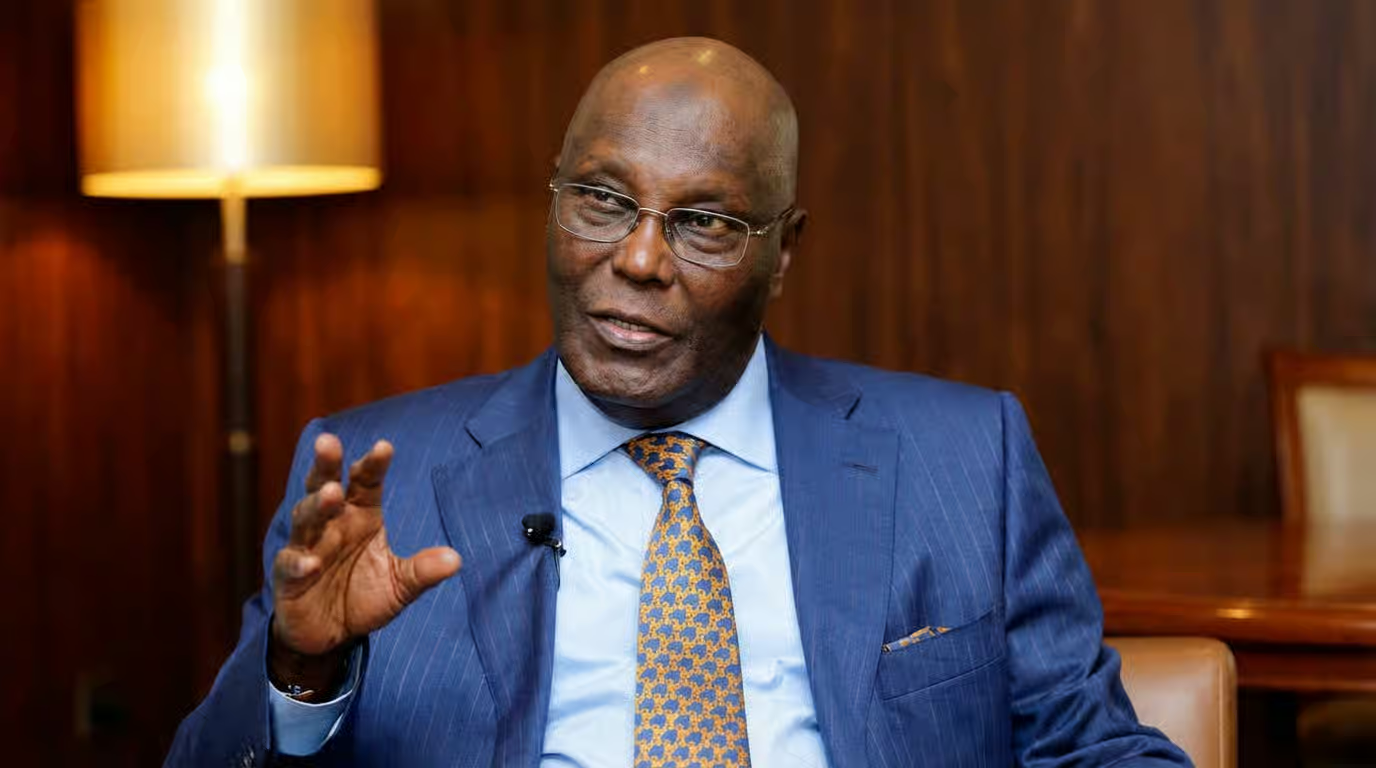
That is precisely the question Atiku Abubakar is determined to answer.
Each time I listen to Atiku, I see a man settled in his mind and sure-footed in his conviction that Nigeria can be made great if the right things are rightly done. There is a calm that accompanies clarity. He does not speak like someone auditioning for applause; he speaks like someone who has already measured the load and located the fulcrum. His confidence is not theatrical. It is architectural.
Like Archimedes, Atiku is not obsessed with shouting at the weight. He is concerned with positioning the lever.
Set this against the present order under the APC and Bola Tinubu, and the contrast is stark. What Nigerians have endured is governance by pressure, not by principle. Policies rolled out without compassion. Reforms announced without buffers. Citizens instructed to endure pain today for relief that never arrives tomorrow. Subsidy removal without social protection. Currency upheaval without production revival. A government fluent in macroeconomic jargon while households drown in microeconomic despair.
Here the Socratic questions insist on answers. For whom is governance designed? For spreadsheets or for people? For markets or for mothers? For theories or for traders? When reform becomes an endurance contest for the poor, it ceases to be reform. It becomes cruelty wearing the mask of courage.
Atiku’s worldview stands in moral opposition to this emptiness. His politics is shaped by empathy refined through experience. He has governed at the centre, built enterprises across sectors, negotiated Nigeria’s diversity, and learned that reform without human consideration is merely punishment in policy clothing. His manifesto is not a pamphlet of promises; it is a systems document. Jobs through production, not propaganda. Federal restructuring to unlock local energy. Education as investment, not charity. Social protection as duty, not afterthought.
Where APC programmes have multiplied anguish, Atiku’s agenda seeks relief. Where Tinubu’s reforms demand sacrifice without consent, Atiku insists on reform with inclusion. One governs as if citizens are expendable variables. The other governs as if citizens are the very reason government exists.
This is not a contest of personalities. It is a contest of philosophies. Do we continue with governance that treats suffering as collateral damage, or do we choose leadership that recognises suffering as a failure requiring urgent correction? Socrates warned that an unexamined life is not worth living; an unexamined policy is not worth enforcing.
Atiku Abubakar is not flawless. No serious leader is. But he is prepared. He has absorbed betrayal without bitterness, defeat without despair, and distortion without retreat. His persistence is not obsession; it is responsibility. It is the discipline of a man who understands that nations are not rescued in moments, but rebuilt through sustained clarity.
Nigeria today is like a stalled engine with immense power locked inside it. What is required is not more shouting, not more slogans, not more sermons delivered to empty stomachs. What is required is the right place to stand.
History rewards societies that recognise the lever when it appears. But it is unforgiving to those who recognise clarity and still choose hesitation. Moments like this demand more than observation; they demand alignment. They require citizens to lend their weight to ideas capable of lifting the nation.
Atiku Abubakar is asking Nigerians not for blind loyalty, but for thoughtful support. Support grounded in reason, empathy, and the shared conviction that Nigeria can be governed better than it is today. To support him is to stand with the belief that poverty is not destiny, that suffering is not policy, and that leadership can once again mean responsibility rather than rhetoric. Nigeria must recognise the fulcrum, give him the place to stand, and support the man prepared to move the nation.
Aare Amerijoye DOT.B
Director General,
The Narrative Force