
Alex Ter Adum, PhD
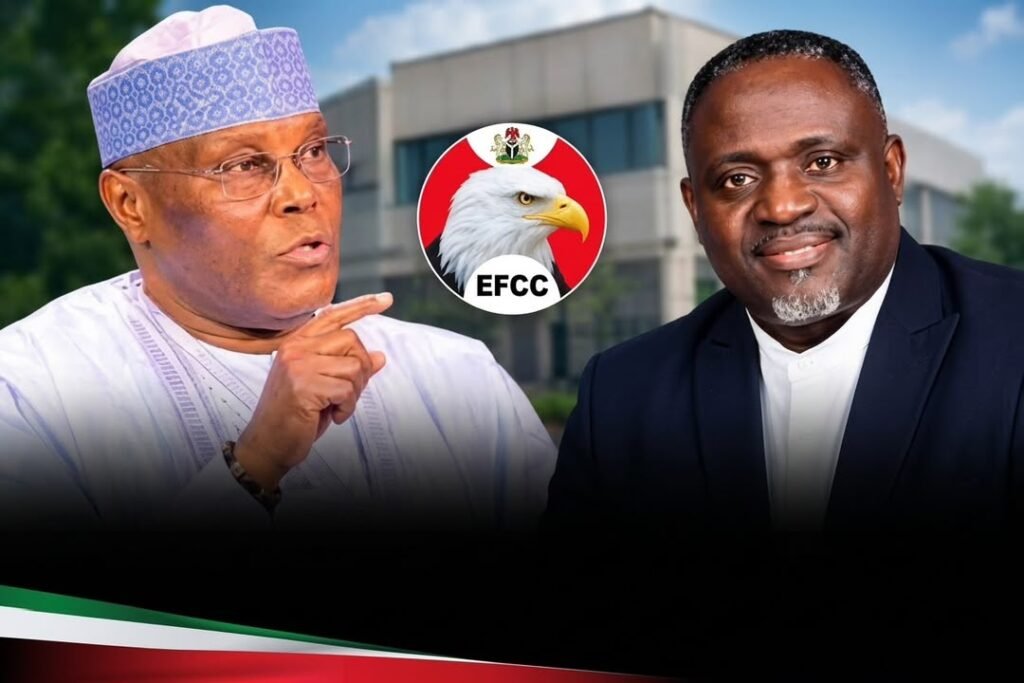
Anthony Daniel’s article, which is written in the form of a petition to EFCC raises legitimate questions about the management of PTDF funds and the transactions involving the defunct Trans International Bank (TIB), NDTV and No. 555 Adetokunbo Ademola Crescent . Those questions deserve to be considered against the documentary record. At the same time, some of the article’s conclusions go further than the evidence presently cited appears to support.
The most important distinction concerns the statement that No. 555 was purchased with PTDF funds by Atiku Abubakar.
The EFCC material associated with the investigation records that ₦30 million connected to Atiku’s Marine Float account was used as the initial deposit in the acquisition of the property. Atiku reportedly explained that he provided the money as a loan to Otunba Fasawe a private citizen at the time. The investigation also examined substantial PTDF deposits placed with TIB and subsequent loans made by TIB to NDTV and related entities.
These facts were adjudged by the EFCC then to warrant scrutiny because it established a sequence that reasonably warranted “suspicion”. This was even though, the facts did not, however, by themselves establish that PTDF funds were used to pay for No. 555.
That would require a more specific evidentiary link between the PTDF funds and the consideration paid for the property. A bank’s receipt of public funds followed by its lending to a private entity does not, without further evidence, establish that the particular funds used in a later transaction were the original public funds. The distinction is particularly important where the claim being made is one of unlawful proceeds and potential forfeiture.
Investigative findings are not the same as criminal findings
The EFCC investigation and the Senate proceedings are important parts of the historical record. They can identify irregularities, raise questions about compliance with statutory requirements and provide evidence for further investigation.
They should nevertheless be distinguished from a judicial determination of criminal guilt.
A finding that a transaction was irregular, unauthorised or inconsistent with the statutory purposes of PTDF would not, without more, establish that an individual committed a particular criminal offence. Nor would a legislative committee report itself constitute a criminal conviction.
Accordingly, terms such as “stolen” or “pillaged” as used by Anthony Daniels in the said petition should be used cautiously unless supported by a specific judicial finding or evidence establishing the relevant offence.
The Jefferson connection requires the same distinction.
William Jefferson’s conviction in the United States is relevant to understanding the wider iGate controversy. It does not, however, establish criminal liability on the part of Atiku Abubakar.
The relevant evidentiary questions would concern Atiku’s own conduct: what he knew, what he authorised, what transactions he participated in and whether those acts satisfy the elements of a particular offence.
The existence of correspondence or commercial relationships involving persons connected to the same transactions may justify or warrant an investigation, but it does not by itself determine the criminal liability of another individual.
Ownership of No. 555 is a separate question.
There is also a need to distinguish between financing, legal ownership, beneficial ownership and occupation.
Granted but not conceding, that a premises may subsequently have became associated with Atiku’s political activities, does not,
by itself, establish that he personally owned the property. Establishing ownership or a beneficial interest in a property would require the examination of the proprietary title documents, corporate records, purchase agreements, payment records and other relevant evidence.
Similarly, establishing that a property was acquired with proceeds of unlawful activity requires more than showing that a person associated with the property had connections to a bank that received PTDF deposits in the past.
What would establish the case more conclusively?
If the objective is to determine whether No. 555 is recoverable by the Federal Government, the most useful evidence would be a documented financial and ownership trail showing:
- who legally acquired the property;
- who was its beneficial owner;
- the precise consideration paid;
- the source of each payment;
- the relationship between those payments and the TIB facilities;
- the source and repayment history of the relevant TIB loans;
- established loss of funds belonging to the PTDF, arising from the placement or interests derived from the placement; and
- whether any identifiable proceeds of unlawful conduct remain embodied in the property.
That evidence would allow the question to be addressed on its merits rather than through inference from chronology alone.
The proper legal question for Anthony Daniels to Resolve.
While there is nothing inappropriate about asking whether the EFCC should revisit an old transaction if relevant evidence remains available.
But the appropriate legal process would be investigation first, followed, where the evidence and applicable law justify it, by the appropriate application to a competent court for preservation or forfeiture.
The property should not be described as definitively belonging to the Federal Government unless that proposition has been established through the appropriate legal process.
Conclusion
The PTDF episode raised serious and legitimate questions then about the management of public funds, the circumstances surrounding the TIB placements, the financing of NDTV and the role of the individuals involved.
There is also documented evidence connecting Atiku to the initial ₦30 million payment associated with No. 555.
What remains less clear from the material cited is the crucial proposition that the property itself was purchased with identifiable PTDF funds. This is because the forensic audit of the entire saga then revealed nothing of the sort.
We are not saying that distinction resolved the wider PTDF controversy, nor does it preclude further investigation if new evidence has emerged requiring further inquisition. It simply identifies the evidentiary threshold that must be met before the property can properly be characterised as proceeds of misappropriated public funds.
A careful assessment should therefore separate what the record establishes, what it strongly suggests, and what remains unproven.
That approach is not a defence of any individual. It is simply the evidentiary standard that should apply when allegations concern public money, criminal liability and the possible forfeiture of property.
This is not with respect to Atiku Abubarkar or the PTDF saga alone, but a general rule applicable to all such situations.
Alex Ter Adum, PhD
National Coordinator
AA MOVEMENT