By Rita Ebiuwa
Every election season comes with scrutiny. The moment politicians present themselves for the highest office in the land, their past records, controversies, decisions and alleged misconduct inevitably return to public discussion.
This is not peculiar to Nigeria. Anyone seeking to lead a country must expect questions about his past. Presidential candidates are not merely asking for votes; they are asking millions of citizens to entrust them with enormous power and responsibility. Therefore, questions about character, integrity and accountability are legitimate parts of the democratic process.
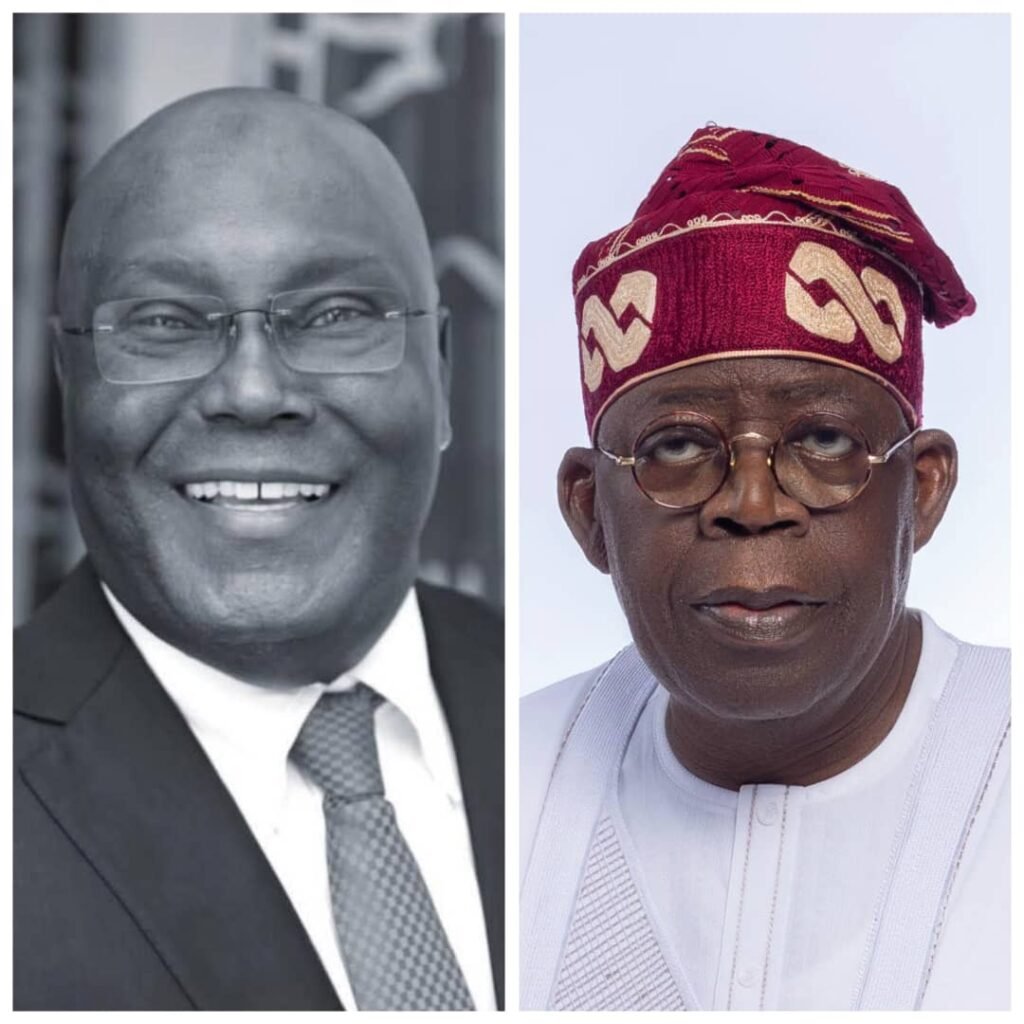
As Nigeria looks towards another presidential contest, two prominent political figures, President Asiwaju Bola Ahmed Tinubu and former Vice President Atiku Abubakar continue to face allegations and controversies connected, in different ways, to the United States.
But beyond the allegations themselves, what should interest Nigerians is how each man responds when questions are raised about his past.
For years, President Bola Ahmed Tinubu has faced questions surrounding his past in the United States, particularly records connected to a 1990s forfeiture case involving funds that U.S. authorities alleged were linked to narcotics proceeds.
Tinubu and his supporters have consistently rejected attempts to portray the matter as proof of a criminal conviction. His defenders have emphasised that the proceedings involved civil forfeiture and have argued that the controversy is repeatedly weaponised by political opponents.
Nevertheless, questions surrounding the records have refused to disappear from Nigeria’s political conversation.
More significantly, recent legal efforts concerning the disclosure of additional U.S. government records relating to Tinubu have generated fresh public interest. Whenever attempts are made to obtain more information, Nigerians naturally ask: What exactly is contained in those records, and why should their disclosure be resisted?
That is the question that cannot simply be dismissed as partisan propaganda.
If the documents contain nothing capable of changing the public understanding of the matter, then transparency would arguably be the most effective way of putting years of speculation to rest.
For a sitting President, openness should not be regarded as an inconvenience. Nigerians deserve as much clarity as the law permits about matters concerning the character and history of the person occupying the country’s highest office.
Atiku Abubakar, former Vice President and another major figure in Nigeria’s presidential politics, has also faced allegations concerning financial dealings and corruption over the years, including controversies with a U.S. dimension.
His political opponents have repeatedly raised these allegations whenever he seeks the presidency.
But there is an important political contrast in the posture he has publicly adopted.
Rather than arguing that questions about his past should never be investigated, Atiku has repeatedly presented himself as willing to face scrutiny and has challenged those who claim to possess evidence of wrongdoing against him to produce it and pursue the appropriate legal process.
That distinction deserves attention.
An allegation is not a conviction. A rumour is not evidence. Political propaganda is not a court judgment. The same standard must apply to Tinubu, Atiku and every other Nigerian seeking public office.
But when serious allegations exist, Nigerians are entitled to examine not only the allegations but also how those involved respond to demands for transparency.
TWO MEN, TWO APPROACHES TO SCRUTINY
And this is where the political comparison becomes interesting.
On one side is a President whose U.S. history continues to generate legal battles and public debate over access to records wants it to be kept secret. On the other is a presidential contender publicly challenging his accusers to bring forward whatever evidence they claim exists against him.
One approach appears focused on controlling what information becomes public; the other publicly invites his opponents to prove their allegations.
If you want to govern more than 200 million Nigerians, you should be prepared to answer difficult questions about your past. If allegations against you are false, transparency provides an opportunity to disprove them. If your opponents are lying, evidence provides the strongest answer.
LET NIGERIANS ASK THE QUESTIONS
Whether you support APC, ADC or any other political party, the standard should remain the same: What are the facts? What do the available records show? And how willing is each candidate to submit himself to scrutiny?
As the country approaches another defining election, Nigerians must decide what kind of leadership they want.
They must examine the records, separate allegations from established facts, consider each candidate’s willingness to answer difficult questions, and then make their judgment at the ballot box.
Ultimately, the choice belongs to the Nigerian people.
Two presidential candidates. Two political records. Two approaches to public scrutiny.
Let the facts be opened. Let the questions be asked. Let the evidence speak. And let Nigerians decide who deserves their trust and their votes.