
Aare Amerijoye DOT.B
ANOTHER FOUR YEARS OF APC is not hard to imagine. We do not need a prophet. We need only eyes. We need only the evidence of our own lives.
We know what another four years of APC looks like because we are already living inside it. It is not a forecast. It is a daily experience. And it is excruciating.
IT LOOKS LIKE a mother in Kano standing at a market stall, calculating whether she can afford both rice and palm oil this week, knowing that she cannot, choosing one, and walking home with her eyes fixed on the ground so that her children do not read the defeat on her face.
It looks like a civil servant in Ibadan who has not missed a day of work in eleven years, who collects his salary at the end of the month and watches it dissolve before the second week — consumed by transport fare, by cooking gas that now costs more than his grandfather earned in a month, by school fees that have tripled while his salary has stood still. He is not poor by laziness. He is poor by policy.
It looks like a graduate in Enugu, twenty-six years old, brilliant and hungry, who has submitted two hundred and forty job applications and received four responses, three of which were scams. He does not tell his parents how hopeless the search has become. He has learned to perform optimism because the alternative is unbearable for everyone.
It looks like a motorcycle taxi rider in Abuja who wakes before dawn, rides to the filling station, pays over one thousand naira per litre for petrol that his grandfather bought for a few kobo, calculates what is left after fuelling, and realises that he must ride for four hours before he has recovered the cost of starting his day. The subsidy was removed. The queues disappeared. The suffering did not. It simply changed its address.
IT LOOKS LIKE a farmer in Benue who cannot go to his own field. Not because he is lazy. Not because the rains have failed. But because armed men have occupied the land his father farmed and his grandfather farmed before that, and the government that took his taxes and his votes has not protected him, has not prosecuted the invaders, has not even visited to count the graves. In Zamfara, in Plateau, in Katsina, in Niger State, entire farming communities have been exterminated or displaced, and the ruling party that promised to end this bloodshed has instead presided over its geographical expansion into territories that knew peace a decade ago.
It looks like a child in Maiduguri who has never known a Nigeria that was not at war with itself, who has grown up in a displacement camp, who draws soldiers and guns when asked to draw her neighbourhood, who is eleven years old and has already learned that safety is something that happens to people in other countries. She is not a statistic. She is the future that the APC has stolen.
It looks like kidnapping as an industry. A growth sector. The one enterprise in Nigeria that has expanded consistently under APC rule, that has created employment for criminals, that has built an economy of ransom flowing out of the pockets of terrified families in every geopolitical zone. Schoolchildren in Kaduna dragged from their dormitories in the night. Worshippers in Ondo slaughtered at prayer. Commuters on the Abuja-Kaduna expressway vanishing between two cities. The abductions have become so routine that the country has learned a grotesque normalcy around them, grieving quickly and moving on because there is always another abduction to grieve, always another family negotiating in the dark with men whose names the government claims not to know.
IT LOOKS LIKE a classroom in Kogi State whose roof has caved in, whose teacher has not been paid in four months, where a seven-year-old child sits on a cracked concrete floor and copies notes with a pencil stub because his mother cannot afford a new one. He has already learned that the government does not see him. That lesson will outlast every other lesson he is taught in that broken room.
It looks like a father in Lagos who sold his plot of land to pay his daughter’s university fees, who borrowed from his cooperative to cover the shortfall, who attended her graduation with tears he could not explain even to himself , and who watched her board a flight to Canada six months later because the Nigeria that educated her had nothing waiting on the other side of that degree. The japa wave is not a lifestyle choice. It is a verdict. It is one hundred thousand educated Nigerians per year delivering the same verdict on the same government in the same direction.
IT LOOKS LIKE a widow in Owerri who took her husband to a government hospital and watched him die not from his illness but from the absence of basic drugs that a functioning government would stock as a matter of routine. She was asked to bring gloves, to bring syringes, to bring the cannula herself from a nearby pharmacy before the drip could be inserted. She brought everything they asked. It was not enough. She carried him home in a wooden box, and the hospital sent her a bill.
It looks like a retiree in Kaduna who worked for the federal government for thirty-five years and paid his pension contributions without fail. He now sits in a queue every three months to confirm that he is still alive, waiting for a pension that arrives late, arrives short, or does not arrive at all. His elected representatives, meanwhile, retire on severance packages that would fund an entire local government for a year. That contrast is not coincidental. It is the architecture of a government that takes from the many to protect the comfort of the few.
IT LOOKS LIKE darkness. Literal, physical darkness. Nigerians generating their own electricity in the twenty-first century because the national grid — after ten years of APC stewardship — delivers fewer than five hours of power per day to the homes that can even access it. Industries have relocated. Factories have closed. Investors have rerouted their capital to countries where the lights come on. And the Minister of Power holds press conferences.
It looks like the naira. The naira that exchanged at roughly one hundred and fifty to the dollar when the APC came to power, now prostrate beyond one thousand five hundred. The savings that families built over decades have been silently confiscated by inflation. The middle class that Nigeria spent a generation constructing has been pushed back below the poverty line without a single law being passed to authorise the theft.
THIS IS NOT BAD LUCK. It is not a global phenomenon visited uniquely upon a helpless government. It is the deliberate harvest of ten years of misgovernance — of an administration that came to power on the singular word change and has delivered, with extraordinary consistency, the precise opposite of everything that word promised.
In 1999, Nigeria’s GDP stood at fifty-eight billion dollars. By 2007, under the Obasanjo-Atiku administration, it had climbed to two hundred and seventy billion dollars. The foreign reserves were rebuilt. The Paris Club debt was retired. The banking sector was reformed. The telecommunications revolution that put a phone in every Nigerian pocket was midwifed by that administration. Women-owned businesses multiplied as credit became accessible and the economy expanded. These were not accidents. They were decisions made by a leadership that understood governance as service rather than extraction.
Compare that record to the contracting, gasping, humiliated economy the APC has produced and ask yourself, without sentiment and without tribal loyalty, which Nigeria you would rather inhabit. Then ask yourself which leader built the Nigeria you preferred.
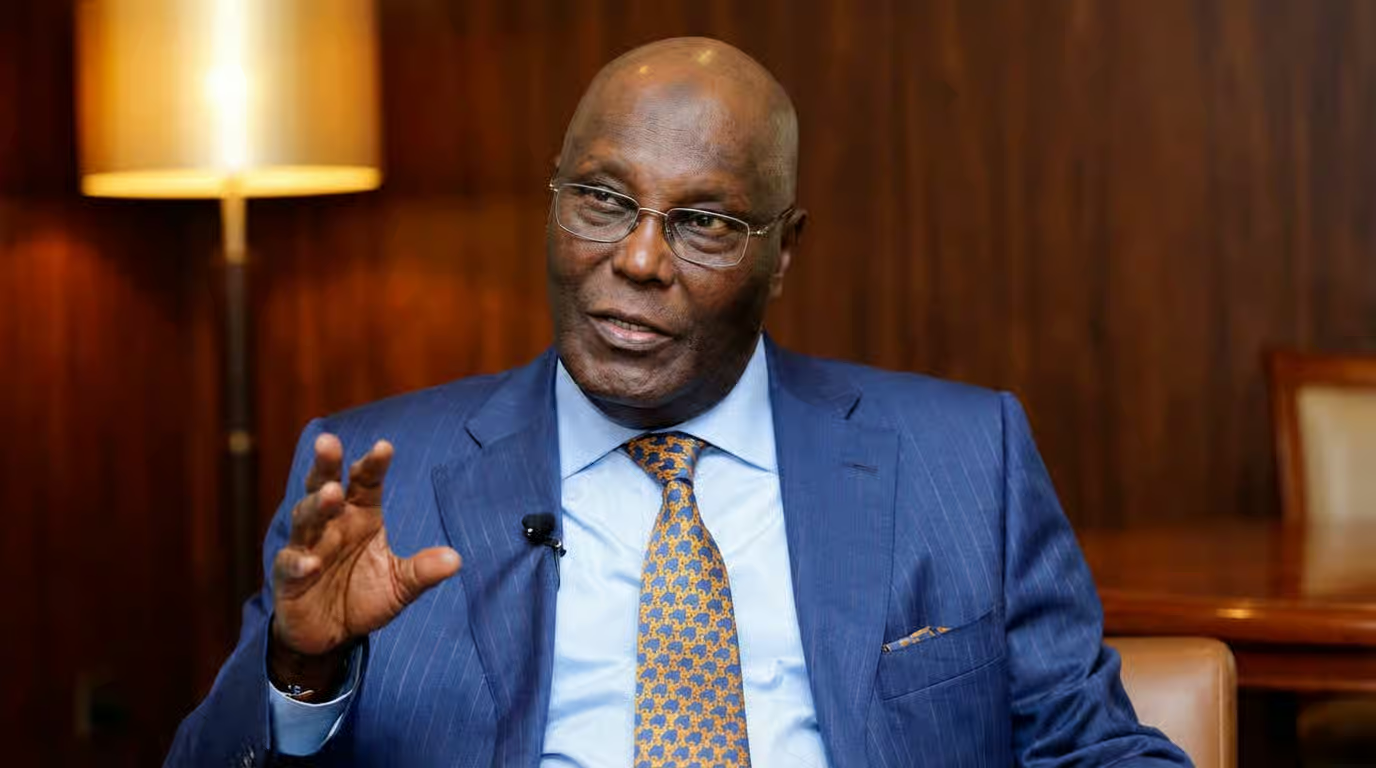
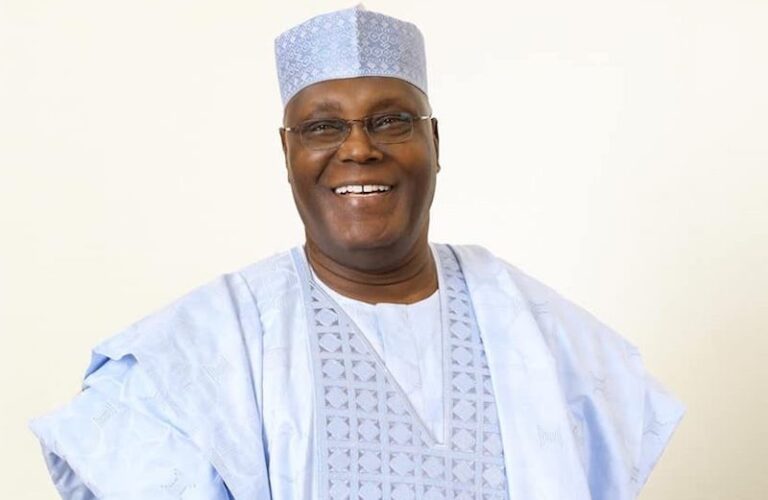
TO THE VOTER who is not yet decided , who knows that things are bad but carries a residual doubt about whether Atiku Abubakar is the answer , this article does not ask you for blind faith. It asks you for something harder and more honest: evidence-based judgement. Atiku governed this country when it grew. When the reserves swelled, when the debt burden shrank, when investment arrived and the naira held its dignity. Every market woman who could afford her full basket in 2006, every student whose university was open, every farmer who could reach his field without fear, every family that slept without the terror of armed men at the door , they were the beneficiaries of a governance philosophy that placed their welfare at the centre of its calculations.
His record is not a promise. It is a precedent. And in a country that has been burnt so many times by promises, a precedent is the only honest currency.
The question before Nigeria in 2027 is not whether the APC deserves another chance. The question is whether Nigeria can survive another chance given to the APC.
We have lived the answer in our kitchens, in our hospitals, in our fields, in our classrooms, and in our darkness. We have lived it in the faces of our children who no longer believe that this country intends to keep its promises to them.
Another four years of this is not a political option.
It is a national emergency. And in a national emergency, you do not re-elect the cause.
You remove it.
Aare Amerijoye DOT.B
Director General, The Narrative Force
thenarrativeforce.org
June 2026
–