Why Atiku Abubakar Remains Nigeria’s Finest and Only Credible Option for 2027
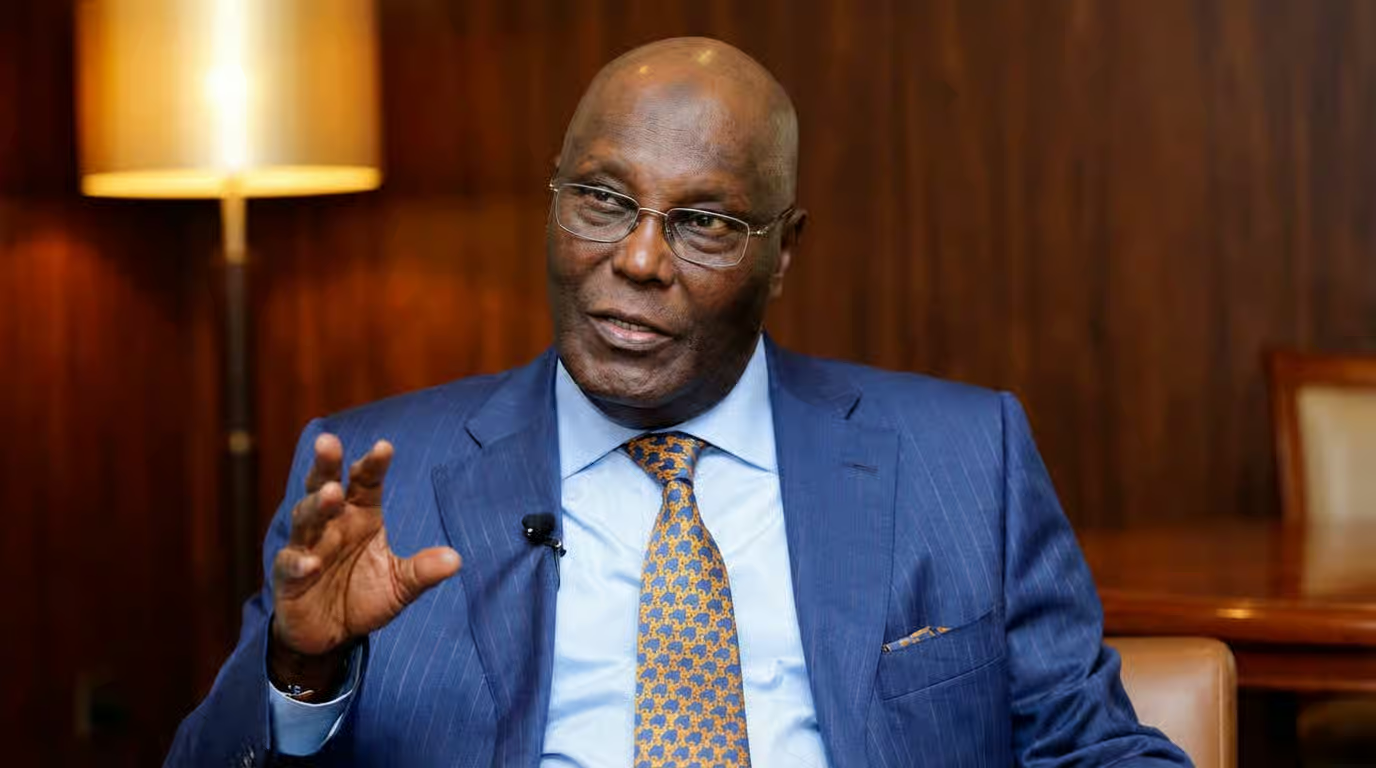
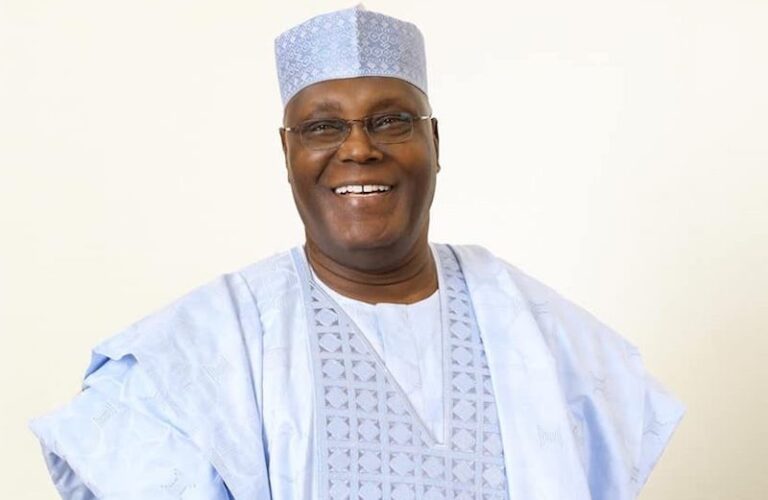
Hate him. Like him. No blackmail, no emotional outburst, no orchestra of sponsored propaganda can circumvent this truth: Atiku Abubakar is the best Nigeria has for 2027. That is not a slogan. That is a verdict rendered by history, by record, and by the devastating clarity of comparison.
Atiku is loved by millions.
Atiku is appreciated by millions.
Not because his supporters are blind. Not because affection has overpowered reason. But because when Nigerians hold Atiku Abubakar’s record next to those who dare to oppose his ambition, the contrast is so stark, so ruthless, so comprehensively one-sided that it requires no further argument. The record speaks. It has always spoken. And it speaks loudly.
No court case. Unlike some people whose legal entanglements are a matter of public judicial record, whose appearances before tribunals and whose exposure to criminal inquiry have become so routine as to constitute a biography, Atiku Abubakar has never been convicted of anything. Not in Nigeria. Not anywhere on earth. Three decades of the most ferocious, best-funded, most politically motivated legal and media hunt in Nigerian democratic history has produced exactly nothing against this man. Not one conviction. Not one judgment of culpability. Not one.
No Pandora box scandal. Unlike some people whose offshore arrangements, beneficial ownerships, and shadow financial structures have been the subject of major international investigative exposure, Atiku Abubakar’s name does not appear in any such global financial disclosure. While others scrambled to explain their entries in documents that circled the world, Atiku had no entry to explain, no structure to justify, no embarrassment to manage. The Pandora box opened wide for others. It had nothing whatsoever to say about him.
No drug case. No forfeiture. Unlike some people whose documented history includes asset seizures, consent agreements, and investigative findings by foreign law enforcement agencies that are freely available in court records for any serious journalist to verify, Atiku Abubakar has no forfeiture order carrying his name. No Nigerian court. No American court. No international tribunal has ever returned a conviction, a finding of guilt, or a credible formal charge against him for narcotics.
No deceit. Unlike some people whose academic credentials remain the subject of unresolved judicial inquiry, whose certificates have generated more litigation than their governance has generated development, whose public statements routinely contradict their documented history, Atiku Abubakar’s record is what it says it is. His biography withstands scrutiny. His qualifications are not in court. His word, tested across three decades of public life, has proven consistent.
Just honesty. That is the typical him.
When Atiku talks about local production, he means it. He has exemplified it. He did not discover local production as an election theme. He built it as a life’s work.
He co-founded Intels Nigeria Limited, one of the largest integrated logistics and port services companies on the African continent, constructed on Nigerian soil, employing tens of thousands of Nigerians, generating Nigerian revenue, building Nigerian industrial capacity from the ground upward. He invested in Adama Beverages, in agricultural enterprises, in businesses that produce on this soil for the consumption of this nation. These are not talking points. These are companies that exist, that you can visit, that Nigerians work in today.
Compare that with those whose major business is importation. Those who have built personal empires on the extraction of foreign goods into Nigerian markets. Those who have grown wealthy not by producing anything on Nigerian soil but by controlling the pipelines through which foreign products enter and Nigerian wealth exits. Those people now stand at podiums and lecture Nigerians about local production. The irony would be comedic if the consequences were not so catastrophically serious.
When Atiku talks about improvement in education, he means it. He has not promised a university. He built one.
The American University of Nigeria in Yola, Adamawa State, is a functioning, internationally accredited institution that has produced graduates competing with the finest minds from universities across the world. Through the Atiku Abubakar Foundation, he has funded scholarships for hundreds of young Nigerians who would otherwise have been denied access to quality education by the poverty that misgovernance has made their inheritance. He has partnered with international academic institutions to build pipelines placing Nigerian talent on the global stage. He has invested in vocational and technical training programmes that understand that a nation’s development is not built in boardrooms alone but in the hands of skilled workers who can make things, fix things, and build things. This is infrastructure of the mind. Built at personal cost. By a man who did not wait for government to educate his country’s children.
During his tenure as Vice President from 1999 to 2007, Nigeria’s GDP grew from 58 billion dollars to 270 billion dollars, a transformation without precedent in the nation’s post-independence economic history. The nation recorded a peak growth rate of 15.3 per cent in 2002. He drove the privatisation programme. He shepherded the National Economic Empowerment and Development Strategy. He gave this nation eight years of governance executed with intention, with competence, and with measurable result. These are not campaign claims. These are verified, documented, internationally acknowledged facts that no amount of propaganda can erase from the record.
Atiku is loved by millions not because of what he has promised. He is loved by millions because of what he has already done.
And he will win in 2027. Not as a prayer. Not as a campaign slogan. As an inevitability written in the logic of a people who have suffered enough, compared enough, and decided enough.
Atiku Abubakar will win the 2027 presidential election because the Nigerian people have rendered their verdict and are prepared to defend it with a ferocity that no electoral machinery, however sophisticated in its corruption, has ever successfully suppressed indefinitely.
The machinery of rigging is not a secret in Nigeria. It is almost a national tradition, dressed in the language of process and the theatre of electoral administration. In 2023, millions of Nigerians watched result sheets that told one story arrive at collation centres that told another. They carried that fury to the courts. They were met with jurisprudence that required extraordinary intellectual gymnastics to accept. They absorbed that outcome. But they did not forget a single detail of how it was done.
In 2027, the Nigerian masses will not merely vote. They will stand guard over every ballot box. They will monitor every result sheet at the point of completion. They will transmit, document, and publish every figure before it reaches any collation centre. They will resist, with every lawful and civic instrument at their disposal, the ritual theft of their democratic will. The era of the indifferent voter is over. What is coming is the era of the vigilant citizen.
Rigging requires the consent of the indifferent. In 2027, there will be no indifferent Nigerians. The trader whose business has been eviscerated by a naira in perpetual engineered collapse will not be moved from that queue by threat or inducement. The graduate who has watched a promised economy of opportunity revealed as an economy of organised suffering will count every result with the precision of someone who understands that their entire future sits on that ballot paper. The young man who earns the same salary but can now afford less than half of what it once purchased will be at that polling unit before the sun rises. The Nigerian masses are not preparing merely to vote in 2027. They are preparing to win. And they will win.
Atiku Abubakar will be President of the Federal Republic of Nigeria. Not because it is his turn. Not because nostalgia demands it. Because the weight of record, the depth of coalition, the breadth of genuine national support, and the righteous fury of a sovereign people who have looked at the alternative and said never again make it an outcome that no manufactured result can permanently forestall.
History is not always timely. But it is always, eventually, just.
Aare Amerijoye DOT.B
Director General,
The Narrative Force
thenarrativeforce.org
26th April, 2026.