Aare Amerijoye DOT.B
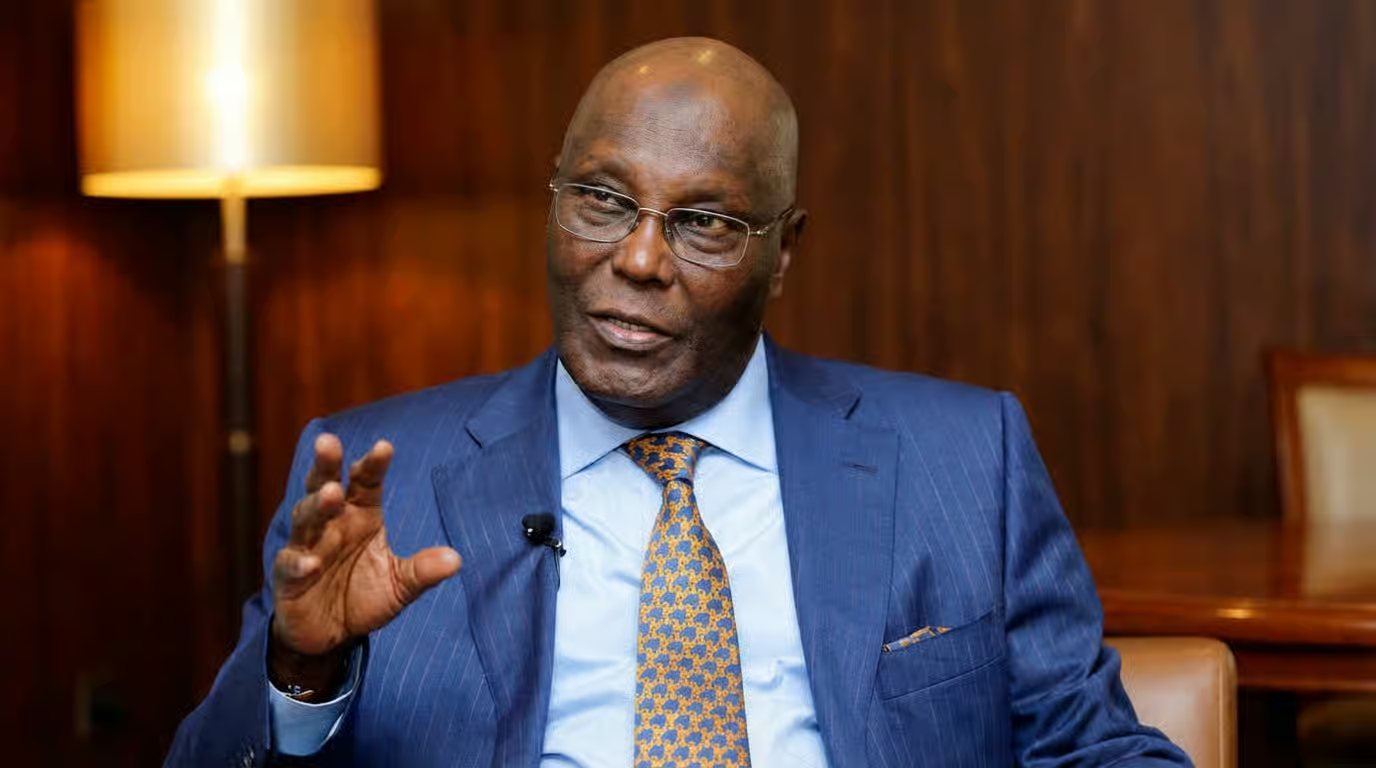
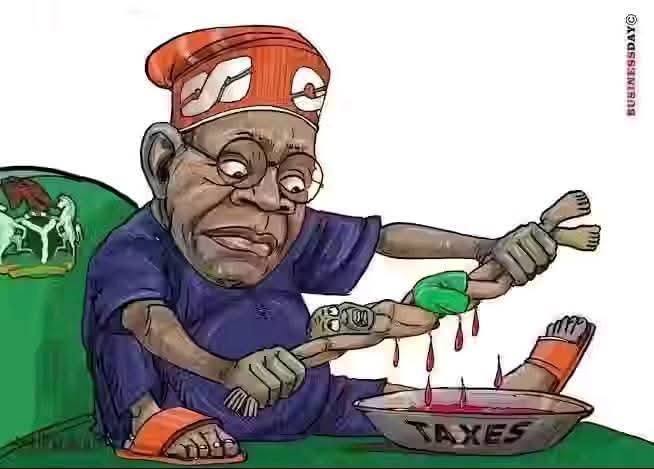
There are governments that fail their people quietly, through neglect and timidity. And then there is the Tinubu administration, which has managed to fail Nigeria loudly, expensively, and with a brazenness that has no precedent in the history of this republic.
This is not satire. This is a verdict. And the evidence is everywhere.
ELEVEN YEARS OF PREPARATION FOR THIS?
The APC did not stumble into power in 2015. They campaigned for years, built a coalition, made specific promises, and asked Nigerians to trust them with the nation’s future. Nigerians obliged. What followed was the most sustained demolition of a national economy in post-independence history.
Buhari spent eight years presiding over stagnation, insecurity, and the steady collapse of national institutions. He handed a broken country to Tinubu, and Tinubu, rather than beginning the work of repair, accelerated the destruction with the enthusiasm of a man who had been waiting his whole life for the opportunity to loot at scale.
The APC promised to fix the naira. It is now trading at over 1,500 to the dollar. They promised to fix the refineries. The Port Harcourt refinery, after decades of promises and billions in so-called turnaround maintenance, remains a monument to organised theft. They promised to fix insecurity. Bandits now collect ransoms openly. Farmers cannot reach their fields. The North bleeds daily.
These are not failures of execution. They are failures of intent.
THE SUBSIDY REMOVAL: A DECLARATION OF WAR ON THE POOR.
On his very first day in office in May 2023, before he had appointed a single minister, before a single policy document had been reviewed, Tinubu removed the petrol subsidy. No safety nets. No cushioning mechanism. No transition plan for the millions of Nigerians who depended on affordable fuel to power their generators, run their tricycles, and transport their goods to market.
The result was immediate and devastating.Transport fares doubled overnight. Food prices spiralled beyond the reach of ordinary families. Small businesses that had survived Buhari’s eight years of mismanagement finally collapsed under the weight of that single decision. Three years later, the wounds have not healed. They have deepened.
He then compounded that catastrophe by unifying the exchange rate in a manner so reckless and so poorly sequenced that it wiped out the savings of millions. The inflationary wave it triggered has never subsided. Three years on, it is still battering Nigerian households. Economists warned him. Civil society warned him. He proceeded regardless, because the pain was not his to feel.
This is a man who deployed the subsidy removal windfall on 1,410 delegates to a summit in the United Arab Emirates. While Nigerians were choosing between eating and fuelling their generators in 2023, their president was assembling the largest and most expensive presidential delegation in the history of Nigerian foreign travel. Nothing has changed since. The indifference was not a moment. It has been a policy.
THE SCORECARD OF SHAME.
Let us talk about what Tinubu has spent Nigerian money on across three years, because the numbers are not merely shocking. They are criminal in their contempt for ordinary people.
The State House spent a staggering 36.3 billion naira on international travel alone in 2024. Combined with local travel, the total bill for presidential movement in that single year reached 83 billion naira, according to data from the Open Treasury Portal. By November 2025, Tinubu had made over 46 foreign trips, accumulating 192 days abroad, more than half a year spent outside the country he was elected to govern.
Buhari, for all his failures, spent 6 billion naira on travel across four years. Tinubu spent nearly 7 billion naira in his first year alone. Three years of globe-trotting at public expense, while Nigerians queued for fuel, skipped meals, and buried children in hospitals without drugs.
Now hold those travel figures against what this government chose to give Nigerians in return. In 2024, the Federal Ministry of Health and Social Welfare received 1.34 trillion naira, representing 4.64 per cent of the national budget. That sounds substantial until you examine what was actually released. Out of 218 billion naira appropriated for health capital expenditure in 2025, only 36 million naira was actually released to the sector, making it practically impossible for the Ministry to execute a single capital project. Not billion. Million. Thirty-six million naira. For the health infrastructure of 220 million people.
Education received 1.27 trillion naira in the 2024 budget. Yet public universities remain underfunded, public schools decay, and the best Nigerian teachers are packing their bags for Canada, the United Kingdom, and Australia in numbers that constitute a national emergency.
And then there is the Lagos-Calabar Coastal Highway, the signature monument to Tinubu’s governing philosophy. The 700-kilometre project is estimated to cost between 14 trillion and 15.6 trillion naira at 2024 exchange rates. The contract was awarded without public bidding to Hitech Construction Company, owned by Gilbert and Ronald Chagoury, described by the government itself as Tinubu’s confidantes. The president’s son co-owns a British Virgin Islands company with Ronald Chagoury’s son. Construction began without the legally required environmental and social impact assessments. Communities were demolished. Livelihoods were erased. And when critics raised the alarm, the government sent ministers to television studios to defend the indefensible.
The total cost of the coastal highway exceeds Nigeria’s entire budget deficit for 2024. It is a road that will cost more than the country allocates to health and education combined across multiple years, awarded without competition to a company owned by a man whose son is in business with the president’s son. If this is not the definition of state capture, no definition is necessary.
Emirates Airlines was announced as returning to Nigeria not once, not twice, but three times across three years. It has not returned. The Afreximbank loan was announced with fanfare in 2023 and then quietly vanished from public discourse. The student loan scheme was launched as a revolution in educational financing. Three years later, it has helped almost no one. The budget padding that characterises the National Assembly under APC superintendence has reached levels that even cynical Nigerians find shocking. Billions for projects that exist only on paper. The culture of impunity that APC introduced in 2015 has now fully metastasised into a system where stealing from the public treasury is not a scandal. It is a career strategy.
THE MAN BEHIND THE CHAOS
Bola Tinubu is not a victim of circumstance. He is the architect of these outcomes.
This is a man whose forfeiture of nearly half a million dollars to American authorities, linked to drug proceeds, is documented in United States court records. This is a man whose academic credentials remain a subject of active legal dispute. This is a man who received 8.8 million votes out of over 90 million registered voters and presented himself as the democratically elected choice of Nigeria.
The Supreme Court that validated his election will be studied by future generations of Nigerian legal scholars as the moment the judiciary formally abdicated its duty to the constitution.
His approach to governance has been consistent with his character. Appointments made without transparency. Contracts awarded without due process. A near-war with Niger Republic that alarmed the entire sub-region. Proposals to relocate federal agencies to Lagos that revealed a governing philosophy built around personal and regional interest rather than national welfare.
While all of this unfolded, Tinubu took vacations. Multiple, extended, well-documented vacations, during which the business of governance was suspended while Nigerians continued to suffer. The message was unambiguous: you are not my priority.
WHY ATIKU AND THE ADC ARE THE ANSWER.
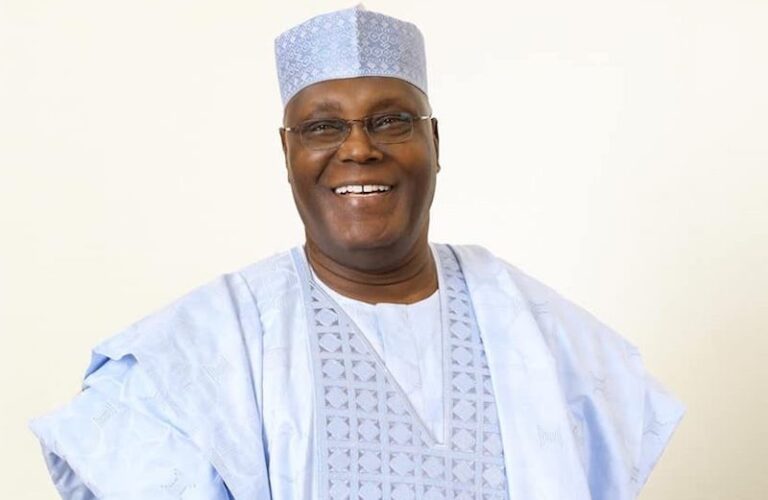
The contrast with Atiku Abubakar is not merely political. It is civilisational.
Atiku served as Vice President during the period of Nigeria’s greatest democratic economic achievement. GDP grew from 58 billion dollars in 1999 to 270 billion dollars in 2007. The Paris Club debt was eliminated. Foreign reserves crossed 43 billion dollars. These were the product of deliberate, competent economic management by an administration in which Atiku was the driving force on economic policy.
Beyond government, Atiku built. He built Intels, which employs thousands of Nigerians directly and tens of thousands indirectly. He built the American University of Nigeria in Yola, an institution of genuine academic distinction. He did not simply talk about the private sector. He built it.
The African Democratic Congress is the vehicle through which this vision returns to national power. The combined opposition vote in 2023 was approximately 14.5 million. Tinubu won with 8.8 million. A unified opposition does not merely have a chance in 2027. It has a mathematical mandate.
The zoning principle reinforces this mandate. The presidency has completed three consecutive cycles in the South West. Every convention of balance and federal character demands a northern presidency in 2027. Atiku Abubakar is that candidate. He is the most tested, the most experienced, and the most capable leader the opposition can present.
THE CHOICE IS STARK
Nigeria is not suffering from bad luck. It is suffering from bad leadership, deliberately chosen and stubbornly maintained by a party that has confused access to power with entitlement to it.
The APC had eleven years. They had the presidency, the National Assembly, and for long stretches the majority of state governments. They had oil revenue, international goodwill, and a population desperate to believe that change was possible. They squandered every advantage, betrayed every promise, and left Nigeria worse in every measurable dimension than they found it.
Tinubu is not a course correction within that failure. He is its logical conclusion. A man whose entire political career has been built on the monetisation of public office has brought that philosophy to the highest office in the land, and Nigerians are paying the price in hunger, darkness, and despair.
The Narrative Force will not be silent. We will document every failure, challenge every lie, and build the narrative infrastructure through which the Nigerian majority reclaims its country in 2027.
The choice before Nigeria is not complicated. It is rescue or ruin. It is competence or catastrophe. It is Atiku and the ADC, or more of the darkness that has become the daily reality of ordinary Nigerian life.
ATIKU. ADC. 2027.
NO GOING BACK.
Aare Amerijoye DOT.B
Director General
The Narrative Force
thenarrativeforce.org