THE HANDWRITING ON THE WALL IS
OBVIOUS.
Aare Amerijoye DOT.B
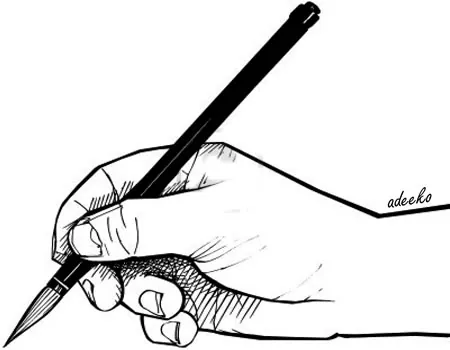
Belshazzar held his feast while the armies of his destruction were already at the gate. He did not know. Or perhaps he knew, and feasted anyway, because that is what men do when the last prop of their power is vanity. He called for the sacred vessels of Jerusalem, filled them with wine, and toasted his own magnificence before a court of a thousand. Then a hand appeared and wrote upon the wall: Mene, Mene, Tekel, Upharsin. The revelry stopped. The kingdom was numbered, weighed, and found wanting. That very night, Belshazzar was slain.
Nigeria in 2026 is staring at its own handwriting on the wall. The fingers writing it are the broken fingers of 220 million citizens bled dry by a government they did not truly elect, a presidency constructed on manipulated ballots and judicial complicity, and an economic programme designed to concentrate wealth in the hands of the few while grinding the many into the dust. The wall is plain. The letters are large. No institutional manipulation, no choreography of bureaucratic subversion, no parade of compromised officials can erase what three years of governance failure have inscribed upon it.
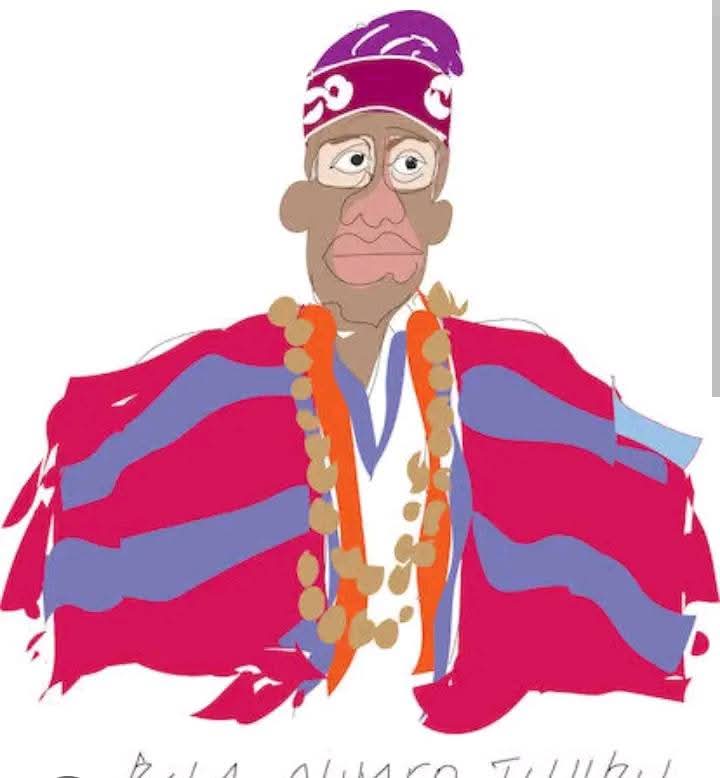
Bola Ahmed Tinubu is Belshazzar on his last feast. No proclamation from INEC, no army of compromised bureaucrats can stop what is coming.
THE ECONOMY AS INDICTMENT.
When this administration inherited Nigeria in May 2023, the naira stood at approximately N460 to one United States dollar. Today, after three years of economic vandalism dressed up as reform, Nigerians are exchanging N1,600 and above for that same dollar. This is not the unfortunate consequence of global headwinds. This is the logical outcome of a government that removed a fuel subsidy without a cushioning plan, that unified exchange rates in a manner that transferred wealth from workers and manufacturers to speculators, and that celebrated IMF commendations while its citizens could no longer afford garri and groundnut oil.
Nigeria’s debt service obligations have consumed more than 90 per cent of government revenue in several fiscal quarters. The country borrows to pay salaries. It borrows to service what it borrowed. It pledges future oil revenues to present creditors while leaving future generations nothing but the bill. This is not governance. It is the economic behaviour of a dynasty consuming its own seed corn and calling the digestion a reform programme.
The human cost of this catastrophe is not captured in spreadsheets. It lives in the market woman in Onitsha who borrowed to restock her stall and found herself trapped in spiralling loss. It lives in the rice farmer in Kebbi whose harvest wilted because diesel to power irrigation became unaffordable. It lives in the textile worker in Kano whose factory shut because imported raw material costs tripled overnight. The man who cannot afford kerosene to cook his family’s dinner is not distracted by a presidential convoy. The graduate selling phone accessories on the roadside because the formal economy has no space for him is not consoled by a minister’s press release about growth statistics that bear no relation to his daily reality.
A government that borrows to service debt while its people eat once a day has not just failed. It has sinned against the nation.
THE APC’S INSTITUTIONALISED HYPOCRISY.
The All Progressives Congress arrived in power in 2015 carrying the most theatrical anti-corruption mandate in Nigerian political history. Muhammadu Buhari thundered from every podium. The masses believed. What followed was eight years of industrialised hypocrisy dressed in the language of accountability. The EFCC became a weapon aimed exclusively at opponents. Those who crossed the carpet with compromising secrets in their briefcases were embraced as statesmen. Those who refused to defect discovered that their files had been reopened, their accounts frozen, their names dragged through coordinated media prosecutions. Nigeria under APC did not fight corruption. It nationalised it, regularised it, and gave it a presidential seal.
Then came Tinubu in 2023. Questions about educational credentials were answered not with transparency but with contemptuous silence and litigation. Questions about the origins of his wealth were deflected with the practiced ease of a man who has never been seriously compelled to answer. The Supreme Court judgment upholding his election is one that legal scholars will contest for decades. What this administration has built is a patronage empire of clinical efficiency: federal appointments distributed on loyalty rather than competence, regulatory agencies converted into presidential extensions, and a National Assembly reduced to an applause chamber that rubber-stamps appropriations and performs oversight as theatre.
The APC did not merely inherit the republic. It has been systematically disassembling it, institution by institution, lever by lever, appointment by appointment.
INEC: THE TWELFTH MAN
Let us speak plainly about the Independent National Electoral Commission. INEC’s conduct during the 2023 general elections constituted what credible international and domestic observer missions described as a systematic subversion of the Nigerian electorate’s will. The commission had made a solemn public promise: the Bimodal Voter Accreditation System would transmit results electronically in real time. The era of manipulation in transit was over. The BVAS machine would be the impenetrable wall between the voter’s choice and the returning officer’s declaration. That promise was broken. Not partially. Completely. Deliberately. Results appeared on the IReV portal hours after declarations, in forms that bore no resemblance to what party agents and journalists had documented at polling units.
As 2027 approaches, INEC is already rehearsing the choreography of incumbency protection. Its recent conduct regarding the ADC and the duly constituted David Mark-led National Working Committee reveals an institution that has absorbed none of the moral lessons of 2023. When a commission removes from its portal the records of a legitimately constituted party leadership without judicial mandate, when it selectively intervenes in internal party disputes in ways that consistently advantage the governing party, it has forfeited the institutional credibility that democratic governance demands. It has ceased to be independent in anything but name.
INEC is no longer a referee. It has been deployed as a twelfth man for the APC’s electoral survival strategy.
THE MATHEMATICS THAT CANNOT BE RIGGED.
Yet here is the calculation the APC machine cannot resolve: the mathematics of Nigerian democracy in 2027 do not favour Bola Ahmed Tinubu. In 2023, even under conditions of massive electoral manipulation, even with the full apparatus of federal incumbency deployed in ways that would embarrass a banana republic, Tinubu secured approximately 8.8 million votes. Peter Obi and Atiku Abubakar together received approximately 14.5 million votes. The combined opposition outpolled the declared winner by nearly six million votes in an election marred by suppression, manipulation, and the catastrophic collapse of INEC’s technological promise.
The entry of Rabiu Musa Kwankwaso into the ADC family, formalised on 30 March 2026, is not a minor event. It is a seismic realignment. Kwankwaso’s Kwankwasiyya movement is one of the most disciplined and demographically dense political organisations in the Nigerian north. Its organisational capacity is not matched by most parties in this country. Combined with Atiku’s pan-Nigerian network, the ADC’s restructured institutional frameworks, and the groundswell of popular revulsion against APC’s governance record, the opposition coalition enters 2027 as a genuine governing alternative. It is a coalition forged not in the comfort of power but in the furnace of shared national suffering.
When Atiku’s Vice Presidential record is placed alongside Tinubu’s presidential record, there is no contest. Between 1999 and 2007, Nigeria’s GDP grew from 58 billion to 270 billion dollars. The telecommunications sector was liberalised, creating an industry that now connects over 200 million lines and employs millions. Annual growth peaked at 15.3 per cent. These are not campaign slogans. They are World Bank data. They are the lived memory of a generation of Nigerians who know what it felt like to have a government that built things rather than borrowed money and broke them. The raw democratic arithmetic of this country has never favoured this government.
One built an economy. The other has dismantled one. Nigeria knows the difference.
FOR EVERY NIGERIAN THIS GOVERNMENT HAS BETRAYED.
This article is not written for the comfortable. It is not written for those in air-conditioned offices who have insulated themselves from the wreckage of this economy with dollar accounts and generator sets. It is written for the man in Mushin who woke up this morning and could not feed his children. It is written for the woman in Maiduguri who buried her savings in a naira that the government killed by policy and called it reform. It is written for the youth in Aba who was told to be patient while the patient bled out. It is written for every Nigerian whose dignity this government has treated as expendable in the service of its own political survival.
Your suffering is not an accident. It is the direct consequence of deliberate choices made by men who knew the cost and chose to impose it anyway. Name that clearly. Remember it completely. Carry it to the ballot box in 2027.
MENE, MENE, TEKEL, UPHARSIN.
The handwriting on the wall reads in letters that every suffering Nigerian can now decode: numbered, weighed, and found wanting. This administration has been numbered by statistics it cannot suppress: inflation above 30 per cent, a naira that has shed more than two-thirds of its value, a debt profile that threatens national sovereignty, a poverty headcount that makes Nigeria’s claim to be Africa’s largest economy a grotesque irony. It has been weighed by the scales of democratic legitimacy and found wanting, its electoral mandate contested by observer missions, legal scholars, and the testified experience of millions who witnessed what happened to their votes. And it is being divided, as the coalition that carried it in 2023 fractures under the weight of unmet promises. Governors are recalculating. Godfathers are reviewing their returns. The machinery of a ruling party that cannot deliver prosperity inevitably turns to consuming itself.
Belshazzar did not believe the handwriting until Daniel read it. Even then, he gave Daniel a purple robe and a gold chain, as if the gifts of a doomed king could alter the verdict already rendered. The APC is offering Nigerians purple robes and gold chains. Palliative disbursements funded by borrowed money, timed to the electoral calendar. Infrastructure photo-ops at projects whose financing details will burden unborn generations. The performance of governance while the fundamental trajectory of Nigeria under this administration continues its documented downward arc.
Bola Ahmed Tinubu and the APC will not be saved by INEC. They will not be saved by the courts. They will not be saved by the federal might deployed so comprehensively against the democratic process, nor by the media proxies on their payroll, nor by the army of social media operatives flooding timelines with manufactured consent, nor by the parade of spokespersons who have perfected the art of saying nothing with great confidence. They will be removed by the Nigerian people in the most consequential election this republic has ever conducted, an election that will determine whether this nation recovers its promise or continues its managed decline into irrelevance.
The feast is ending. The hand is writing. The kingdom has been weighed. Every Nigerian who has gone to bed hungry under this administration, every parent who could not pay school fees, every entrepreneur whose business the naira collapse destroyed, every voter whose will was stolen in 2023 is a witness at the tribunal of history. And that tribunal does not accept appeals.
Nigeria is watching. History is watching. The wall is already written.
Aare Amerijoye DOT.B
Director General,
The Narrative Force, Aare Atayese of Odo Oro Ekiti /thenarrativeforce.org