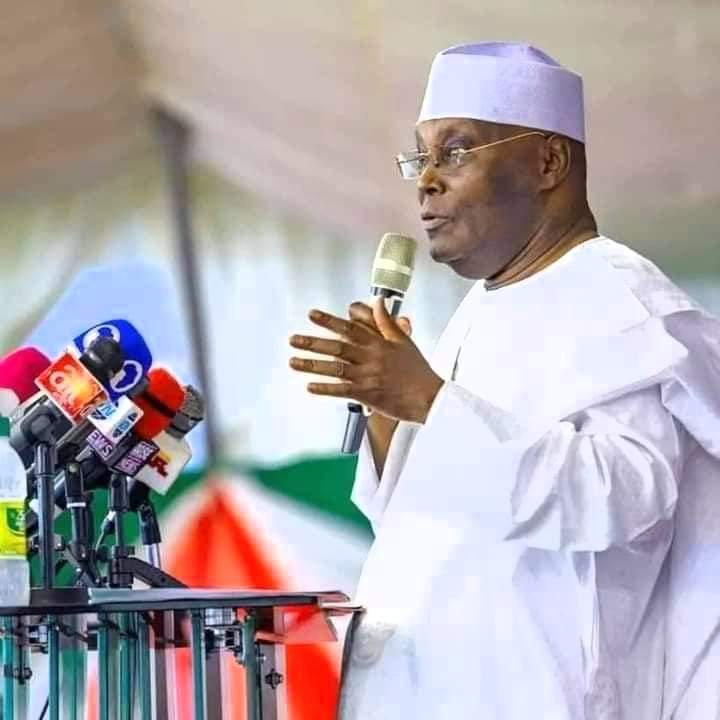
In this piece, I shall attempt to offer a factual and measured analysis of the north-south presidential zoning pattern in Nigeria’s Fourth Republic, the present state of that arrangement, and the path forward that best serves the interests of equity, fairness and justice as Nigeria approaches the 2027 general elections.
THE FOUNDATION: 1998 TO 1999.
In 1998, enormous pressure was mounted on the military government by pro-democracy forces and advocates, demanding a return to civilian rule. In the wake of the lingering fallout from the June 12 annulment, the powers that be resolved to return governance to democratic structures and, in particular, to support a candidate from the South-West as a measure of redress for the travesty of June 12, 1993.
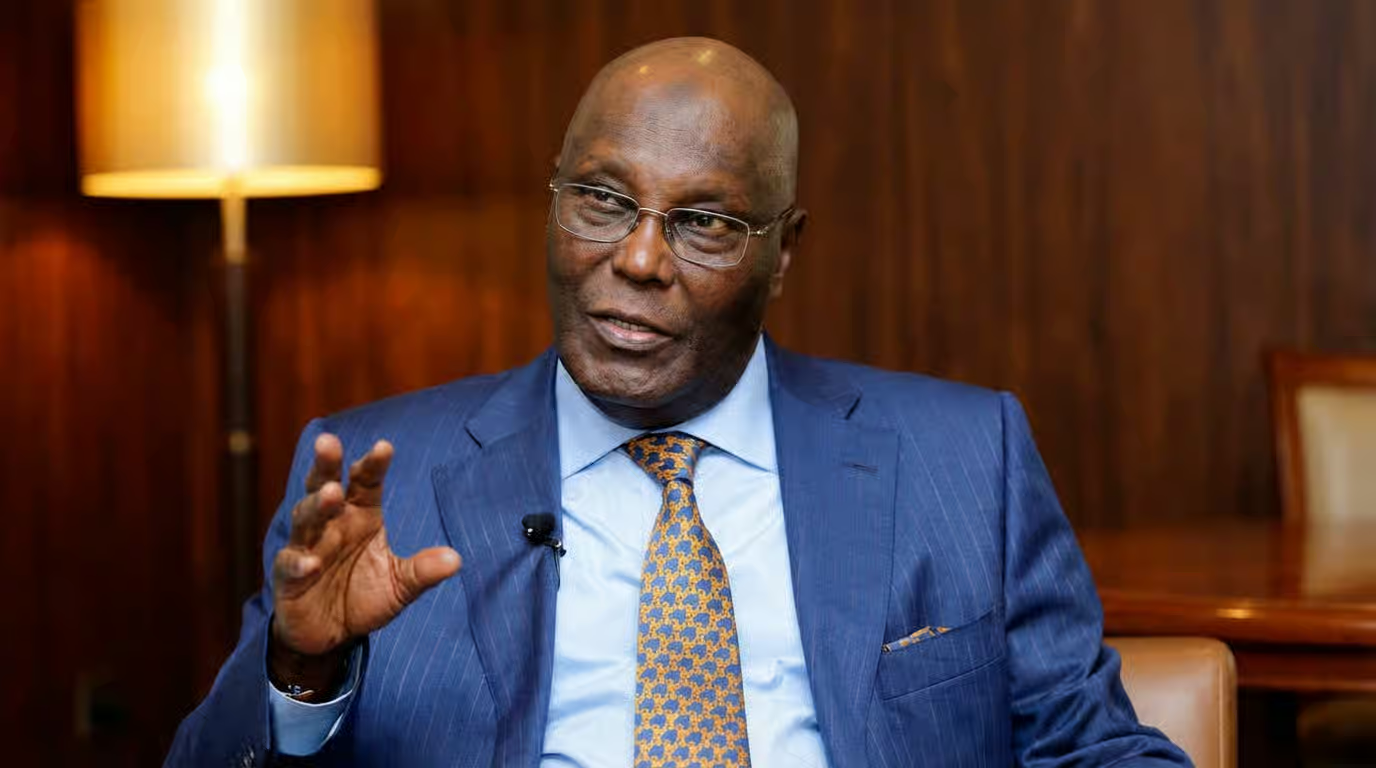
General Olusegun Obasanjo, who was then incarcerated, emerged as the favourite of the kingmakers to become the jfirst president of the Fourth Republic. The Peoples Democratic Party (PDP) was the chosen vehicle. Obasanjo was released from custody, sponsored, and became the PDP’s flag bearer. He ran alongside Atiku Abubakar from the North-East as his running mate. Together, they assumed the offices of President and Vice President respectively.
2003: LOYALTY OVER AMBITION
As the 2003 PDP primaries drew near, a significant number of PDP governors and party stakeholders prevailed upon Atiku to contest against his principal, citing their belief that Atiku was a superior democrat who would serve the country better as president. Despite the weight of these assurances and the backing of powerful governors, Atiku declined.
He appealed to them instead to rally behind Obasanjo for a second term, refusing to be an instrument of betrayal against the man he had served loyally. Obasanjo was re-elected in 2003 and completed another four years in office.
Atiku refused to betray Obasanjo. He insisted on supporting him for a second term, even when powerful forces urged otherwise.
THE THIRD-TERM GAMBIT AND ATIKU’S PRINCIPLED STAND.
Emboldened by the vast powers of the presidency, Obasanjo moved to extend his tenure through a sponsored bill in the National Assembly seeking a third term. This audacious attempt was resisted by Nigerians of conscience, within the legislature, across civil society, and among senior political figures.
Most notably, Vice President Atiku Abubakar vehemently opposed the agenda. As a committed democrat, Atiku stood his ground. The third-term bid was roundly defeated and firmly aborted.
2007: THE NORTH’S TURN AND A NATIONAL TRAGEDY
In 2007, the PDP zoned its presidential ticket to the North. The late Umaru Musa Yar’Adua, sponsored by the PDP, was duly elected as president. It is here that the zoning story takes a consequential turn.
Within barely two years and a few months of assuming office, President Yar’Adua passed away. In fulfilment of constitutional provisions, Goodluck Ebele Jonathan was sworn in as president to complete the remainder of Yar’Adua’s tenure.
2011: A GENTLEMAN’S AGREEMENT
Ahead of the 2011 elections, northern PDP stakeholders insisted that the party’s presidential ticket be returned to the North, so that a northern candidate could serve out the equivalent of a second term, consistent with the existing zoning arrangement within the PDP.
President Jonathan, however, appealed to northern PDP stakeholders to allow him contest for a full term of four years, after which he pledged his support for a northern PDP candidate in 2015. This agreement was struck with northern PDP stakeholders and major northern political interests. It was accepted, and Jonathan was backed to win the 2011 presidential election, a reasonable accommodation under the circumstances.
A gentleman’s agreement was struck: Jonathan would do one more term, then step aside for the North in 2015. History records what became of that promise.
2015: A PROMISE BROKEN, A COALITION BORN.
In 2015, having tasted power and basked in its privileges, President Jonathan reneged on the agreement with his northern PDP counterparts. Rather than honour his commitment to support a northern candidate, he heeded the counsel of those who assured him that no force in Nigeria could unseat a sitting president.
He listened to the praise singers, principally from the South, who had a vested interest in sustaining their access to government through his continued presidency. Only one PDP presidential nomination form was procured in 2015, and it bore Jonathan’s name.
This decision was a grave miscalculation. By defying northern interests within the PDP and by extension the broader North, Jonathan inadvertently provided the conditions for a formidable opposition coalition to crystallise.
Northern PDP stakeholders joined forces with southern progressive elements. Buhari’s Congress for Progressive Change (CPC) merged with Tinubu’s Action Congress of Nigeria (ACN) and other opposition tendencies to birth the All Progressives Congress (APC) in 2014. The rest, as they say, is history. The APC swept Jonathan and the PDP from power in 2015, the first time in Nigeria’s history that an incumbent government was removed through the ballot box.
COUNTING THE YEARS: THE ARITHMETIC OF ZONING.
President Jonathan’s decision to contest in both 2011 and 2015 destroyed the PDP’s internal zoning framework. I state this with confidence: when Jonathan contested and won in 2011, the convention dictated that it was the North’s turn.
Having served for nearly six years, Jonathan’s presidency combined with Obasanjo’s eight years gave the South a cumulative fourteen years of the presidency against the North’s mere two years under Yar’Adua. The North’s claim to 2015 was therefore not a matter of sentiment. It was one of equity. Jonathan surrendered that ground to the APC.
With President Buhari’s two full terms spanning eight years, the North’s cumulative hold on the presidency in the Fourth Republic stands at ten years as at 2023. The South, at that same point, had held the presidency for fourteen years, still ahead by four years.
This was precisely why the PDP in 2023 declined to zone its ticket to either region, opting instead for an open contest. The ruling APC equally did not foreclose northern aspirants from seeking its presidential ticket in 2023, for the same reason.
By May 29, 2027, the South will have held the presidency for a cumulative eighteen years. The North just ten years. The arithmetic speaks plainly.
2027 AND BEYOND: WHAT THE NUMBERS DEMAND.
With President Bola Ahmed Tinubu of the South-West occupying the presidency, the South’s cumulative hold will reach eighteen years by 29 May 2027, while the North’s tally remains at ten years. The question of where equity and justice demand the presidency should go in 2027 answers itself.
Should Tinubu secure a second term, the South’s cumulative total would reach twenty-two years by 2031, against the North’s ten. Should another southern candidate, say Peter Obi, emerge victorious and serve two terms, southern cumulative presidency would reach twenty-six years by 2035. The North would still stand at ten years.
On the other hand, if a northern candidate, particularly Atiku Abubakar from the North-East, becomes president in 2027 and contests a second term in 2031, both regions would arrive at 2035 with a cumulative tally of eighteen years each. For the first time in the Fourth Republic, the equation would be balanced.
THE CASE FOR ATIKU ABUBAKAR.
The case for H.E. Atiku Abubakar is not merely one of arithmetic, though the arithmetic is compelling. Atiku’s North-East geopolitical zone has never produced an executive president in the Fourth Republic. Its only contribution to national leadership at that level was Prime Minister Abubakar Tafawa Balewa in the First Republic.
Beyond geography, Atiku’s democratic credentials are unimpeachable. He chose loyalty over ambition in 2003. He stood against executive overreach in the third-term saga. He has consistently championed the unity and economic transformation of Nigeria over decades of public service.
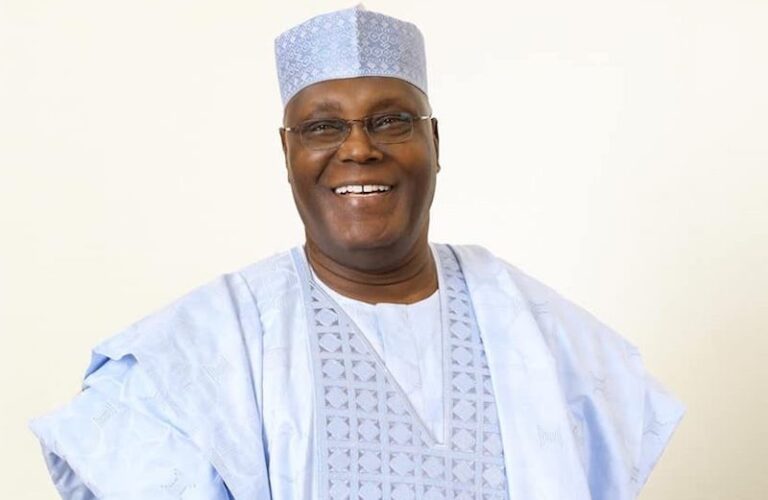
Atiku Abubakar, as the ADC’s presidential candidate, is not simply the most equitable choice for 2027. He is the most strategically sound choice for an opposition that is serious about displacing the APC and ending the misrule of a government that has presided over the collapse of the naira and historic levels of inflation.
The living standards of ordinary Nigerians have been steadily eroded under this administration. The case for change is not just moral. It is urgent.
To balance the Fourth Republic’s zoning equation between North and South, the answer for 2027 is unambiguous. It is the North’s turn, and Atiku Abubakar is the North’s finest offering.
LetsBalanceThe4thRepublicZoningEquationBtwNorth&SouthWithAtikuAbubakarAsPresidentFor2027 ⚖️ ✊ 🤝 🇳🇬 ✅
By:
PRINCE ODAFE J. EFEKODHA
Vice Chairman, Media Relations Outreach and Strategic Engagement, The Narrative Force
ADC Stakeholder, Delta State | Public Affairs Analyst