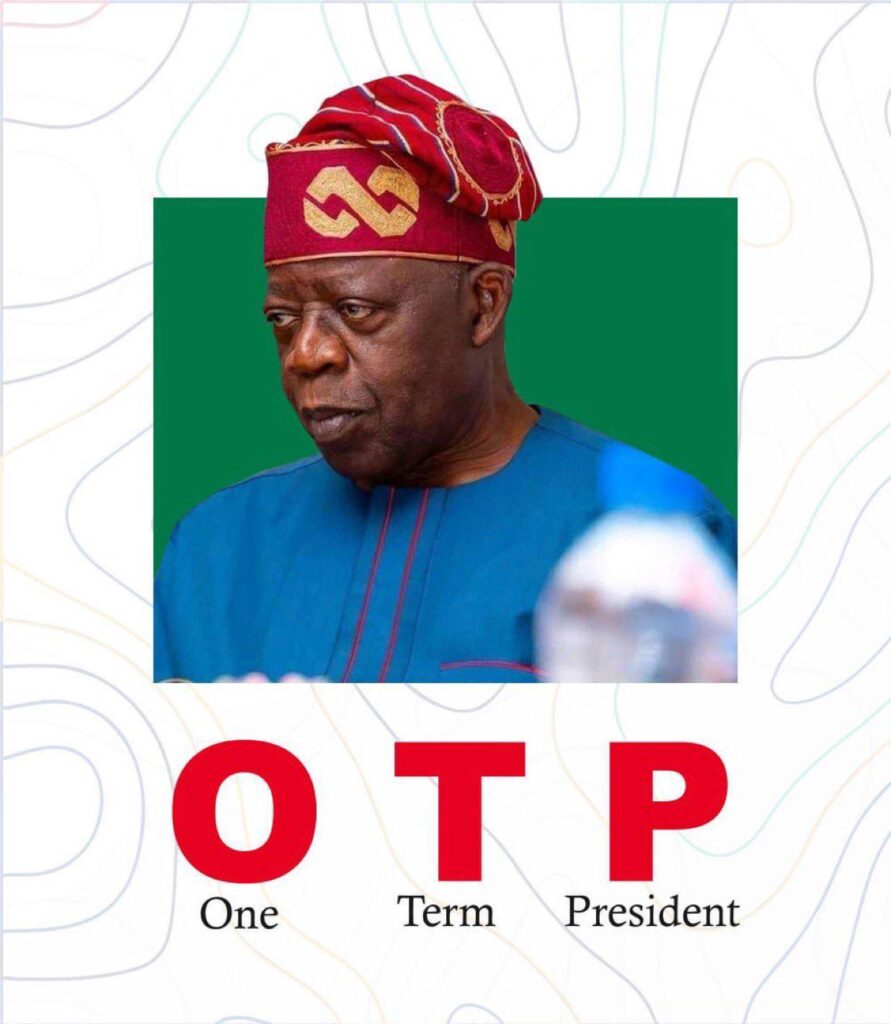
Aare Amerijoye DOT.B
As Bola Ahmed Tinubu stood before King Charles III, Queen Camilla, Prince William and Catherine, Princess of Wales, at a State Banquet in St George’s Hall, Windsor Castle on Wednesday the 18th of March 2026, delivering what he called a “profound honour” as the first Nigerian leader to address that historic venue, Nigerian protesters stood outside those same castle gates.
Members of the Take It Back movement staged a protest outside Windsor Castle, openly confronting supporters of the President and condemning the British government for what they described as endorsing a corrupt and illegitimate regime. Their placards were unambiguous. “Nigeria is better without Tinubu.” “Tinubu: Age? Disputed.” “Tinubu: Parents? Disputed.”
The palace pageantry could not drown out the questions that follow this president everywhere he travels.
Those questions have a paper trail. That paper trail leads directly to the courts of the United States of America.
This might be one of those very irreparable damages they feared.
When Bola Ahmed Tinubu’s lawyers stood before a United States federal court in September 2023 and argued that releasing his records would cause him “severe and irreparable harm,” and that once the information was out, it “cannot be taken back to the bottle,” they may not have been speaking only about his Chicago State University academic files.
They may have been speaking about all of it.
Here is what has been unfolding in the courts of the United States of America, courts that answer to no Aso Rock, no DSS, and no compliant legislature.
On 19 September 2023, Magistrate Judge Jeffrey Gilbert of the United States District Court for the Northern District of Illinois ordered Chicago State University to release Tinubu’s academic records to his presidential rival, Atiku Abubakar, within 48 hours. Tinubu filed an emergency application before Senior Judge Nancy Maldonado, pleading that the release would cause him severe and irreparable harm.
His lawyer told the court in plain terms: “Severe and irreparable harm will be done to Bola Tinubu if the records are released. If the records are released, harm will be done and cannot be taken back to the bottle.”
Judge Maldonado granted a temporary stay.
Now consider what sat at the centre of that frantic legal scramble. The certificate Tinubu had submitted to the Independent National Electoral Commission on 17 June 2022 was purportedly issued in 1979 and signed by one Elnora Daniel.
Ms Daniel, however, only arrived at Chicago State University in 1998, coming from Hampton University, nineteen years after Tinubu was said to have graduated. She had left the institution in 2008, fourteen years before Chicago State University issued a fresh certificate in Tinubu’s name when a Nigerian lawyer made enquiries about his educational records there.
A certificate. A signature. A signatory who was not yet at the institution when the document was supposedly signed.
And a president who raced to court to ensure those records would never see daylight.
But the certificate drama is only one strand of this unravelling.
The more consequential strand involves the Federal Bureau of Investigation, the Drug Enforcement Administration, and a 1993 narcotics case in Chicago that has never been adequately explained.
In 2022, American transparency advocate Aaron Greenspan, working with Nigerian investigative journalist David Hundeyin, filed a Freedom of Information Act request with six United States federal agencies, namely the FBI, DEA, CIA, IRS, the State Department, and the Executive Office of US Attorneys. They sought records relating to a heroin trafficking ring that had operated in Chicago in the early 1990s. Among the names in the request was Bola Ahmed Tinubu.
Five of the six agencies issued what lawyers call Glomar responses, a legal mechanism by which an agency refuses to confirm or deny that records even exist. Greenspan took them to court.
In April 2025, United States District Judge Beryl A. Howell of Washington DC ruled against the FBI and DEA. She found that their refusal to acknowledge the existence of records was, in her words, neither logical nor plausible. She ordered both agencies to search for and release all non-exempt documents, ruling that the public interest in disclosure clearly outweighed any privacy claims Tinubu could assert, particularly since both agencies had already confirmed in court filings their connection to a narcotics probe involving the Nigerian president.
At the centre of the case sits a 1993 affidavit by IRS Special Agent Kevin Moss, filed in the Northern District of Illinois. That affidavit confirmed that Tinubu held accounts in First Heritage Bank containing over one million four hundred thousand United States dollars, funds the US government alleged were proceeds of drug trafficking. Those funds were subsequently forfeited. Tinubu has consistently denied any wrongdoing.
The April 2025 ruling did not end the matter. It only began a new chapter of obstruction.
The FBI and DEA continued to delay, requesting new deadlines and providing what the court described as minimal explanation for their repeated failure to comply. Deadline after deadline passed. August 2025. September. December. January 2026. Not a single document was produced.
On 3 February 2026, Judge Howell publicly rebuked both agencies. She ordered the FBI to submit sworn statements accounting for its failure to honour court deadlines, directed it to release all non-exempt records in batches, and set a hard final deadline of 1 June 2026 for the completion of full disclosure. She further ordered both agencies to file joint progress reports to the court every fourteen days.
Pause here and register what this means in plain language.
By 1 June 2026, well before Nigeria’s 2027 election campaigns reach their peak, FBI and DEA investigative records on Bola Tinubu are scheduled to be released into the public domain by order of a United States federal court. Not newspaper allegations. Not opposition talking points. The internal files of America’s premier law enforcement and anti-narcotics agencies, compiled during an active criminal investigation.
The Take It Back protesters at Windsor Castle put it plainly. They said they rejected the symbolism of the visit entirely, arguing that former colonial powers have no moral authority to validate what they described as the continued exploitation of their nation, and that inviting Tinubu to the palace does not confer legitimacy but exposes complicity.
They were standing outside a castle. But the real tribunal is in Washington DC. And that tribunal has already spoken.
Nigerians must ask themselves a simple question. What is in those files that a sitting president finds so devastating, so irreparably damaging, that he has spent years and enormous resources trying to prevent their release?
A man with nothing to hide does not fight this hard to hide nothing.
His own lawyers told a court that once it was out, it “cannot be taken back to the bottle.”
The bottle is tilting. The deadline is 1 June 2026. And when the contents finally pour out, no state banquet, no royal carriage procession, and no 42-gun salute will be able to drown out what Nigerians will finally see.
Aare Amerijoye DOT.B
Director General,
The Narrative Force
www.thenarrativeforce.org