While Tinubu and the APC run Nigeria like a garrison where citizens are hostages, the African Democratic Congress and Atiku Abubakar offer the only credible path to democratic liberation in 2027.
Aare Amerijoye DOT.B,
There is a phrase that has migrated from the seminar rooms of political theory onto the bleeding streets of Nigeria: the prison house of democracy. It is not a poetic flourish. Under Bola Ahmed Tinubu and the All Progressives Congress, it is the daily, suffocating reality of 220 million citizens who wake each morning inside a country that has been seized, padlocked, and surrendered to a cabal with no interest in their survival.
What Nigeria is living through is not governance. It is occupation. And there is a profound difference between the two. A government serves. An occupation extracts. A government answers to the people. An occupation answers to the commandant.
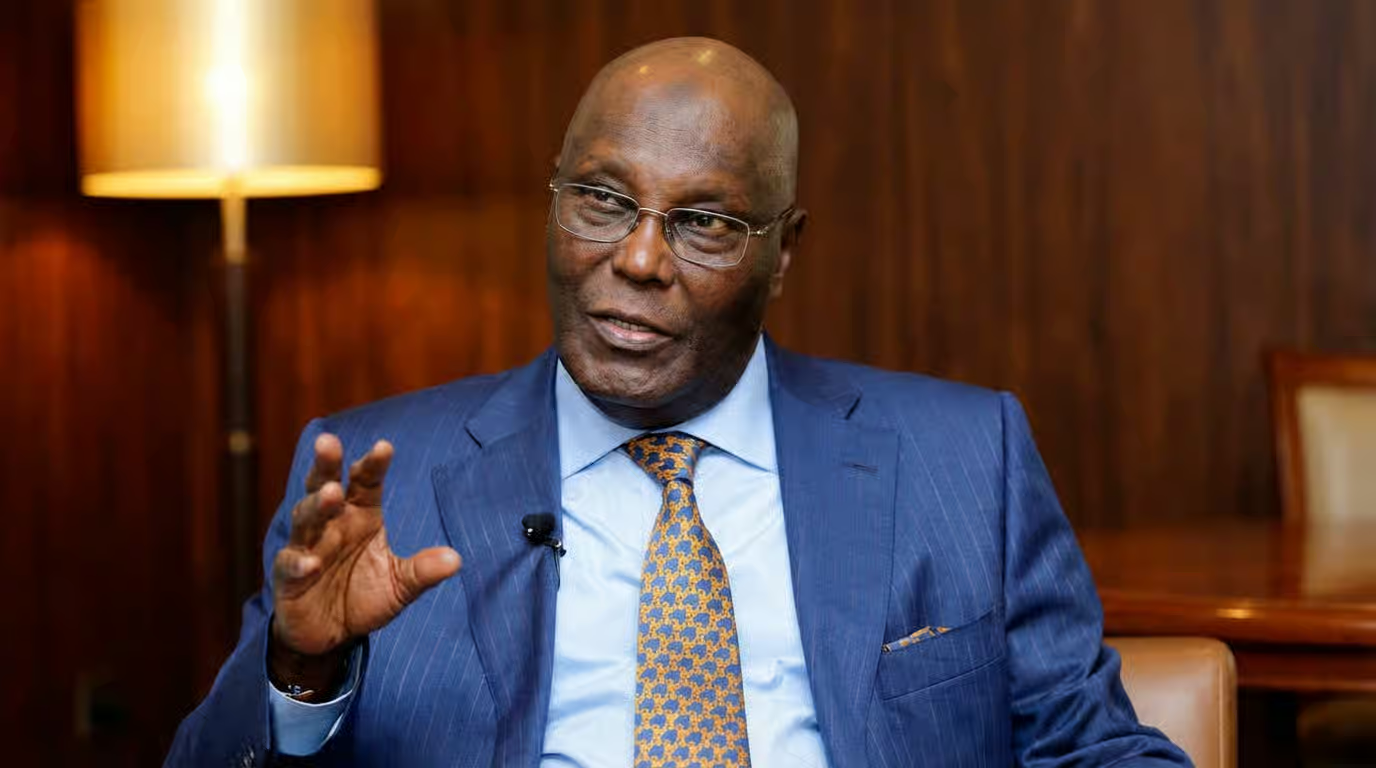
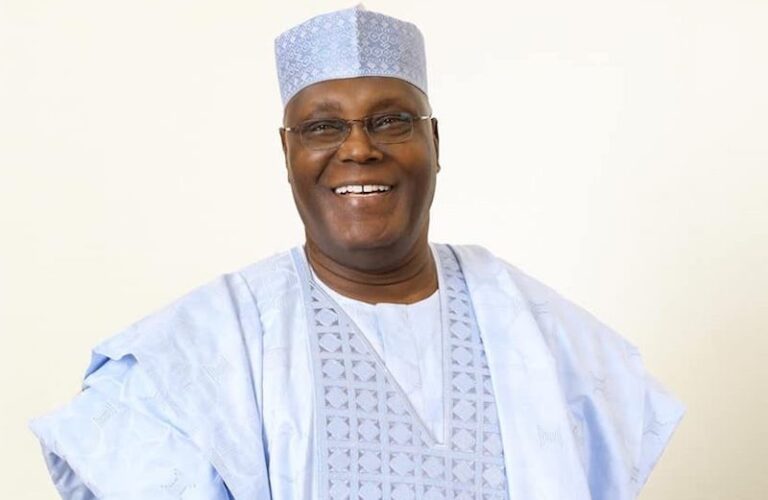
Since May 2023, Nigeria has had a commandant, not a president. Nigeria is not merely bleeding. Nigeria is haemorrhaging on the altar of incompetence, impunity, and deliberate institutional sabotage. And the surgeon who must stop the bleeding has a name: Atiku Abubakar.
“The APC has not governed Nigeria. It has occupied Nigeria. There is a difference between a government and an occupation force, and Nigerians now understand it in their empty pockets, their darkened homes, and their broken futures.”
THE GARRISON HAS A NEW COMMANDANT AND HIS NAME IS TINUBU.
What has taken root in Nigeria under the APC is a system of garrison politics: the calculated deployment of party machinery, state resources, and patronage networks to capture democratic institutions rather than serve them. Governors become enforcers. Ministers become logistics officers. The legislature becomes a rubber stamp.
The presidency becomes the garrison headquarters from which orders flow downward and loyalty flows upward, while the Nigerian people are left entirely outside the transaction. Consider the evidence, not as rhetoric but as lived reality documented in figures that do not lie.
The naira has collapsed from 470 to the dollar in May 2023 to over 1,600 naira today, the most catastrophic peacetime currency destruction in Nigeria’s post-independence history. Headline inflation peaked at 34.8 percent in December 2024 according to the National Bureau of Statistics, the highest in nearly three decades, eroding the savings, wages, and dignity of every Nigerian household that does not feed at the garrison table.
The pump price of petrol has risen from 185 naira per litre under the previous administration to over 1,000 naira today in many parts of the country, following a subsidy removal that was promised as liberation but delivered as punishment. The Band A electricity tariff was hiked by 300 percent in April 2024, from 68 naira per kilowatt-hour to 225 naira, for consumers who receive an average of less than 12 hours of supply daily according to the Nigerian Electricity Regulatory Commission’s own data.
Meanwhile, the Nigerian government spent 37.8 billion naira on presidential air travel in 2023 alone, according to figures published by BudgIT, Nigeria’s foremost fiscal transparency organisation. This is what a garrison looks like from the inside. Citizens are not constituents in this arrangement. They are captives. And captives, history teaches us, do not remain passive forever.
The japa exodus has become the loudest verdict ordinary Nigerians are delivering on this administration in real time. The United Kingdom issued 65,929 skilled worker visas to Nigerians in 2023, a 52 percent increase from the previous year, according to UK Home Office statistics.
Canada, the United States, and Australia tell similar stories. Nigeria is not losing its surplus. It is losing its future, one departure gate at a time.
THE ADC: THE DOOR OUT OF THE PRISON.
Every prison house, no matter how formidably constructed, has a door. The door out of Nigeria’s current political captivity is the African Democratic Congress and in 2027, that door will be opened.
The ADC is not a repackaging of familiar failure. It is not the APC with a new logo, nor the PDP with a fresh coat of rhetoric. It is a genuinely new institutional vessel for a country that has exhausted the moral credit of both dominant parties.
Where the APC has governed through patronage and the PDP has collapsed under the weight of internal godfatherism and garrison conventions that disenfranchise ordinary members, the ADC offers something genuinely radical in the Nigerian political context: internal democracy anchored in due process, transparent delegate selection from the ward level upward, and a constitutional structure that does not permit a single godfather to override the collective will of the membership.
The ADC conducted its recent national convention under conditions of transparency that neither the APC nor the PDP has demonstrated in living memory. Delegates were elected, not selected. Votes were counted, not announced. Aspirants were heard, not anointed.
This is not a small thing in a political environment where, as the Court of Appeal has repeatedly confirmed, the internal primaries of dominant parties have become theatres of predetermined outcomes.
In Ekiti State, in Ikole Local Government Area, in wards across the six geopolitical zones of this country, ADC structures are being built with the patience and precision that serious electoral contests demand. Ward executives are organising meetings. Members are being registered.
The work is quiet, methodical, and deliberately unglamorous, because the people doing it understand that 2027 will not be won in television studios. It will be won in polling units.
“ADC membership registration is not a bureaucratic exercise. It is the construction of a liberation army. Every card collected is a ballot armed against the garrison.”
ATIKU IS NOT A CANDIDATE. ATIKU IS A COVENANT.
Nigeria’s tragedy in recent electoral cycles has been the confusion of popularity with capacity, the elevation of sentiment over substance, of symbolism over the hard, unglamorous work of economic management and institutional rebuilding. 2027 cannot afford that confusion again.
The cost of getting it wrong one more time is a Nigeria that may not recover within a generation. By every serious measure of leadership capacity, Atiku Abubakar stands apart from every figure crowding the 2027 horizon. And unlike those who are asking Nigerians to trust a promise, Atiku is asking Nigerians to trust a record.
He has governed before and the record is not hidden. As Vice President, Atiku drove the structural reforms that underpinned Nigeria’s most significant economic expansion since independence. GDP grew from $45 billion to over $170 billion. Foreign direct investment rose from under $1 billion annually to over $8 billion. These were not accidents of oil price cycles. They were the products of deliberate, competent economic architecture.
The telecommunications revolution that put a mobile phone in the hands of the poorest Nigerian, that created the largest mobile market in Africa and birthed an entirely new entrepreneurial ecosystem, was driven by the liberalisation agenda that Atiku championed against powerful vested interests that preferred the old monopoly.
State enterprises haemorrhaging billions in public funds were restructured through the Bureau of Public Enterprises under his direct supervision, not as ideological performance, but as pragmatic governance anchored in outcomes. Nigeria’s economy moved with purpose and gave young Nigerians concrete reasons to invest their futures at home.
Today, under Tinubu, young Nigerians are leaving in historic numbers. Not in search of adventure. In flight from despair. The Nigerian Medical Association has warned that over 16,000 doctors left Nigeria between 2019 and 2023, a haemorrhage that has left many public hospitals operating at critically reduced capacity.
The Association of Nigerian Physicians in the Americas estimates that over 50 percent of Nigerian-trained doctors now practise outside the country. Universities produce graduates whom the economy cannot absorb. The informal sector, long the shock absorber of Nigerian economic failure, is itself contracting under the combined pressure of naira devaluation, high energy costs, and collapsed consumer purchasing power.
Atiku is not offering a sentiment. He is offering a covenant: a proven, costed, implementable commitment to structural economic reform that returns Nigeria to double-digit growth; to a genuine fiscal federalism that releases the entrepreneurial energy trapped in states and local governments by the suffocating centralisation of the current order; to a security architecture rebuilt on intelligence-led operations, inter-agency coordination, and the restoration of community trust in law enforcement.
And to a foreign policy that reclaims Nigeria’s position as the anchor of African stability, the voice of the continent in global institutions, and the destination of choice for serious investment. This is not campaign language. It is the language of a man who has held the levers of state, who knows their weight, their reach, and their limits, and who has the institutional memory, the technocratic network, and the democratic legitimacy to deploy them again in the service of a suffering people.
2027 IS NOT AN ELECTION. IT IS A VERDICT.
The Nigerian people are not going to the polls in 2027 merely to choose between parties. They are going to deliver a verdict: a solemn, historic reckoning with years of APC misrule that has compressed a generation’s worth of economic pain into the span of a single administration.
That verdict follows a damning indictment. According to the National Multidimensional Poverty Index, 133 million Nigerians are living in multidimensional poverty. That figure is not a statistic. It is a national emergency wearing the face of a child who went to bed hungry, a widow who cannot pay school fees, and a pensioner whose savings the inflation crisis has quietly annihilated.
That verdict must not be squandered through apathy, through the false comfort of cynicism, or through the manipulation of garrison machinery that has stolen previous mandates and recycled stolen futures. It must be delivered through an organised, mobilised, and fiercely protected ballot. The ADC is the platform of that verdict. Atiku Abubakar is the name inscribed upon it.
Every Nigerian who has watched the naira become confetti in their hands, every trader whose business the spiralling import costs have strangled and shuttered, every parent who has sat in the corridor of a public hospital with a sick child and been told there are no drugs, no beds, and no doctors, every young graduate who boarded a flight to London or Toronto or Calgary not because Nigeria could not use their talent but because Nigeria under this administration chose not to reward it, every one of those Nigerians is a juror.
Every widow who cannot afford to bury her husband because the cost of a wooden coffin has tripled, every farmer who planted and could not harvest because bandits and kidnappers own the roads that should carry his produce to market, they are jurors too. And they are ready to pronounce.
The verdict is already written in their pain. 2027 is simply the day it is read aloud, in ink, at the polling unit, under the eye of a nation that has finally had enough.
“Nigeria does not need a better APC or a renovated PDP. Nigeria needs a new covenant with its people. That covenant has a platform: the ADC. It has a candidate: Atiku Abubakar. And it has a deadline: 2027.”
Register with the ADC today. Mobilise your ward this week. Speak to your neighbour before the next election cycle swallows the moment. Speak to your market woman. Speak to your okada rider. Speak to the graduate packing his bags in quiet defeat.
Speak to the nurse who is already on the waiting list for a UK visa. Tell them all that the garrison is not permanent. Tell them that prison houses have been broken before, by peoples far more burdened than we are, in circumstances far darker than these.
Tell them that Nigeria’s prison house has a key. Tell them that in 2027, Atiku Abubakar will use it, and that Nigeria will finally, irreversibly, and with the full-throated voice of a liberated people, breathe again.
Aare Amerijoye DOT.B
Director General,
The Narrative Force
Aare Atayese of Odo Oro Ekiti