The nation bleeds not from lack of resources, but from a surplus of accidental rulers.
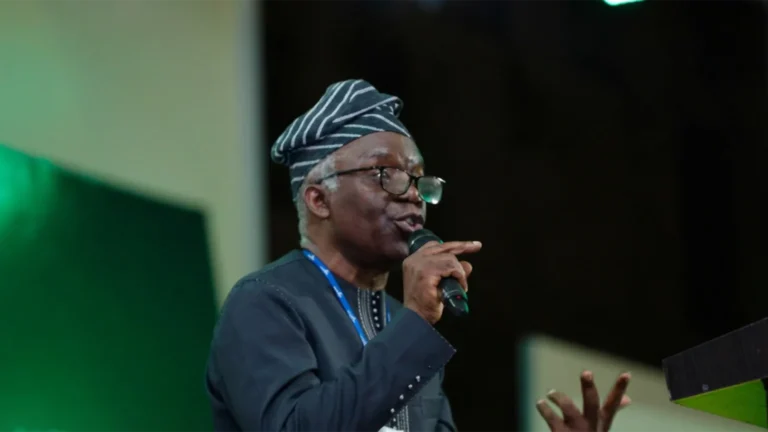
Aare Amerijoye DOT.B
HISTORY IS MERCILESS. It does not negotiate. It does not console. It does not grade on a curve of good intentions or regional sentiment. History renders one verdict only: results.
And by that cold, unblinking standard, Nigeria stands today as the most painful paradox on the African continent. A nation so blessed by Providence that it ought to be a wonder of the world. A nation so cursed by its own leadership choices that millions of its children are fleeing it by land, by sea, and by prayer.
This is not an accident of geography. It is not the consequence of colonialism alone, though colonialism left its scars. It is not the fault of the international financial system, though that system has never been kind to Africa.
Nigeria’s wound is self-inflicted. Nigeria’s crisis has a name, and that name is accidental leadership.
I. WHAT HISTORY LOOKS LIKE WHEN IT IS DONE RIGHT
Otto von Bismarck did not become the Iron Chancellor by sentiment. He unified a fragmented Germany through strategic genius, unrelenting will, and a blueprint so precise that Europe trembled.
Abraham Lincoln did not stumble into greatness. He studied, he suffered, he lost repeatedly, and when history finally called his name, he was ready. He held a republic together with his bare hands and paid for it with his life.
Lee Kuan Yew inherited Singapore in 1965. No oil. No vast agricultural land. No demographic dividend of 220 million souls. Just a swampy, resource-poor island city that the world had written off.
Within one generation, through disciplined governance, zero tolerance for mediocrity, and an absolute refusal to allow sentiment to override competence, Lee Kuan Yew transformed Singapore into one of the wealthiest, most efficiently governed nations on earth. That is what a prepared leader looks like. That is what vision, backed by political will, actually produces.
Closer to home, Chief Obafemi Awolowo gave us the living proof. His free education policy in the Western Region did not merely fill classrooms. It shattered the architecture of generational poverty.
Decades after his passing, the South West still harvests what Awolowo planted. That is the signature of a true leader. Not the roads named after them. Not the statues erected in their honour. But the transformation that quietly continues in the lives of ordinary people long after the leader is gone.
“A nation that repeatedly tolerates accidental presidents has made a permanent peace with perpetual failure.”
II. THE UGLY LEDGER OF ACCIDENTAL POWER
Now turn and face Nigeria’s own record without flinching.
Strip away the eagles on the uniforms. Strip away the democratic bunting and the inauguration fanfare. What remains? A disturbing, unbroken pattern of men who did not so much seek power as receive it. Leaders selected not by the rigorous demand of national necessity but by the grubby calculations of faction, region, religion, and last-minute compromise.
Some of our past heads of state confessed openly that they never planned to be president. Others were consensus fillers, produced when the actual contenders neutralised one another and the system needed a name to insert.
Others arrived on the barrels of guns, with neither mandate nor blueprint, only the assumption that holding power and knowing how to use it are the same thing. They are not. They never have been.
The consequences are not abstract. They are written in flesh and in statistics. Nigeria’s inflation has exceeded 30 per cent, gutting the purchasing power of every working family in the country. Youth unemployment stands above 50 per cent according to the National Bureau of Statistics, condemning an entire generation to idleness in a land of abundant natural wealth.
More than 1.5 million Nigerians left their homeland in a single year, not as tourists or adventurers, but as refugees from a state that had nothing left to offer them. Our refineries, after decades and billions of naira in so-called turnaround maintenance, remain monuments to institutional failure. Our universities produce graduates who cannot find work. Our hospitals send our own rulers abroad for treatment.
These are not statistics. They are indictments. They are the bill that accidental leadership has handed to 220 million Nigerians, and we are still paying it, with interest, every single day.
“Sentiment has never fixed an exchange rate. Zoning has never built a refinery. Ethnicity has never created a single job.”
III. SENTIMENT IS NOT A DEVELOPMENT PLAN
Every election season, they return. The merchants of division. The engineers of sentiment. They drape themselves in regional grievance and religious fervour and stand before the Nigerian people with nothing in their hands except the oldest, cheapest currency in our political economy: your tribe, your zone, your faith.
They dare not speak of policy because they have none. They dare not speak of record because it damns them. So they speak of rotation. They speak of it being someone’s turn. As though the presidency of a nation of 220 million suffering people is a trophy to be passed around a table rather than a responsibility to be earned by demonstrated capacity.
Let us ask the questions these merchants cannot answer. Which ethnic group will stabilise the Naira? Which geopolitical zone will industrialise the Niger Delta? Which religion will fix the power grid, build the rail networks, and create the 20 million jobs Nigeria needs before this generation is entirely lost to emigration and despair?
Sentiment has no answer. It never has. It never will. Lee Kuan Yew did not ask which tribe deserved to run Singapore’s economy. He asked which policies would work. Nigeria must begin asking the same question before it is too late.
Sentiment is not a development plan. Zoning is not a substitute for competence. And the Nigerian people, battered, weary, and running out of patience, deserve infinitely better than another four years of on-the-job training at national expense.
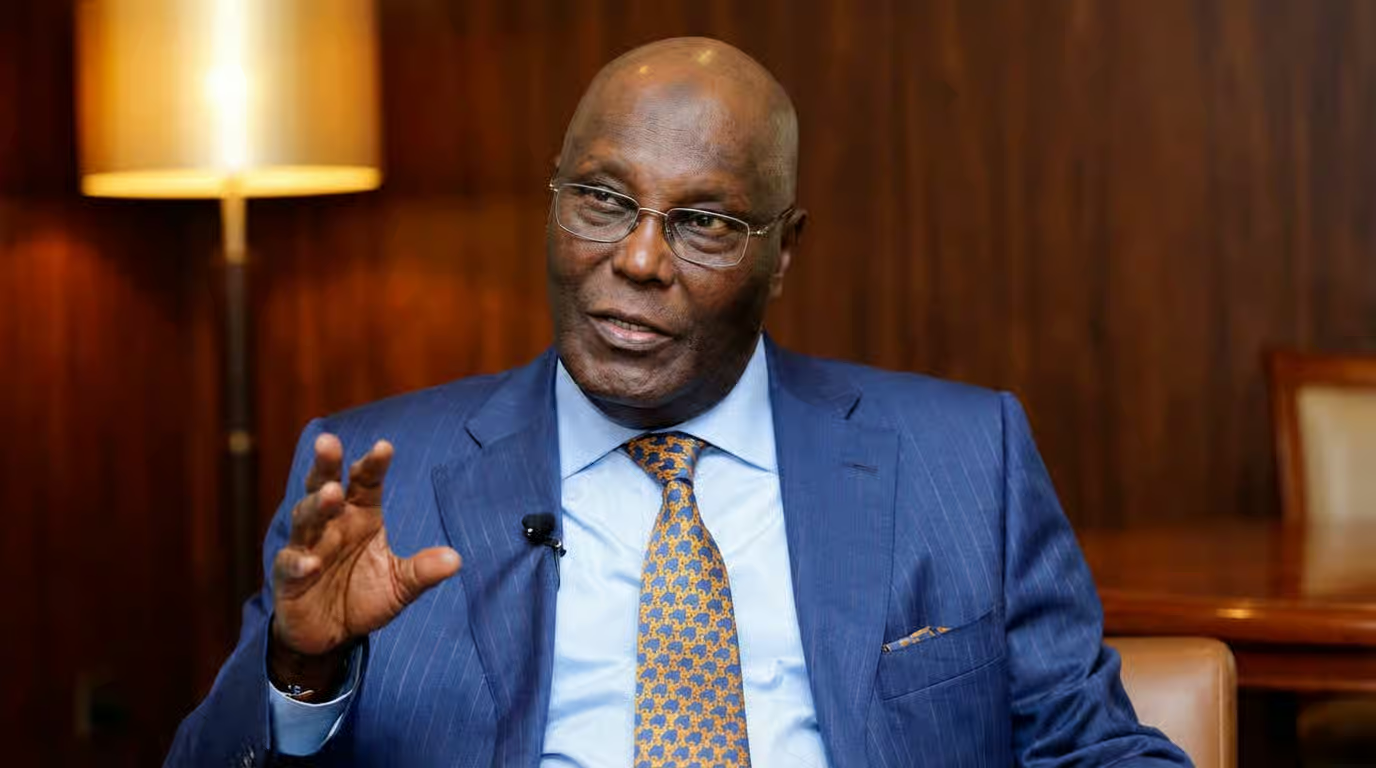
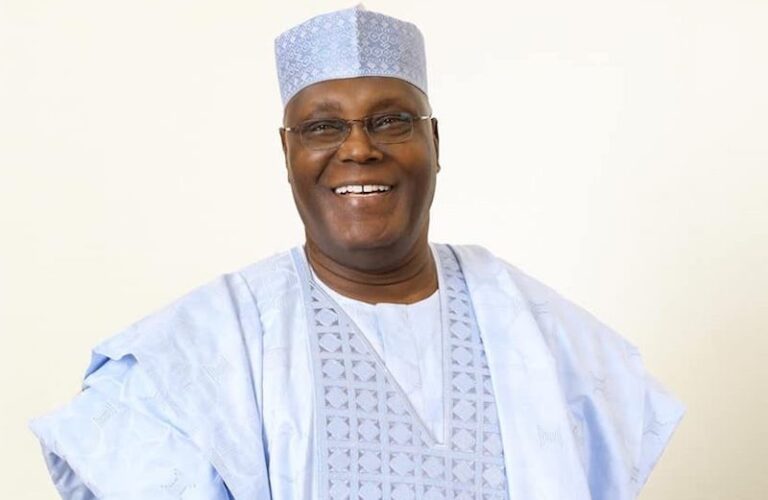
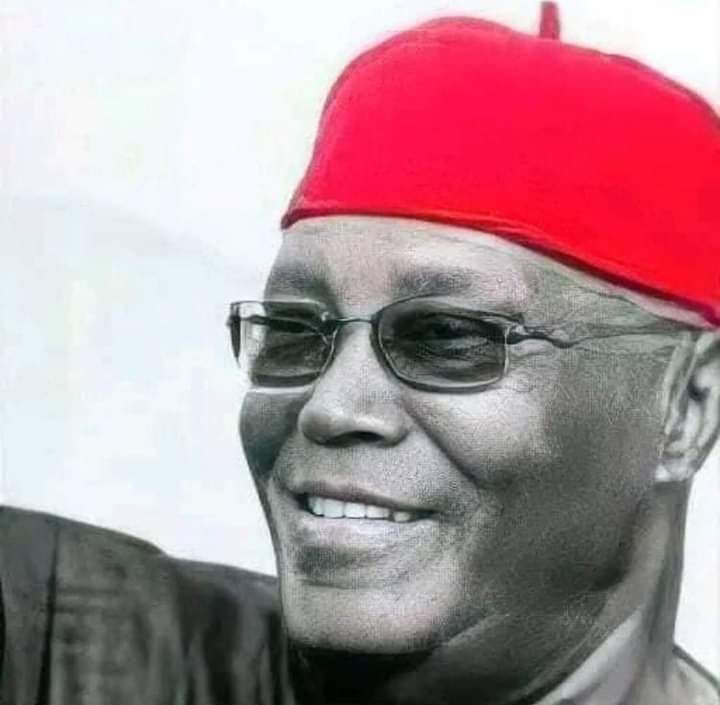
IV. THE CASE FOR ATIKU ABUBAKAR
Into this wreckage steps a man who has been preparing for this moment, whether the world acknowledges it or not, for the better part of four decades.
Atiku Abubakar is not a fresh face. He is a tested, weathered, and battle-hardened force. He has governed. He has built. He has negotiated Nigeria’s complexity at its highest levels and emerged with his understanding of what this country needs not diminished but sharpened.
His manifesto, Let’s Get Nigeria Working Again, is not campaign verse. It is a policy document. It identifies the fractures and prescribes specific, costed, sequenced remedies.
He proposes the privatisation of state enterprises that have become perpetual drains on public treasure, including the refineries that have consumed billions without delivering a single functional drop of refined fuel to the Nigerian consumer. He advocates fiscal federalism that dismantles the suffocating centralisation keeping states dependent and powerless.
He commits to an industrial and technology policy designed to absorb Nigeria’s vast, restless, talented youth population into productive economic life rather than leaving them to choose between unemployment and emigration.
These are not promises written on campaign posters. They are frameworks forged by a man who built businesses from nothing, employed thousands of Nigerians, and operated at the demanding intersection of commerce and governance before he ever stood on a political platform.
Atiku Abubakar has genuine skin in the Nigerian game. His success is tied to Nigeria’s success in ways that purely political figures simply cannot claim.
And his pan-Nigerian reach is not a talking point. It is a lived reality. In a nation fracturing along ethnic and religious fault lines, a leader who has built real relationships, real investments, and real trust across every geopolitical zone of Nigeria is not a luxury. He is a national necessity.
Unity cannot be decreed from Aso Rock. It must be embodied by the person who occupies it.
“Nigeria does not need another accident in Aso Rock. It needs an architect with blueprints already drawn.”
V. THE VERDICT HISTORY IS PREPARING.
We are at the crossroads. Not metaphorically. Literally. The choices Nigeria makes in 2027 will determine whether this generation is remembered as the one that finally broke the cycle or the one that chose comfort over courage one final, fatal time.
The African Democratic Congress and Atiku Abubakar represent a road that is harder to walk but impossible to regret. A road built on verified data, international best practice, and an unshakeable commitment to the proposition that 220 million Nigerians deserve a government that actually governs.
Even his opponents, in their more honest moments, have been forced to concede this truth. Bola Ahmed Tinubu, before political ambition reshaped his public positions beyond recognition, declared with unmistakable conviction that Nigeria needs Atiku to continue to make life more meaningful.
He said it because in that moment he meant it. And the truth of it has not diminished simply because his ambitions changed direction. Truth is not a political ally. It does not defect.
Nigeria needs Atiku. Not because of his ethnicity. Not because of his religion. Not because of which zone he calls home. But because of what he knows, what he has built, what he has withstood, and what he has the demonstrated capacity to deliver.
Because in 2027, Nigeria cannot afford another accident. It cannot absorb another four years of a leader discovering, in real time and at the nation’s expense, what governing actually requires.
The nation that chose Bismarck was unified. The nation that chose Lincoln was saved. The nation that chose Lee Kuan Yew was transformed beyond all recognition.
The Nigeria that chooses Atiku Abubakar and the African Democratic Congress in 2027 chooses the audacious, necessary, overdue possibility of becoming, at long last, the nation it has always had the potential to be.
That choice belongs to the farmer in Benue, the trader in Onitsha, the graduate in Kano, the mother in Lagos, and the fisherman in Bayelsa. It belongs to every Nigerian anywhere on earth who has ever refused to stop believing that this country can be saved.
History is not watching passively. History is taking names. Cast your vote with your conscience. Cast it with your children’s hunger in mind. Cast it with the full, unsparing weight of what Nigeria deserves and has never yet received.
Choose vision. Choose competence. Choose Atiku. Choose Nigeria.
Aare Amerijoye DOT.B
Director General,
The Narrative Force
Aare Atayese of Odo Oro Ekiti