WHEN NUMBERS ROAR, PROPAGANDA COLLAPSES.
Aare Amerijoye DOT.B
Politics, especially Nigerian politics, has always been a theatre of noise. It is a marketplace where propaganda shouts, rumours multiply, and carefully manufactured illusions attempt to masquerade as reality. Every election cycle produces an orchestra of commentators determined to bend perception until repetition begins to resemble truth.
Yet beneath the drums of propaganda stands a quiet and incorruptible referee that no politician can intimidate.
Numbers.
Numbers do not argue. They do not shout on television panels. They do not hire digital propagandists. They do not manufacture narratives.
They simply exist with the cold, unyielding authority of truth.
And when the numbers of Nigeria’s 2023 presidential election are examined without partisan intoxication, one reality rises above the fog of political manipulation like a mountain that refuses to move:
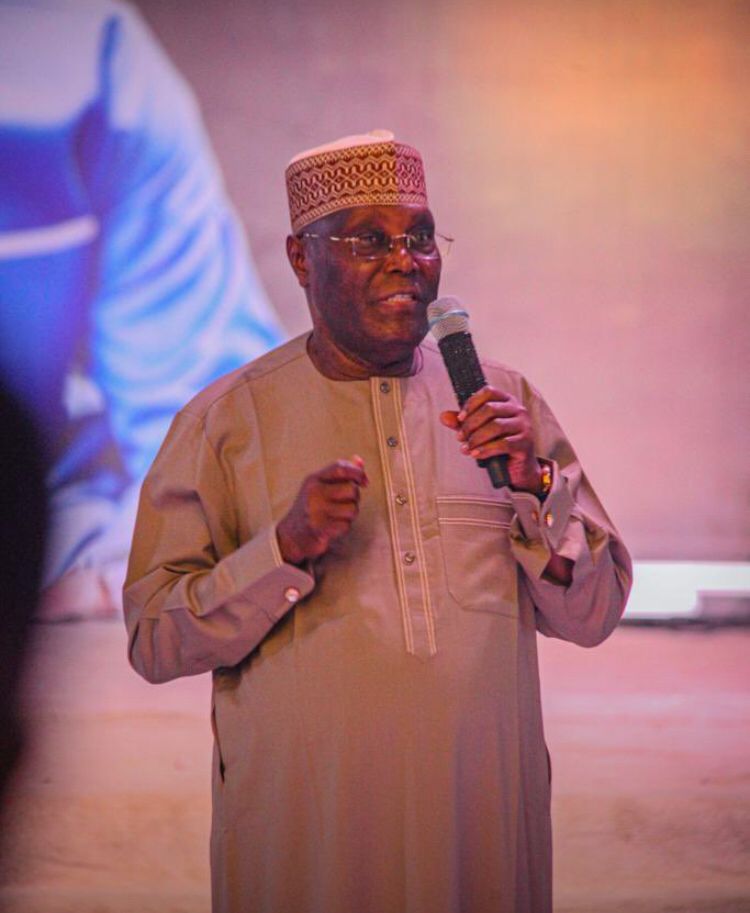
Alhaji Atiku Abubakar remains the most formidable opposition electoral force in Nigeria.
Not mythology.
Not emotional sentiment.
Mathematics.
And as Nigeria inches toward the defining crossroads of the 2027 presidential election, that mathematical reality is now converging with another political development whose implications are only beginning to dawn on the national consciousness:
The African Democratic Congress (ADC) is steadily emerging as the coalition platform capable of translating Nigeria’s growing frustration into electoral correction.
When these two forces intersect , a candidate with enduring national reach and a coalition platform open to democratic convergence , the political equation begins to change in ways the current establishment would rather Nigerians did not examine too closely.
THE MAN THEY KEEP TRYING TO ERASE.
Nigerian politics has a peculiar obsession with writing premature political obituaries. Every election season produces analysts eager to declare that a particular political figure has reached the end of his relevance.
But history has a wicked sense of humour.
There are politicians who resemble fireworks: loud, dazzling, and spectacular for a moment before fading into darkness.
Then there are political mountains: figures whose presence refuses to disappear no matter how many storms rage against them.
Atiku Abubakar belongs firmly in the latter category.
For more than three decades, Nigeria’s political landscape has witnessed parties fragment, alliances collapse, and once-powerful figures vanish into political silence. Yet through every betrayal, every propaganda assault, every carefully choreographed attempt at political extinction, Atiku has remained a recurring constant in Nigeria’s democratic equation.
His critics have written his political obituary repeatedly.
Yet every election cycle delivers the same embarrassing correction.
The obituary was premature.
THE 6.9 MILLION ELECTORAL FOUNDATION.
The 2023 presidential election produced many competing narratives, but one statistic towers above them all with quiet authority.
6,984,520 Nigerians voted for Atiku Abubakar.
Nearly seven million citizens across the federation cast their ballots for him.
This is not a trivial political statistic. It represents one of the most formidable opposition vote bases in contemporary Nigerian politics.
These votes did not appear overnight. They were not manufactured by fleeting social media enthusiasm or momentary political hysteria.
They represent the accumulated result of decades of national political engagement, grassroots networks, policy credibility, and enduring relationships across Nigeria’s diverse regions.
In political terms, this is not a temporary surge.
It is a foundation.
And foundations, unlike waves of excitement, do not disappear simply because opponents wish them away.
NIGERIA’S GROWING ANGER.
To understand the political significance of 2027, one must first understand the national mood.
Nigeria today stands at a painful economic crossroads.
Inflation has turned ordinary food items into luxury commodities. The purchasing power of millions of households has evaporated. Businesses are suffocating under the combined weight of policy confusion and economic instability.
Young Nigerians , energetic, educated, and ambitious , are increasingly trapped in a labour market that offers frustration instead of opportunity.
Across markets, campuses, offices, and villages, a quiet question echoes through conversations:
How did Africa’s most populous nation descend into such relentless economic hardship?
The present administration promised “renewed hope.”
What many Nigerians experience daily instead resembles renewed hardship.
When hardship spreads widely enough, politics begins to reorganise itself.
And Nigeria is approaching precisely such a moment.
ADC AND THE POLITICS OF NATIONAL REALIGNMENT.
In moments of national disillusionment, political systems rarely remain static. They reorganise themselves.
Old alliances weaken. New coalitions emerge. Citizens begin searching for credible platforms capable of converting widespread frustration into democratic change.
Within this unfolding realignment, the African Democratic Congress (ADC) is increasingly attracting attention as a rallying platform for Nigerians determined to build a broad democratic coalition ahead of 2027.
ADC represents something rare in Nigeria’s contemporary political environment:
A platform not suffocated by entrenched factional warfare.
A coalition space open to reformist energies.
A structure capable of translating national dissatisfaction into organised political momentum.
In political physics, moments of national frustration create what might be called gravitational centres , platforms around which opposition energies begin to gather.
ADC is rapidly becoming such a centre.
And when a candidate with the nationwide electoral reach of Atiku Abubakar intersects with such a platform, the resulting alignment begins to look less like speculation and more like historical momentum.
WHEN POLITICAL ARITHMETIC RETURNS.
Politics, at its most fundamental level, is arithmetic.
Seven million votes represent a formidable electoral base.
Add expanding coalition structures.
Add aggressive grassroots mobilisation.
Add the deepening national dissatisfaction with economic hardship.
Suddenly the political equation begins to shift.
The same establishment that appears comfortable today may discover that the ground beneath it has quietly begun to move.
History is full of such moments.
Ruling parties rarely notice the tremors beneath their feet until the earthquake finally arrives.
THE ROAD TO 2027.
The approaching 2027 presidential election will not merely be another routine political contest.
It will increasingly resemble something far more consequential.
A referendum on economic survival.
A referendum on leadership competence.
A referendum on whether Nigeria continues drifting through economic turbulence or chooses a new direction.
In such moments, citizens search for leadership that combines experience, national reach, and the ability to unite diverse constituencies.
Few figures in Nigeria’s political history embody that combination as persistently as Atiku Abubakar.
THE QUESTION NIGERIA MUST SOON ANSWER.
As the 2027 political horizon approaches, propaganda will intensify. Alliances will shift. Narratives will be manufactured with increasing desperation.
But eventually the Nigerian electorate will confront a question that propaganda cannot permanently obscure.
When the nation examines the realities of electability, national structure, coalition-building capacity, and electoral reach, who possesses the credibility to lead a broad democratic movement capable of restoring direction to Africa’s most populous nation?
The numbers whispered part of the answer in 2023.
By 2027, they may roar it with thunderous clarity.
Because in politics there are candidates who merely contest elections.
There are candidates who compete seriously.
And there are candidates whose presence transforms elections into moments of national reckoning.
Alhaji Atiku Abubakar, standing at the intersection of enduring national political capital and the emerging coalition platform of the African Democratic Congress, is steadily becoming that inevitable reckoning.
Aare Amerijoye DOT.B
Director General
The Narrative Force