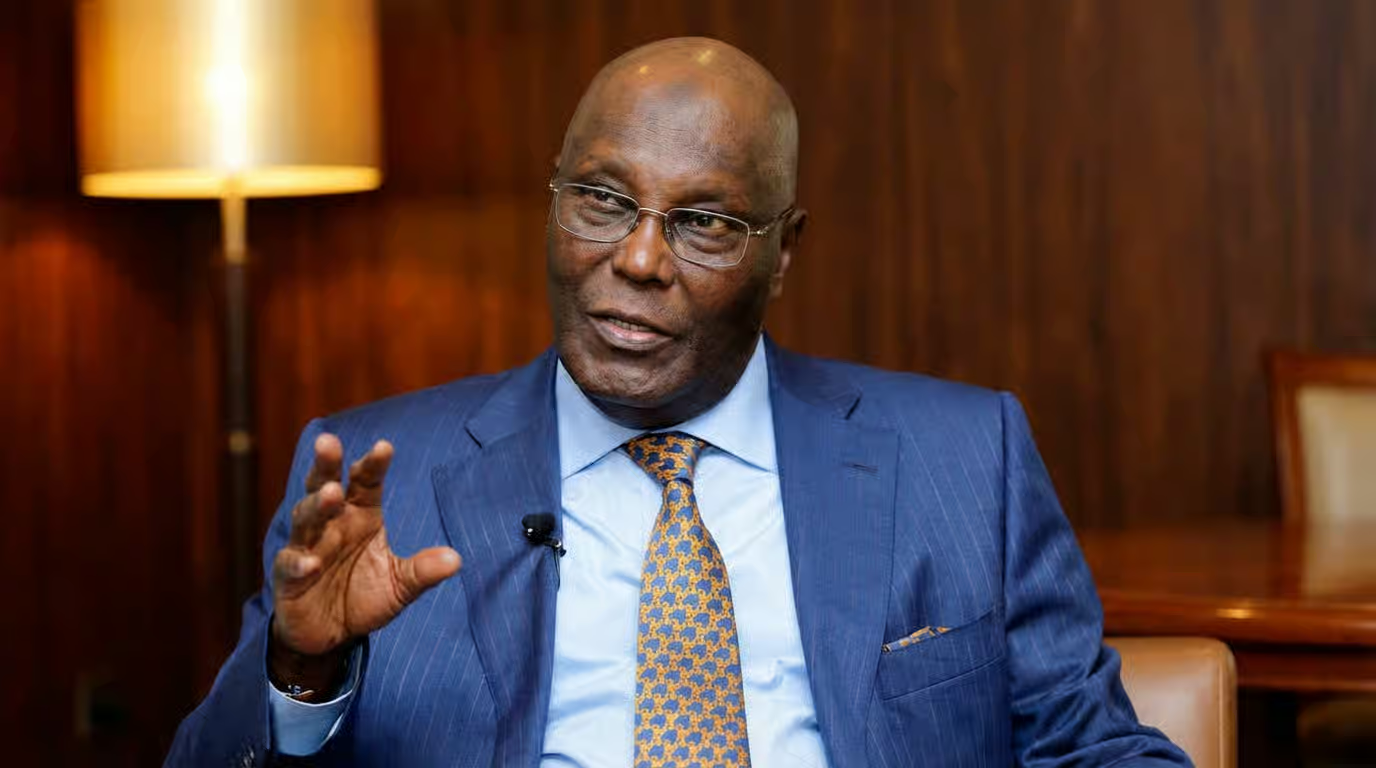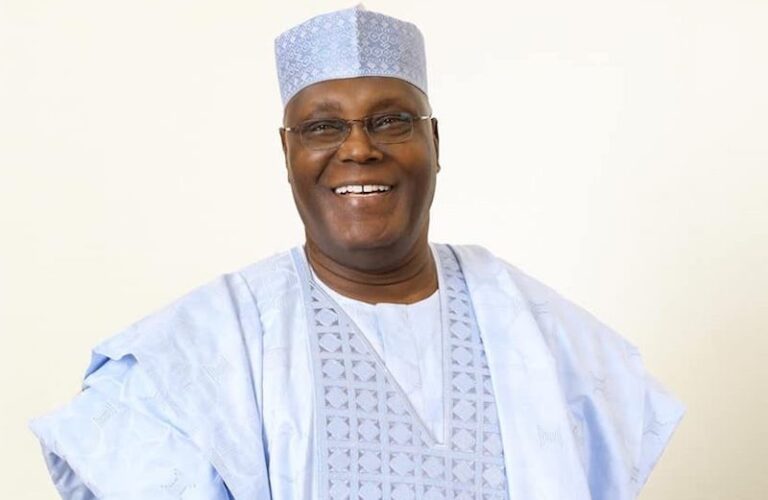
Why the 2027 Election Is Gradually Tilting Toward Atiku and the ADC Coalition
Aare Amerijoye DOT.B
THE MATHEMATICS OF AN INCUMBENCY UNDER PRESSURE.
Politics is often conducted through rhetoric, but elections are ultimately decided by numbers. Beneath the daily theatre of political statements and official pronouncements lies a quieter arithmetic that gradually shapes the fate of governments.
As Nigeria approaches the 2027 presidential election, the statistical indicators surrounding the administration of President Bola Ahmed Tinubu suggest an incumbency facing a demanding political landscape.
The most immediate measure of a government’s standing with its citizens is approval. According to the EBDA mid-term poll conducted in July 2025 at a ninety-five percent confidence level with a margin of error of plus or minus three percent, President Tinubu’s approval rating stood at thirty-seven percent.
That figure does not stand alone. Data compiled earlier by NOI Polls, based on surveys conducted across the thirty-six states of the federation and the Federal Capital Territory, placed the president’s average approval rating during his first year in office at twenty-seven point five percent. At its lowest point, public approval dipped to just eleven percent in February 2024.
Public perception of the government’s economic management has been similarly restrained. Approval for economic performance hovered below forty percent, while the administration’s record on job creation received ratings in the same range.
These numbers do not determine elections by themselves, but they establish the environment within which elections are fought. History repeatedly shows that incumbents approaching reelection with fragile approval ratings face a far more complicated political terrain.
As Aldous Huxley once observed, facts do not cease to exist simply because they are ignored.
THE HUMAN CONSEQUENCES OF ECONOMIC DISTRESS.
Beyond polling figures lies the deeper reality of economic hardship experienced by millions of Nigerians.
In October 2025, the World Bank reported that approximately one hundred and thirty-nine million Nigerians were living below the poverty line. Earlier estimates before the current administration had placed the figure significantly lower, meaning that the number of citizens experiencing economic vulnerability has expanded dramatically within a relatively short period.
Food inflation at various points climbed above forty percent, while the removal of the long-standing fuel subsidy in May 2023 triggered ripple effects across transportation costs, electricity pricing, and the cost of consumer goods.
Human Rights Watch described Nigeria’s present cost-of-living crisis as among the most severe the country has experienced in nearly three decades.
Economic statistics may appear abstract when presented in policy reports, but in everyday life they translate into concrete experiences. Rising prices mean families struggling to afford food. Declining purchasing power means small businesses shrinking or closing. Youth unemployment translates into a generation uncertain about its future.
Over time these lived realities reshape political attitudes.
THE LESSON OF THE 2023 ELECTION.
The presidential election of 2023 remains one of the most instructive political events in Nigeria’s recent democratic history.
Official results released by the Independent National Electoral Commission showed President Bola Tinubu securing just under eight point eight million votes. Former Vice President Atiku Abubakar received slightly under seven million votes, while Peter Obi of the Labour Party obtained slightly above six million votes. Rabiu Musa Kwankwaso of the New Nigeria Peoples Party added approximately one point five million votes.
When these figures are viewed collectively, they reveal an important truth. The combined votes received by the principal opposition candidates exceeded fourteen and a half million. In other words, the opposition vote was significantly larger than the total that produced the eventual winner.
Tinubu’s victory therefore emerged not from an overwhelming national consensus but from the fragmentation of opposition support across multiple political platforms.
This arithmetic has since become the intellectual foundation of the emerging coalition politics now gathering momentum around the African Democratic Congress.
If the major opposition constituencies align behind a single presidential candidate in 2027, the numerical balance of the election could change dramatically. The votes previously secured by Atiku Abubakar and Peter Obi alone already exceed the total that delivered the presidency in 2023. Rabiu Kwankwaso’s support base, particularly concentrated in Kano State, remains an additional variable capable of reshaping the equation even further.
Coalitions in politics are therefore not merely symbolic alliances. They are mathematical instruments.
THE RECONFIGURATION OF NATIONAL POLITICAL ALLIANCES.
Another important development shaping the political landscape ahead of 2027 is the gradual reconfiguration of alliances that once sustained the ruling party.
When the All Progressives Congress was formed in 2013, it emerged from the merger of several political traditions, including the Congress for Progressive Change, the Action Congress of Nigeria, the All Nigeria Peoples Party, and a faction of the All Progressives Grand Alliance. Each of these political streams contributed structures, leaders, and regional strengths to the coalition that would later win national power.
The Congress for Progressive Change tendency, closely associated with the political legacy of former President Muhammadu Buhari, provided the APC with enormous grassroots energy across the northern states, particularly in the North-West where voter mobilisation networks were deeply entrenched.
In recent years, however, visible strains have begun to appear within that broad alliance. A number of influential political figures from different strands of the original coalition have gradually repositioned themselves within the emerging opposition alignment.
Among the most prominent is Nasir El-Rufai, the former governor of Kaduna State, whose political trajectory intersected strongly with the Buhari-era CPC current and whose influence remains considerable within northern political networks.
Alongside him stands Rotimi Amaechi, former governor of Rivers State and former minister of transportation, who rose to national prominence originally within the People’s Democratic Party before later becoming one of the most powerful figures within the APC and serving as Director-General of the party’s 2023 presidential campaign. His repositioning signals an important shift within the political environment of the South-South.
Equally significant is Rauf Aregbesola, former governor of Osun State and a leading figure produced by the old Action Congress of Nigeria political tradition in the South-West. His estrangement from the ruling party introduces new dynamics within a region long considered one of the APC’s strongest political bases.
These movements are politically consequential because each of these actors represents a different historical current that once converged to form the APC. Their gradual migration toward the opposition illustrates how the internal equilibrium that sustained that coalition is being renegotiated.
In Nigerian politics, when figures of such stature reposition themselves, they rarely move alone. They carry with them long-standing organisational structures, loyal supporters, and local political networks built over many election cycles.
Coalition politics therefore often involves not merely the movement of individuals, but the migration of political infrastructure.
THE EMERGENCE OF A BROAD OPPOSITION ALIGNMENT.
By mid-2025 the African Democratic Congress had begun evolving into a coalition platform bringing together diverse political constituencies from across Nigeria’s geopolitical zones.
Former Vice President Atiku Abubakar remains one of the central figures in this emerging alignment, drawing upon decades of political relationships across the northern states. Peter Obi continues to command significant support among urban voters, younger Nigerians, and much of the South-East. Rotimi Amaechi brings considerable influence within the South-South political landscape. Nasir El-Rufai’s presence strengthens northern intellectual and political networks, while Rauf Aregbesola introduces an additional dimension within the South-West.
Senator David Mark, a former Senate President respected across party lines, has provided institutional stability to the coalition through his leadership role within the ADC structure.
Rabiu Kwankwaso remains formally within the NNPP, yet his Kano-based political movement continues to attract national attention as a potential variable in the unfolding alignment.
Taken together, these actors represent a constellation of constituencies stretching across Nigeria’s major political regions.
THE NORTHERN ELECTORAL EQUATION.
No analysis of Nigerian presidential elections can ignore the decisive electoral influence of the North-West.
This geopolitical zone contains the largest concentration of registered voters in the country and has historically played a pivotal role in determining presidential outcomes.
Atiku Abubakar’s long political career has allowed him to build enduring grassroots networks across several northern states. When combined with the ongoing realignments involving former CPC political structures, these networks could significantly influence the region’s electoral direction in 2027.
Northern politics has always been shaped by alliances, historical loyalties, and regional sentiment. The configuration of these factors over the next two years will likely determine whether the region remains divided or coalesces around a new political centre of gravity.
THE LIMITS OF INCUMBENCY.
Incumbency remains one of the most powerful advantages available to any sitting president.
Control of federal institutions, access to government resources, and administrative authority provide incumbents with substantial political leverage.
However, democratic systems also impose limits on that power.
Electoral reforms, particularly the growing emphasis on electronic transmission of results and heightened scrutiny by civil society organisations, have gradually strengthened transparency within Nigeria’s electoral process.
In addition, several members of the emerging opposition coalition possess deep familiarity with the internal workings of the ruling party, having previously played significant roles in its campaigns and governance structures.
This familiarity could influence the strategic dynamics of the coming election.
A NEW GENERATION OF VOTERS.
Perhaps the most significant transformation between 2023 and 2027 lies in the demographic structure of Nigeria’s electorate.
More than sixty percent of Nigerians are under the age of thirty-five. Economic hardship, unemployment, and rising living costs have increasingly politicised this generation.
Young Nigerians who once viewed politics with indifference are now engaging with national debates, organising digitally, and demanding greater accountability from political leaders.
The political behaviour of this demographic group could play a decisive role in shaping the outcome of the next election.
As Abraham Lincoln once famously observed, the ballot is stronger than the bullet.
DEMOCRACY’S FINAL ARBITER.
Ultimately, elections are not decided by politicians, analysts, or commentators. They are decided by citizens.
Economic realities, political alliances, and campaign strategies will all influence the course of events over the next two years.
Yet the final verdict will come from the Nigerian electorate itself.
In every democracy, the voter remains the ultimate judge.
Nigeria’s voters will deliver that judgement in 2027.
Aare Amerijoye DOT.B
Director General
The Narrative Force