Aare Amerijoye DOT.B
The 2027 presidential election will not be an ordinary democratic exercise. It will be a national reckoning. A brutal, unforgiving verdict on whether Nigeria deserves resurrection or is condemned to continue her slow, public execution. It will be a collision between competence and catastrophe, between foresight and fatalism, between the promise of national renewal and the certainty of national ruin. Nigeria today is not merely standing at a crossroads. She is dangling over the edge of a cliff, and the hands holding her there are the very hands entrusted with her salvation.
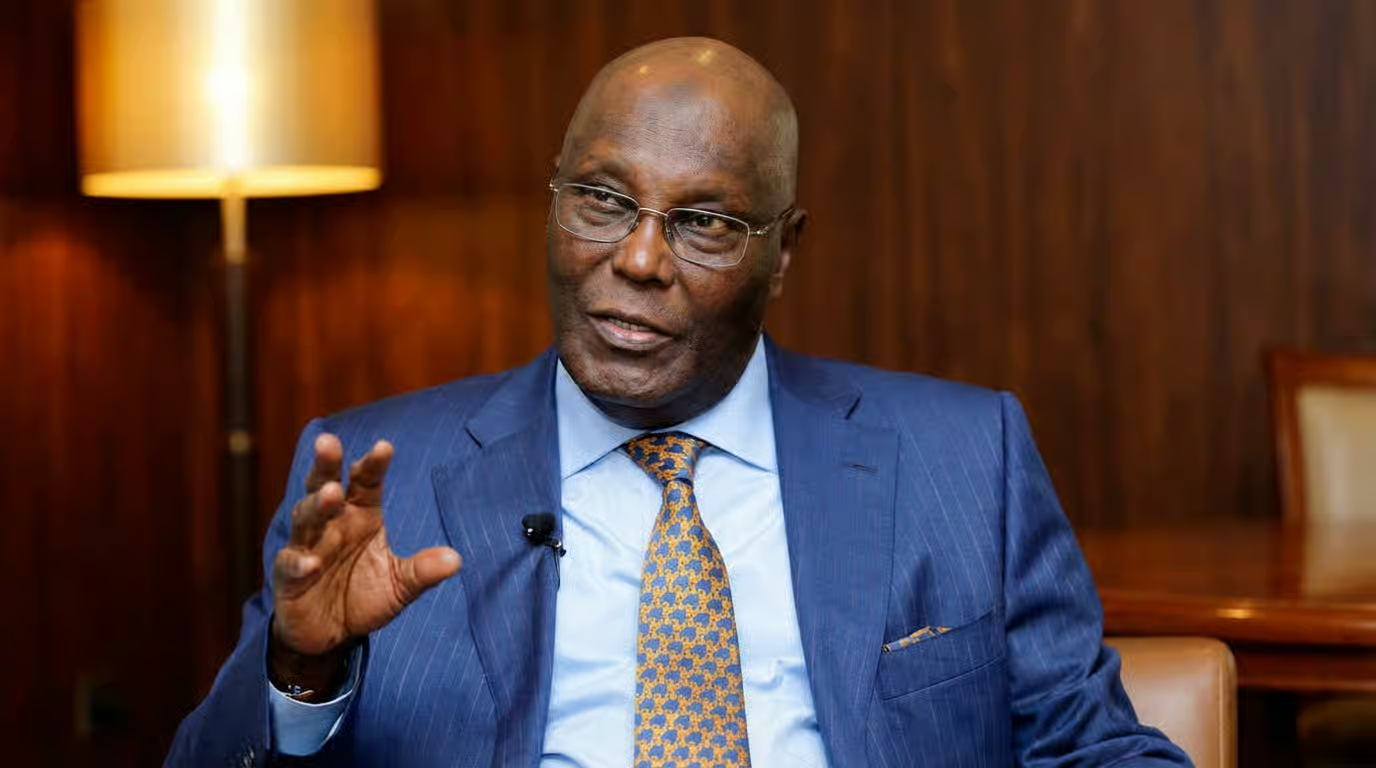
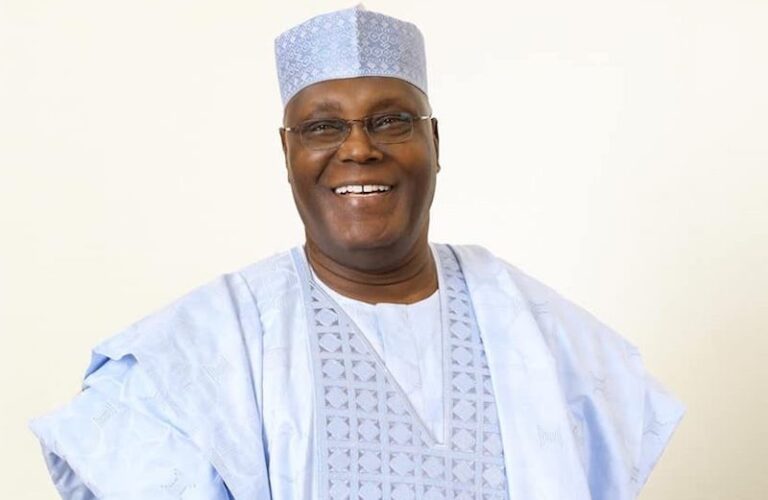
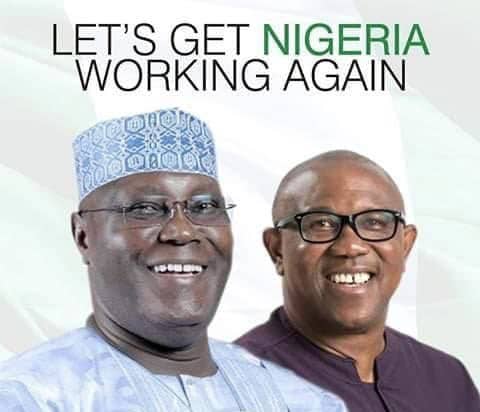
The choice before Nigerians is neither complicated nor abstract. It is terrifyingly simple. Continue under the economic arson and governance vandalism that have defined the administration of Bola Ahmed Tinubu, or turn, while there is still time, to the only statesman in the current political firmament with the intellectual architecture, economic literacy, and governing experience capable of hauling Nigeria back from the brink. That man is Atiku Abubakar.
Under Tinubu’s watch, Africa’s most populous nation has been reduced to an economic wasteland where hope is rationed and survival has become an achievement. The naira has been humiliated into a shadow of its former self, collapsing under the weight of reckless experimentation masquerading as reform. Inflation has become a merciless predator, devouring wages and annihilating dignity. Hunger has migrated from the margins into the mainstream. Families who once lived modestly now live precariously. Those who once lived precariously now live desperately.
The removal of fuel subsidy, an operation that required strategic sequencing, social cushioning, and disciplined execution, was instead carried out with the brutality of blunt force trauma. The result was not reform. It was economic haemorrhage. Transport costs exploded. Food prices spiralled beyond reach. The middle class, already fragile, was effectively erased. What should have been a surgical correction became a national amputation.
This is the defining signature of Tinubu’s governance. Motion without direction. Activity without strategy. Power without purpose.
But leadership is not theatre. It is not sloganeering. It is not the occupation of office. Leadership is the ability to see beyond the present chaos and impose order upon it. It is the discipline to make decisions not for applause but for outcome. It is the moral seriousness to understand that the presidency is not an entitlement to be possessed but a burden to be carried.
And it is precisely here that the gulf between Atiku Abubakar and Bola Tinubu becomes not merely visible but overwhelming.
Atiku Abubakar is not presented as a mythical redeemer. He is something far more dangerous to the failed order Nigeria currently endures. He is prepared. He is deliberate. He is equipped.
His economic doctrine is anchored in production, not propaganda. He understands that nations do not escape poverty through rhetoric but through enterprise. His programme prioritises industrial expansion on a scale capable of absorbing millions of unemployed youths. He recognises the digital economy not as a buzzword but as a battlefield where Nigeria must either compete or perish. He understands that foreign investors do not respond to speeches. They respond to credibility, policy stability, and institutional integrity. These are the currencies he intends to restore.
He grasps what the current administration either does not understand or does not care to understand, that overcentralisation is the enemy of efficiency. Under his leadership, genuine local government autonomy will cease to be constitutional poetry and become administrative reality. Governance will move closer to the people. Power will cease to suffocate at the centre.
He recognises that without judicial independence, democracy is nothing more than organised deception. The culture of executive intimidation and institutional capture will face dismantling. Justice will cease to be a commodity reserved for the powerful.
He understands the psychological importance of currency stability. A collapsing currency is not merely an economic failure. It is a national humiliation. His fiscal and monetary coordination will pursue stability not as an aspiration but as a measurable objective.
The philosopher John Locke wrote that the only justification for government is the preservation of life, liberty, and property. By that standard, the present administration stands morally indicted. Nigerians are not merely poorer. They are more vulnerable. More insecure. More expendable.
Karl Marx warned that history repeats itself first as tragedy and then as farce. Nigeria endured the tragedy. She is now living through the farce.
And this is why 2027 cannot be treated as routine. It must be treated as rescue.
Those who benefit from the current disorder will not surrender quietly. They will deploy state power. They will manipulate division. They will exploit identity. They will attempt to exhaust the will of the people.
But history teaches a brutal lesson. No regime, no matter how entrenched, survives the moment the people withdraw their consent.
Frantz Fanon issued a warning that echoes across generations. Each generation must either fulfil its mission or betray it.
This generation of Nigerians faces its mission now.
To submit is to consent to permanent decline.
To resist is to reclaim the possibility of national rebirth.
Atiku Abubakar represents more than candidacy. He represents capacity. He represents preparation. He represents the last organised bridge between Nigeria and the abyss.
The hour is late. The stakes are final. The choice is unforgiving.
History is watching.
Aare Amerijoye DOT.B
Director General
The Narrative Force