Aare Amerijoye DOT.B
Nigeria stands today not merely at a crossroads but at the very edge of a precipice, staring into the abyss of a governance crisis so profound that history itself may struggle to adequately capture its scale. The tragedy of the present moment is not simply that leadership has faltered. It is that failure has become normalised, defended, and, in some quarters, even celebrated.
The All Progressives Congress did not inherit a perfect nation in 2015. No honest observer would claim that. But what cannot be disputed is that after years in power, the measurable indicators of national wellbeing have deteriorated in ways that are both visible and verifiable.
Inflation has climbed above 30 percent. Youth unemployment and underemployment combined affect a significant portion of Nigeria’s productive population. The naira has experienced severe depreciation, eroding purchasing power and pushing millions further into economic vulnerability. These are not abstract statistics. They are lived realities. They are the difference between stability and anxiety in millions of homes.
Nigeria did not merely pause. Nigeria regressed.
But this is not a funeral address. It is a declaration of possibility.
THE MAN THE MOMENT DEMANDS
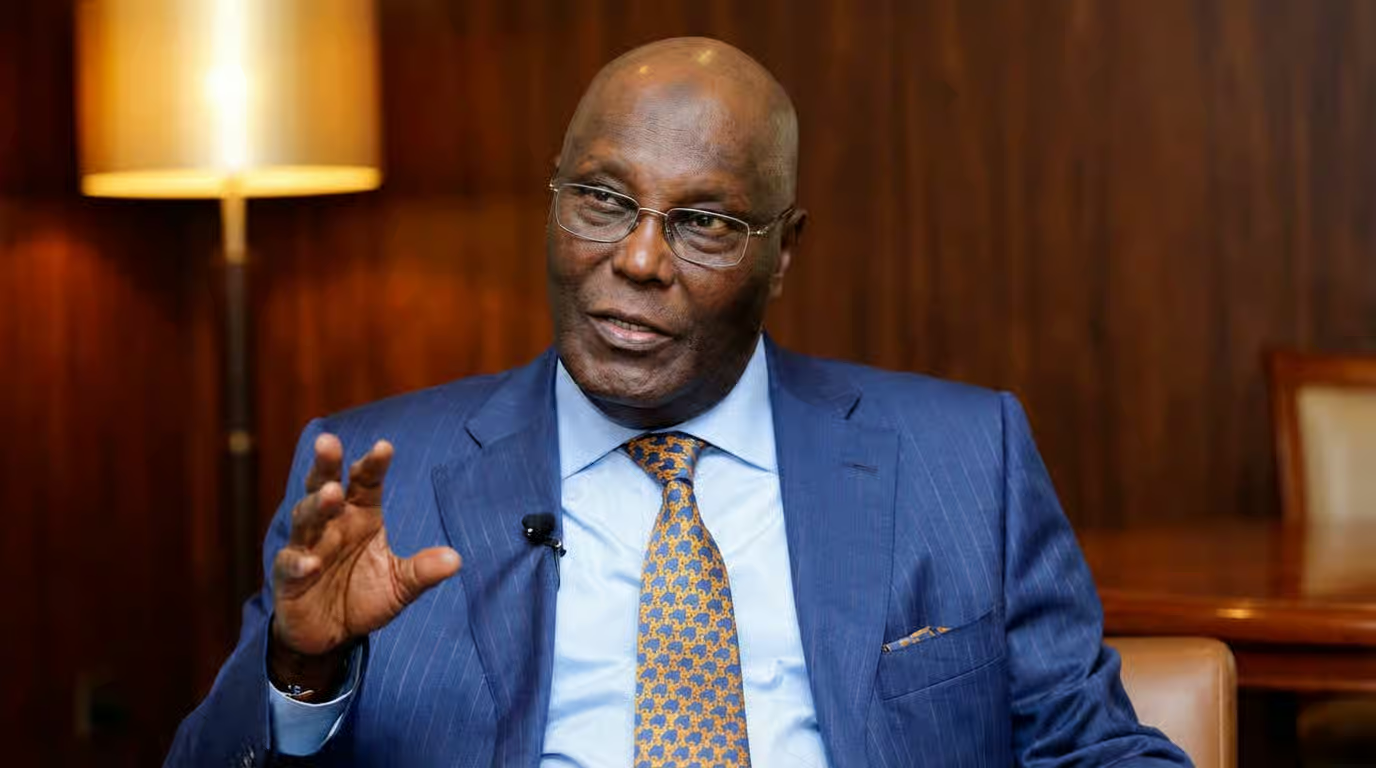
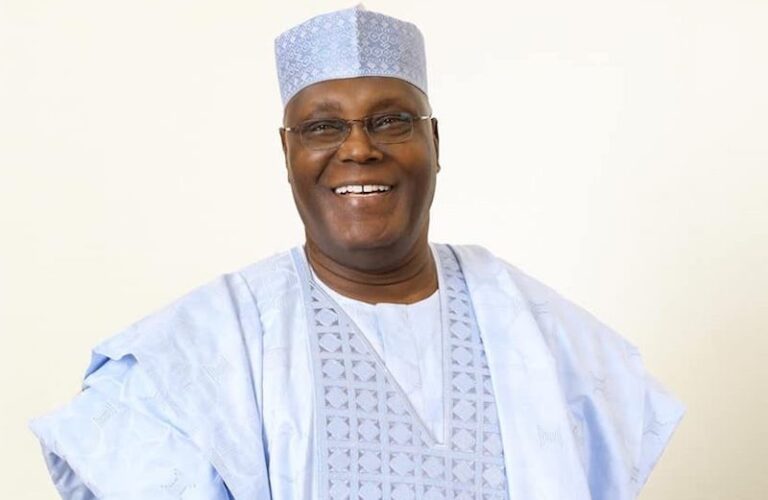
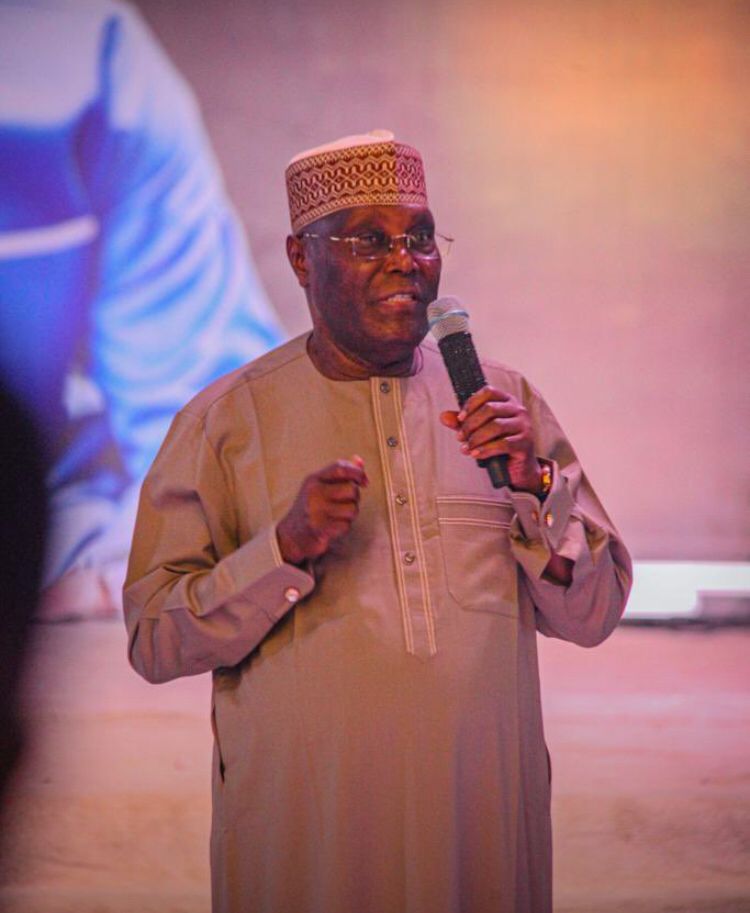
In every defining national moment, history produces individuals whose preparation meets necessity. In the Nigerian context, few figures possess the combination of experience, institutional memory, and economic orientation represented by Alhaji Atiku Abubakar.
Abraham Maslow once observed that what a man can be, he must be. Atiku’s public life reflects a sustained engagement with the central question of Nigeria’s development.
As Vice President between 1999 and 2007, he played a key role in economic reform efforts that opened sectors of the economy to private investment. The liberalisation of telecommunications during that era transformed Nigeria from a country with fewer than one million connected telephone lines into Africa’s largest telecom market, creating millions of direct and indirect jobs and enabling the digital economy Nigerians depend on today.
Nigeria also experienced sustained economic expansion during much of that period, with strong GDP growth driven by structural reforms and global economic conditions that the administration successfully leveraged.
These are not theoretical arguments. They are historical precedents.
Wole Soyinka reminds us that silence in the face of national decline is complicity. Atiku has remained an active participant in national discourse for over three decades, contesting elections, proposing reforms, and articulating alternative pathways for economic recovery and political restructuring.
Winston Churchill famously said that courage is the capacity to continue despite adversity. In the endurance of his political journey, Atiku represents persistence rooted in conviction.
THE PLATFORM OF NATIONAL RECONSTRUCTION
The African Democratic Congress today represents more than a political platform. It represents a vehicle through which alternative leadership can be organised and presented to Nigerians.
Political parties are, ultimately, instruments. Their value lies in the vision and competence of those who lead them.
Atiku’s articulated priorities remain clear and consistent.
A restructured federation that allows states greater economic autonomy.
A private sector driven economy capable of creating sustainable employment.
Educational investment that prepares Nigeria’s youth for global competitiveness.
Institutional reforms that strengthen transparency and accountability.
These objectives are not radical. They are rational.
They reflect lessons learned from both Nigeria’s successes and its failures.
THE STRATEGIC IMPERATIVE
Political change does not occur through sentiment alone. It requires organisation, discipline, and preparation.
Nigeria has over forty million eligible voters who remain unregistered. Millions more remain politically disengaged, not out of apathy but out of disillusionment.
Rebuilding trust requires more than rhetoric. It requires presence at the grassroots level. It requires engagement at ward level. It requires persuasion grounded in credibility.
History shows that political renewal emerges when citizens recognise both the urgency of change and the credibility of alternatives.
The work must begin early. It must begin deliberately.
THE CLARION CALL
Nigeria’s future remains unwritten.
Nations are not destroyed by hardship alone. They are destroyed when citizens lose belief in the possibility of recovery.
Atiku Abubakar represents, for millions of Nigerians, the possibility of experienced leadership returning to national governance.
He represents continuity with a reform tradition that once expanded opportunity.
He represents an alternative that citizens have the democratic right to evaluate.
The decision, ultimately, belongs to the Nigerian people.
Democracy confers not only the right to vote, but the responsibility to choose wisely.
History will record that moment of choice.
And future generations will live with its consequences.
Aare Amerijoye DOT.B
Director General
The Narrative Force