
Let us reason together, as Plato demanded, not as followers drunk on loyalty, but as citizens who still believe that a republic survives only by questioning itself.
In Republic, Socrates does not insult injustice. He interrogates it. He presses it with questions until it either confesses or collapses. And so we begin where every serious republic must begin.
What is justice?
Is it the protection of power or the exposure of truth?
Is it silence when questions threaten comfort or courage when answers threaten thrones?
If justice, as Plato insists, is harmony between truth and order, then Nigeria must confront a disturbing conclusion. We have mistaken silence for stability and avoidance for wisdom.
Here Plato would pause and remind us that a city does not collapse because of loud enemies, but because of quiet accomplices. In the Republic, the fall of the state begins not with invasion, but with moral fatigue. When citizens grow tired of asking questions, tyranny no longer needs chains. It walks freely, dressed as order.
On September 29, 1999, Olisa Agbakoba, SAN, walked into the Lagos State House of Assembly as a moral disturbance. He was not there to flatter power. He was there to question it. Like Socrates before the Athenian elite, he asked why the press had gone quiet, why the legislature trembled, and why truth was being treated as an inconvenience.
The matter was not hidden. It was not speculative. The allegations surrounding certificate forgery were published by PM News, at a time when journalism still pretended to interrogate power. The publication was supervised by Bayo Onanuga, the same man who would later reinvent himself as the loudest defender of the very power he once helped question.
This is not irony for entertainment. It is irony as evidence.
In Plato’s language, this is the moment when the guardians abandon their duty. The watchmen turn inward. The city is no longer defended by truth, but by loyalty. Once this happens, the Republic teaches us, corruption no longer feels like crime. It feels like normalcy.
Plato warned that when those who should love truth begin to love proximity to power, the city becomes sick. When yesterday’s interrogator becomes today’s propagandist, the republic loses its moral compass. The question must be asked. Did the facts change, or did allegiance change.
Agbakoba did not shout. He reasoned relentlessly. He stated plainly that everyone knew something was wrong, yet everyone preferred confusion to clarity. In Platonic terms, this was not ignorance. It was injustice chosen consciously. The guardians of the city had abandoned reason and surrendered to appetite.
Pause here and reflect.
When a press that once published allegations later works tirelessly to disinfect them, is truth corrected or merely suppressed
When journalists stop asking questions, does democracy breathe or does it only pretend to live
Nigeria did not decay suddenly. She reasoned herself into moral exhaustion.
At this stage, Plato would introduce a harder truth. He would say that injustice survives not because it is strong, but because those who see it calculate the cost of resistance and choose comfort instead. In this calculation, silence becomes strategy, and neutrality becomes collaboration.
This failure finds a disturbing explanation in the work of William Glasser, M.D. Glasser spent his life studying why individuals and institutions choose destructive behavior even when truth is available. In his clinical anecdotes, he observed that systems collapse when they prioritize power over responsibility.
Glasser wrote, “The problem is not that people are treated badly, but that they are treated irresponsibly.” In one hospital case he described, patients improved only when excuses were withdrawn and responsibility restored. Lies prolonged sickness. Accountability accelerated healing.
Nigeria chose lies.
And like a patient refusing diagnosis, she mistook denial for survival. The judiciary learned avoidance. The press learned convenience. The public learned resignation. What Glasser taught in medicine applies cruelly to politics. Untreated truth metastasizes.
Instead of institutional responsibility, she offered institutional silence. Instead of truth, she prescribed distraction. And so the sickness spread from politics to the judiciary, from the judiciary to the press, and from the press to public conscience.
Agbakoba’s comparison with the cases of Salisu Buhari and Evan Enwerem was not rhetorical. It was philosophical. Standards once established, Plato taught, bind the city. To abandon them is to announce that justice is selective. And once justice becomes selective, the republic becomes a stage play.
Nigeria deviated not because she lacked precedent, but because she lacked courage.
Then came another warning from Itse Sagay, who cautioned that ignoring forgery and perjury would endanger democracy itself. This was not legal pedantry. It was a Platonic warning against enthroning the unjust man while pretending order still exists.
Nigeria again chose silence.
At this point, Plato would insist on further questioning.
Can a republic endure when appearance is rewarded more than truth?
Can law command respect when it shields the powerful?
Can renewal grow from foundations never examined?
The economist and moral philosopher E. F. Schumacher supplies further clarity. Schumacher warned that societies collapse not from lack of intelligence, but from the worship of size, complexity, and power. He called it the worship of bigness.
In Small Is Beautiful, Schumacher wrote, “Any intelligent fool can make things bigger, more complex, and more violent. It takes a touch of genius and a lot of courage to move in the opposite direction.” He narrated how institutions grow so large that questioning them becomes taboo. Truth becomes inconvenient. Conscience becomes negotiable.
Schumacher’s warning fits Nigeria with surgical precision. The bigger power became, the smaller conscience shrank. Complexity was used to drown simple questions. Procedure replaced principle. Process replaced morality.
Now fast forward twenty eight years.
The allegations remain embalmed, not resolved. Asiwaju Ahmed Tinubu sits at the centre of power while the questions that trailed him since 1999 remain unanswered, not disproved, but avoided. The judiciary learned to interpret silence as wisdom. Sections of the media learned to polish stains instead of exposing them. Public intellectuals learned selective amnesia.
And history is circling again.
As 2027 approaches, another election cycle arrives. Another round of screening. Another moment of scrutiny. Asiwaju Ahmed Tinubu will submit himself again for electoral examination, and the same questions buried in 1999 will return. No gaging will succeed. No intimidation will work. Plato reminds us that unanswered questions do not die. They wait.
This is the moment that demands choice. Plato teaches that every republic eventually arrives at a crossroad where citizens must decide whether they prefer comfort or justice. Avoidance only postpones the reckoning. It never cancels it.
This debate will not fade because it is not noise. It is moral debt.
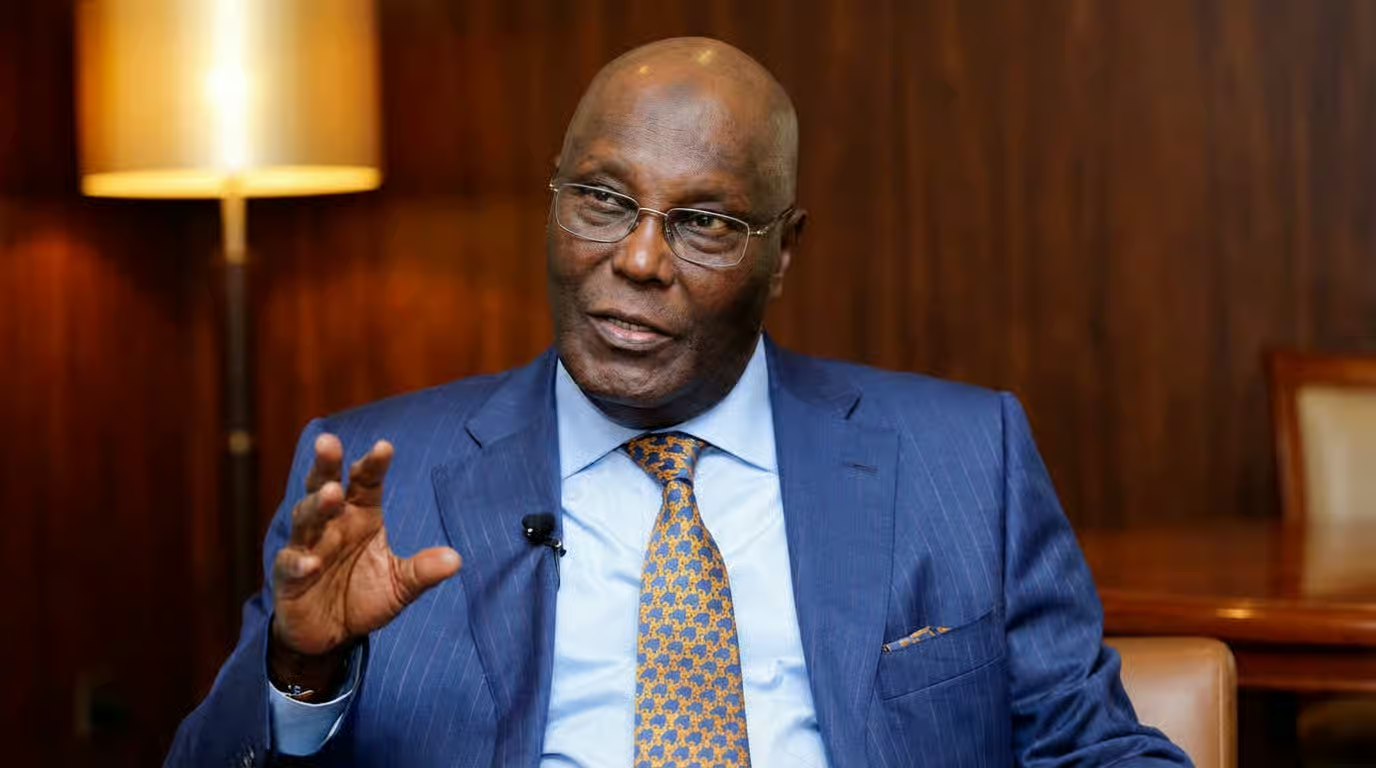
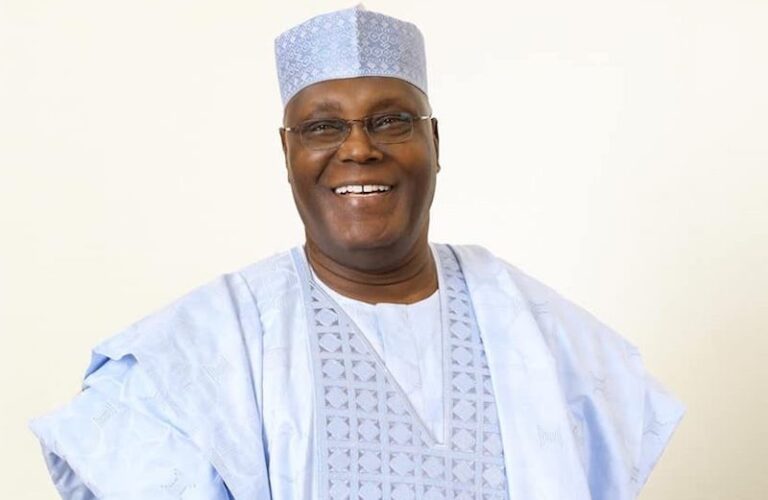
Against this culture of avoidance stands Atiku Abubakar, a man whose public life has been subjected to relentless scrutiny. Courts, tribunals, hostile interrogations. He was not protected. He was examined. In Platonic terms, he stood in the open square, not hidden in the cave.
Here Plato’s allegory of the cave becomes unavoidable. One man is dragged into the light and questioned repeatedly. Another remains shielded in shadows while others insist the shadows are reality. The difference is not character alone. It is institutional honesty.
If justice means equality before inquiry, then Nigerians must ask who has been questioned and who has been shielded.
Plato warned that when illusion is crowned king, the republic becomes a lie applauding itself. When forgery is tolerated and silence celebrated, democracy does not weaken quietly. It collapses with applause.
So let us conclude as Plato would, not with slogans, but with reason.
A judiciary that avoids truth cannot command legitimacy.
A press that fears inquiry cannot defend freedom.
A republic that buries questions prepares its own grave.
The ghost of 1999 walks not out of vengeance, but necessity. One leg is already outside the grave because truth does not rot quietly.
And until Nigeria chooses justice over comfort, inquiry over worship, and reason over propaganda, this discussion will continue. Not as insult. As duty.
Aare Amerijoye DOT.B
Director General,
The Narrative Force