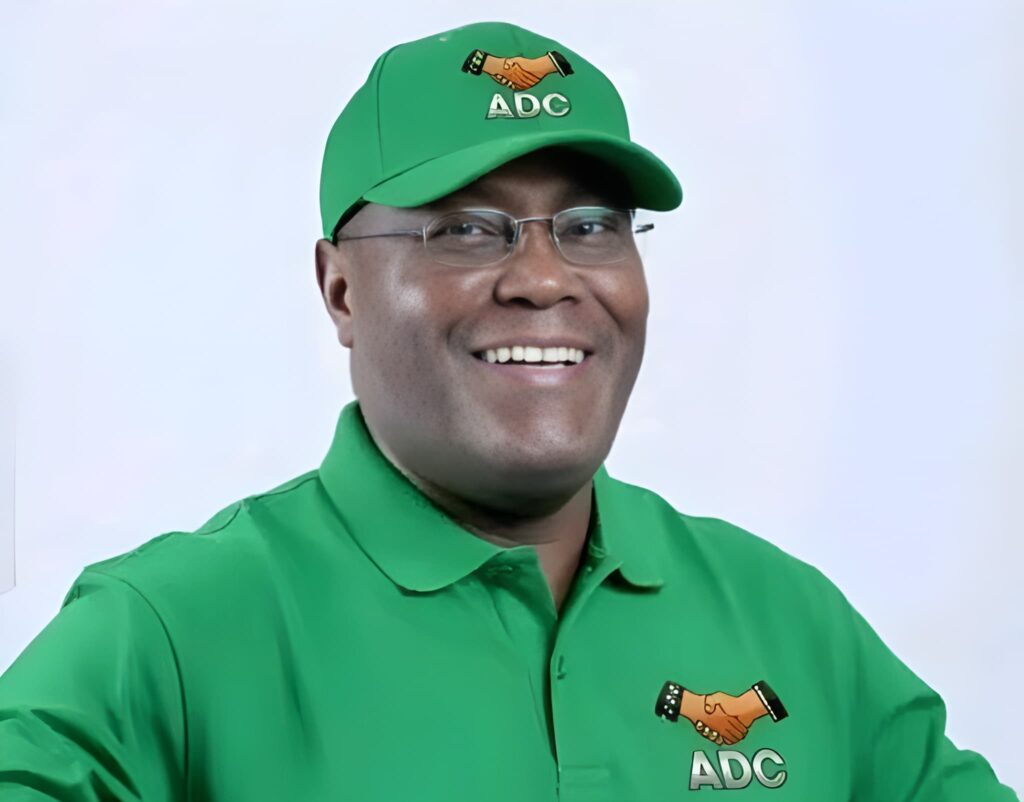
On a humid election night years ago, somewhere between the flickering bulbs of an INEC collation centre and the restless murmurs of party agents refusing to go home, a senior journalist leaned over and asked a quiet but devastating question: “If this man walks away, who is left to stand?”
The room fell silent. Not because the answer was unclear, but because it was painfully obvious.
In Nigerian politics, moments like that separate theatrics from structure, noise from endurance, and popularity from power. Long after slogans fade and crowds disperse, what remains is the hard scaffolding that keeps opposition alive. That night, as on many others before and after it, the scaffolding had a name.
There comes a moment in the life of a nation when preference must yield to truth, when emotion must surrender to evidence, and when denial becomes an indulgence history will not forgive. Nigeria is standing squarely at such a moment.
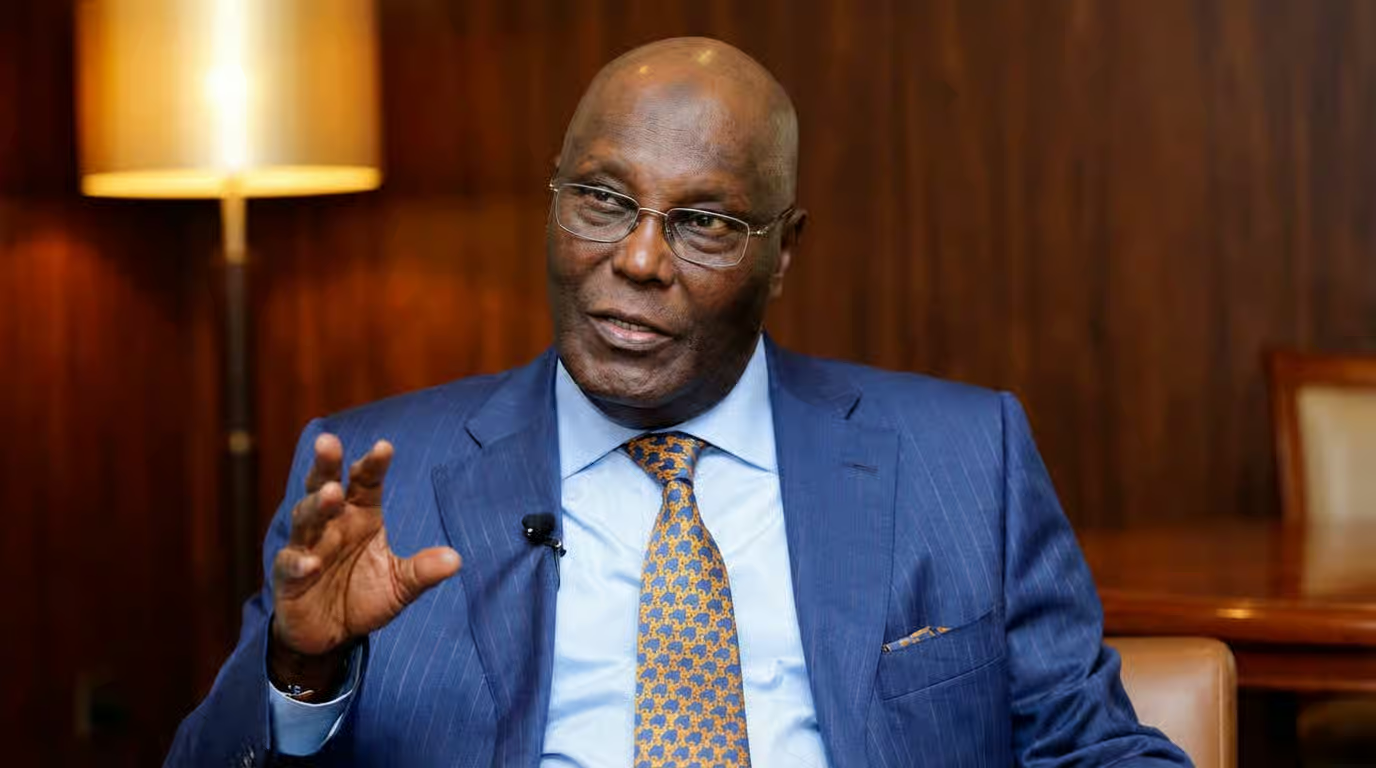
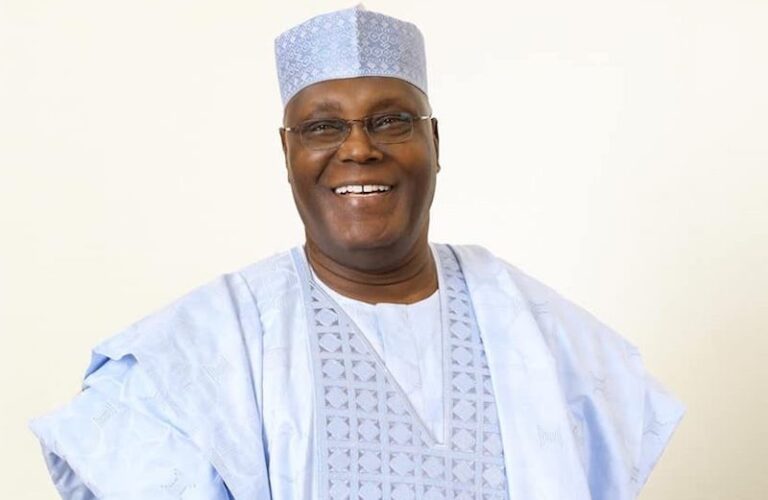
Hate him or admire him, contest his ideas or embrace them, one fact remains immovable: Atiku Abubakar deserves credit,not ceremonial credit, but consequential credit. Credit not for ambition, but for endurance; not for rhetoric, but for relevance; not for sentiment, but for structure.
A simple Socratic inquiry confronts us: What becomes of democracy when opposition collapses?
Another follows relentlessly: What is opposition if it lacks scale, stamina, and national reach?
Strip Nigeria’s political evolution since 1999 of Atiku Abubakar, and what emerges is not pluralism, but pageantry. Not competition, but coronation. Not democracy, but administrative inevitability.
This is not poetry. It is political anatomy.
Opposition is not sustained by slogans or social media applause. It survives on three unforgiving pillars: national spread, financial capacity, and institutional memory, the same pillars identified by comparative democracy studies across emerging economies. Remove any one, and opposition becomes protest. Remove all three, and democracy suffocates.
Atiku Abubakar has supplied all three,consistently, visibly, and at great personal cost.
In 2019, he mobilised over 11 million votes, cutting across regions, religions, and social classes, a figure officially recorded by INEC and unmatched by any other opposition contender in the Fourth Republic. In 2023, despite a fractured opposition landscape, he remained the only opposition figure with genuine nationwide infrastructure, electoral presence, and organisational depth, spanning ward, local government, state, and national structures.
No other opposition leader in Nigeria commands simultaneous relevance in all six geopolitical zones. None. This is not a matter of opinion; it is a matter of record observable in electoral spread, delegate mobilisation, and campaign reach.
Ask again, without sentiment: Who else has the capacity to fund, structure, and sustain a truly national opposition campaign in Nigeria today?
The silence that follows is instructive.
Politics, like physics, obeys gravity. Influence flows towards mass, not noise.
Today, the African Democratic Congress has become the new gravitational centre of opposition politics,not by propaganda, but by convergence. Serious actors gravitate towards platforms that can win, not merely platforms that can complain, a pattern historically evident in successful opposition realignments across Africa and beyond.
ADC has become the meeting point because it has become the last credible vessel for national opposition cohesion, drawing attention, discourse, and political traffic across regions and demographics.
But every vessel needs an anchor.
Within ADC, another uncomfortable but necessary question must be asked: Can a political movement afford to ignore its most stabilising force?
Opposition is not a debating society. It is not a youth forum. It is not a moral exhibition. It is a battle of endurance, alliances, logistics, and memory. In that arena, Atiku Abubakar is not a passenger. He is the axis around which viability rotates.
To deny this is not idealism; it is self-deception.
Nigeria today groans under the weight of policy recklessness.
Inflation has crossed historic thresholds, officially placed above 28% by the National Bureau of Statistics. Food prices have tripled in many households, particularly staples such as rice, garri, and beans. Manufacturing capacity is shrinking, with utilisation rates struggling below 60%, while youth unemployment and underemployment continue to fester, exceeding 40% by combined metrics. These are not opposition talking points; they are official data corroborated by the NBS, World Bank, and independent economic observers.
Against this backdrop, Atiku Abubakar’s economic philosophy stands in stark contrast: market-driven growth tempered by social responsibility; private-sector expansion over state capture; fiscal federalism over suffocating centralisation; productivity over palliatives.
Atiku’s record is not theoretical. Telecommunications liberalisation under his stewardship expanded GSM penetration from under 1% to over 40% within a decade, unlocking millions of jobs, billions in foreign direct investment, and an entirely new digital economy. Private-sector expansion, educational access, and economic reforms during that era produced measurable national outcomes, not press statements.
Here, the Socratic question sharpens: In a nation bleeding from economic miscalculation, do you gamble with improvisation,or do you return to tested competence?
There is a fashionable but lazy assumption in Nigerian political discourse that opposition success is automatic once Atiku steps aside. History exposes this illusion.
Where Atiku disengaged, opposition weakened.
Where Atiku intervened, opposition survived.
Where Atiku coordinated, opposition expanded.
Remove Atiku from the equation today, and the ruling party would not merely dominate; it would operate unchallenged, insulated by incumbency, state power, and financial muscle.
Democracy does not survive on purity alone. It survives on credible resistance.
The 2027 election is not a popularity contest. It is a rescue mission.
Nigeria does not need a leader who excites timelines. Nigeria needs a leader who understands the machinery well enough to dismantle its failures and rebuild its purpose.
If ADC is serious about power,not protest,it must align strategy with reality. And reality is unambiguous:
In the opposition ADC, refusing to align with Atiku Abubakar,the undisputed backbone of opposition politics,is not principled defiance; it is strategic misalignment, one that history has repeatedly punished.
This is not about worship. It is about winning.
Atiku Abubakar has paid the price of opposition politics in Nigeria,through vilification, sacrifice, and persistence. Democracies do not collapse overnight; they suffocate when opposition loses courage. Nigeria’s democracy still breathes because Atiku refused to abandon the arena.
For that, history will remember him kindly.
Thank you, Waziri,not because you are flawless, but because when democracy required resistance, you remained standing.
And in 2027, if ADC is serious about power, competence, and national rescue, its best bet is not conjecture.
It is Atiku Abubakar.
Aare Amerijoye DOT.B
Director General,
The Narrative Force