As I observed the unfolding tragedy of what the PDP has now become, a quiet sadness mingled with a deep sense of prophetic vindication. Looking at what PDP has become today did not amuse me and I am not surprised, I have often said that when Wike, Makinde, Ortom, Ikpeazu and Ifeanyi Ugwuanyi were working against Atiku, I consistently warned that their cantankerous, rebellious and self-deifying attitude would eventually destroy the Party.
Those warnings were not guesses; they were born from the long memory of Nigeria’s political history , a history where every major political collapse began not from external opposition but from internal sabotage, the treachery of insiders, the arrogance of men who believed themselves greater than the institutions that made them.
It is like a sword destroying its own scabbard; such a sword inevitably exposes itself in naked shame. And today, the naked shame stands public and unhidden for all Nigerians to witness.
That is precisely what the defunct G5 has done to the PDP. They wrecked the Party by working against its presidential candidate in 2023, they danced on the grave of their treachery, they celebrated the loss, they rejoiced in the ashes of defeat, and today their triumph has turned into internal civil war.
The betrayal they once toasted as “strategy” has returned as a political hurricane, sweeping through the corridors of Wadata Plaza with unrelenting vengeance.
They are now broken into factions, splintered like a clay pot thrown against a rock. A party that once ruled Nigeria for sixteen uninterrupted years, a party that once had structures in all 774 LGAs, a party that produced presidents, governors, senators, ministers and technocrats , now gasps for breath under the weight of its own self-inflicted wounds.
It is now Wike, Ortom, Ikpeazu, Ifeanyi Ugwuanyi and Fayose on one side, attempting to hold a collapsing roof, versus Makinde, Bala Mohammed, Chief Bode George and Turaki on the other, struggling for the fragments of what once held Nigeria’s democratic dream together. This implosion is not accidental. It is the inevitable harvest of political perfidy. In political science, there is a maxim: “No organisation survives betrayal from its leadership core.” The PDP, once the largest political party in Africa with over 16 million registered members in 2015, is today gasping for relevance because those entrusted with stewardship chose ego over institution.
All the while before now, they blamed Atiku for every challenge in the Party, even when he was the one holding the remains of the umbrella from being blown into political extinction. They worked against him in 2019. They worked against him again in 2023. The irony is cutting: the one man they tried to destroy is the only man who kept the PDP alive long enough for them to betray it.
The G5 waged a war not against Atiku alone but against the soul of the PDP itself, dancing triumphantly as they stabbed their own Party in the heart. And today the reward of betrayal has returned full circle: division, bitterness, loss of moral authority, and a slow diminishing into political irrelevance.
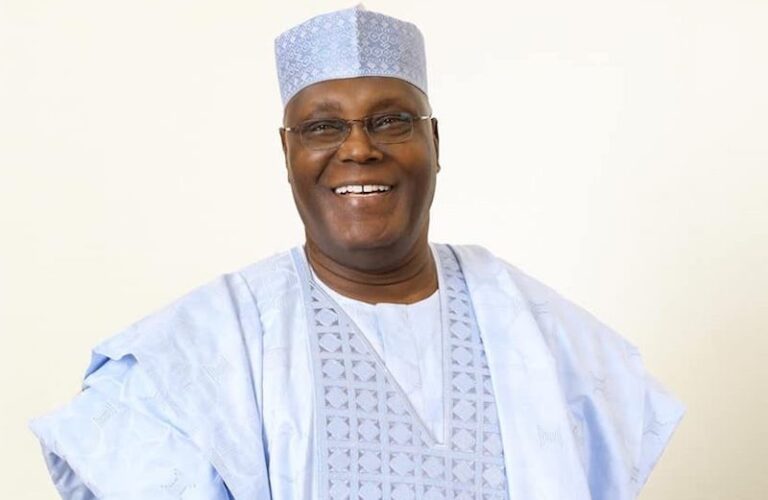
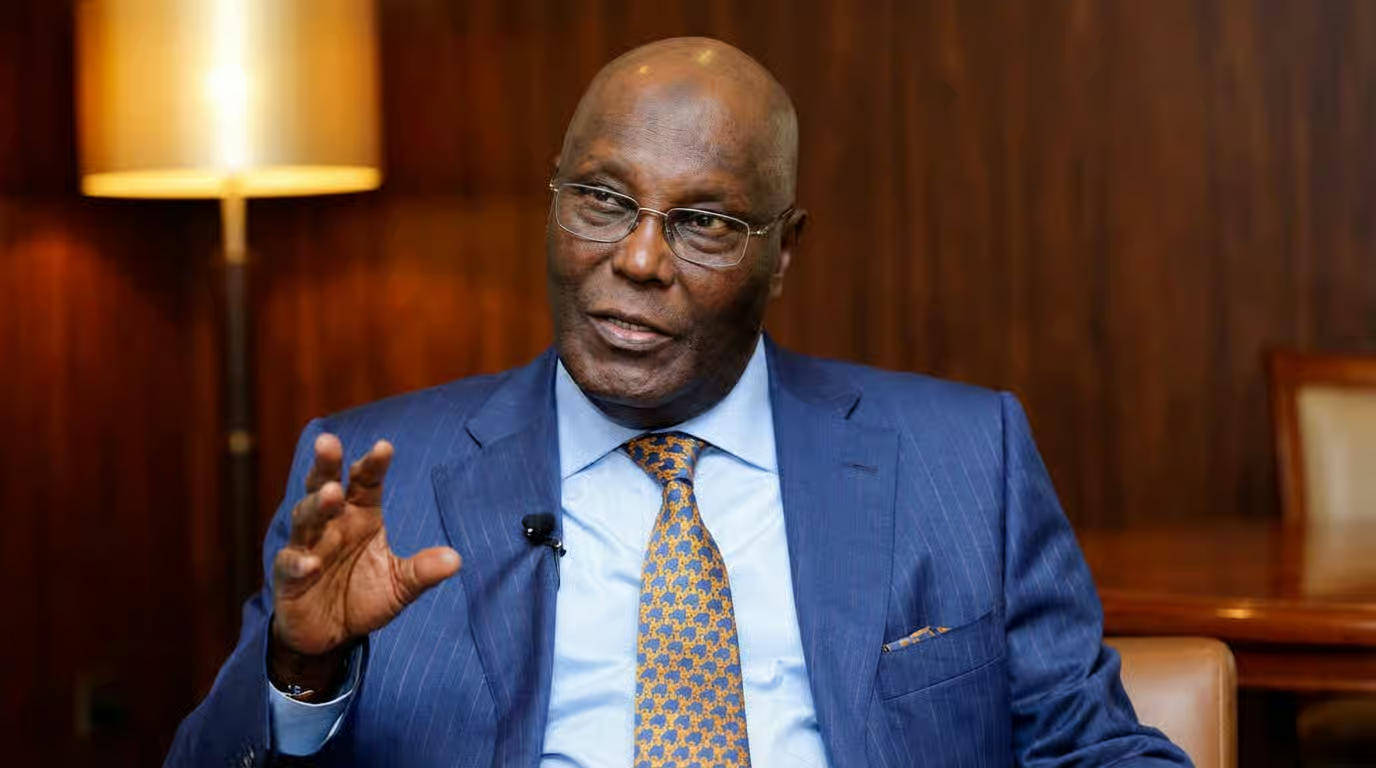
History will be unkind to them, but history will never forget Atiku Abubakar. Because Atiku is not a man who emerged yesterday. He is a political institution, an ecclesiastical pilgrim in Nigeria’s democratic sojourn, a statesman forged through decades of sacrifice, consistency, vision, and immeasurable investment in the survival of democracy.
Atiku did not join the PDP as a mere member; he was one of the builders. His financial sacrifices, his strategic wisdom, his energy, and his commitment were foundational pillars of the Party’s creation. Without Atiku, the PDP would never have grown into the formidable political force that governed Nigeria for sixteen years. Atiku financed its earliest struggles, strengthened its organisational roots, and stood firmly when others were still dancing around military corridors in fear. His documented financial input into pro-democracy networks and party structures remains one of the highest by any single political figure in the Fourth Republic.
His political journey is one of ecclesiastical dedication. He has been blackmailed, demonised, misrepresented and attacked, yet every slander thrown at him has fallen like dull arrows against a granite mountain. He has been called names because weak men fear strong shadows, but no blackmailer has ever produced evidence against him.
Not a single EFCC case.
Not a single ICPC file.
Not one overseas criminal indictment.
No forfeiture.
No drug link.
No stain.
No blemish.
Nothing.
What Atiku carries is not scandal, but the residue of envy from those who cannot match his pedigree.
Before Nigeria even knew democracy would return in 1999, Atiku was already fighting for it. He supported NADECO. He funded pro-democracy organisations. He backed MKO Abiola during the June 12 crisis. He resisted Abacha’s dictatorship. He was a backbone of the 1998 G-34 and People Democratic Movement (PDM)that birthed the PDP. He sacrificed personal wealth, political comfort, and safety for Nigeria’s democratic rebirth.
Historically, many Nigerians, including prominent figures such as Asiwaju Bola Ahmed Tinubu, openly recognised Atiku’s place in the pro-democracy resistance that defined the June 12 era. Before politics separated them into rival camps, both men stood firmly on the same side of history , resisting military dictatorship, defending the mandate of the Nigerian people, and risking everything at a time when oppression carried fatal consequences.
Atiku was not a spectator in that struggle; he was a frontline financier, strategist, and pillar of support to democratic forces when even the bravest trembled. His home was watched. His movements were monitored. His loyalty to the cause put him at genuine risk of elimination, as several key NADECO and June 12 actors were trailed, jailed, exiled, or assassinated. Atiku faced the same danger with calm courage and unyielding resolve, knowing fully well that standing on the side of the people could cost him his life.
In those years, many of today’s political gladiators openly acknowledged his bravery, his commitment, and his willingness to sacrifice personal comfort for national freedom. Atiku’s contributions to the pro-democracy movement were widely recognised in political circles, civil society networks, and the international community. Those who lived through the June 12 resistance understood that without men like Atiku, the democratic dawn of 1999 might never have arrived.
These are verifiable historical records.
As Nigeria stepped into the fragile dawn of the Fourth Republic in 1999, the country resembled a wounded giant. Institutions were weak, industries were collapsing, infrastructure was dying, and Nigeria ranked among the least connected nations on earth. Into this post-military wasteland stepped Atiku Abubakar, who did not merely occupy the office of Vice President , he redefined it.
Under his supervisory coordination, the Economic Management Team birthed Nigeria’s modern economy. The global telecommunications revolution that democratised communication , from fewer than 500,000 working lines to over 219 million active connections ,was possible because Atiku broke the monopoly and opened the sector.
He also championed banking sector reforms, pension reforms, civil service reforms, aviation reforms, and privatisation models that remain benchmarks in African economic transformation. Technocrats like El Rufai, Soludo, Duke, Ezekwesili, and Okonjo-Iweala publicly acknowledged his leadership and intellectual depth.
Foreign investment surged. Debt management improved. Nigeria regained international credibility. States grew stronger. The private sector expanded. Millions of Nigerians entered the middle class.
Atiku’s impact was everywhere.
Yet, despite these achievements, he faced the fiercest political attacks of his generation , but through all storms, he never broke, never bowed, never compromised his democratic convictions.
His resilience is not human; it is historic. His relevance is not incidental; it is inevitable. His re-emergence is not by chance; it is by the sheer force of his intellectual depth, economic understanding, administrative mastery, and democratic sacrifice.
Today the PDP is diminishing, not because it lacks structures, but because it lacked loyalty, discipline, and gratitude. A Party cannot fight its own spine and expect to stand upright. The defunct G5 thought they were undermining Atiku; they were in truth eroding the foundation of their own political future. Now their structure is crumbling, their influence is evaporating, their coalition is disintegrating, and their internal rancour is louder than their political relevance.
While PDP bleeds from internal cannibalism and chronic betrayal, the ADC is rising with a new moral clarity, a principled discipline, and a reinvigorated national consciousness. Nigerians are tired of hypocrisy. They are tired of betrayal being celebrated as strategy. They are tired of parties that worship personal egos above national good. They are turning toward a platform where integrity, structure, and visionary leadership are converging.
And in the centre of this rising political horizon stands Atiku Abubakar, the man whose ideas have never aged, whose vision has never dimmed, and whose commitment to Nigeria has never wavered.
If the PDP had listened to him in 2019, Nigeria would not be in this valley of insecurity, economic collapse and social despair. If the PDP had followed him in 2023, the nation would not be choking under inflation, hunger, mass unemployment, kidnapping, and catastrophic leadership confusion. They fought him, they mocked him, they sabotaged him, and today they are reaping the fruits of their own treachery.
The political history of Atiku Abubakar is one written in bold ink across the canvas of Nigeria’s democratic struggle. His sacrifices built bridges. His resources built the Party. His ideas built institutions. His courage built confidence. His consistency built hope. And now, at a time when Nigeria desperately needs a statesman with a panoramic vision of governance, Atiku stands uncontested in his ideological clarity.
No case. No stain. No scandal. No indictment. No skeleton. Just a man whose destiny continues to unfold like a torch leading a blind nation toward the light.
History is turning. PDP is diminishing. ADC is rising. And Atiku, the most misunderstood statesman of his time, is ascending once again , not by noise, not by propaganda, not by treachery, but by the undeniable weight of competence, character, sacrifice and a vision for a better Nigeria.
Aare Amerijoye Donald Olalekan Temitope Bowofade (DOT.B)
Director General
The Narrative Force